


Common Mistakes When Using HPMC for Tile Adhesive in Wall Applications
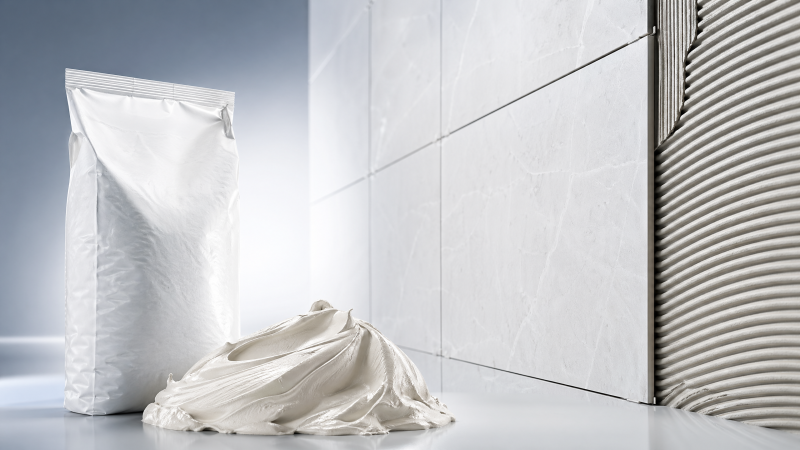
In wall tiling projects, improper use of HYDROXYPROPYL METHYL CELLULOSE for tile adhesive can lead to sagging, weak bonding, poor workability, and costly rework. For project managers and site decision-makers, understanding these common mistakes is essential to maintaining application efficiency, installation quality, and long-term performance. This article outlines the key issues to avoid and how to optimize adhesive results in demanding wall applications.
Why wall applications are less forgiving than floor tiling
Wall installation creates a very different stress profile from floor tiling. Gravity acts continuously on fresh adhesive, so the balance between open time, slip resistance, water retention, and early wet tack becomes more critical. When teams use HYDROXYPROPYL METHYL CELLULOSE for tile adhesive without adapting the formulation for vertical surfaces, problems often show up within the first 10–30 minutes of application.
For project managers, the cost impact is not limited to adhesive waste. A wall tile failure can disrupt 3 key project targets at once: schedule, labor productivity, and final acceptance quality. Even a small increase in tile slip can force installers to slow down, add temporary support, or redo alignment, especially on large-format ceramic and porcelain installations.
In chemical formulation terms, HPMC acts as a rheology modifier and water-retention agent. However, selecting the wrong viscosity range, substitution pattern, or dosage may reduce instead of improve field performance. This is why the procurement team should not evaluate cellulose ether by price alone, especially for vertical applications with tiles above 300 × 600 mm or in hot, dry jobsite conditions.
Jinan Ludong Chemical Co., Ltd. operates integrated cellulose ether production and service systems for global construction material customers. With annual capacity reaching 45,000 tons and HPMC viscosity control from 400 to 200,000 CPS, the company is equipped to support formulation matching rather than one-size-fits-all material supply. For wall tile adhesive, that matching process can reduce avoidable on-site variability.
What project teams should assess before approving a formulation
- Tile type and size, especially standard wall tile versus large-format porcelain panels.
- Substrate absorption, including cement render, gypsum-based wall systems, and old renovation surfaces.
- Ambient temperature and wind exposure, commonly ranging from 10°C to 35°C on active sites.
- Required application window, such as 2–4 hours pot life or extended open time for larger crews.
Common mistakes when using HYDROXYPROPYL METHYL CELLULOSE for tile adhesive on walls
The most common mistake is assuming that any HPMC grade suitable for cement-based mortar will also work well in wall tile adhesive. In practice, the behavior of HYDROXYPROPYL METHYL CELLULOSE for tile adhesive depends on dosage, viscosity, dissolution profile, and coordination with other ingredients such as cement, fillers, and redispersible polymer powder. A mismatch often appears as sagging or insufficient anti-slip performance.
A second mistake is overdosing in order to improve water retention. More is not always better. Excessive cellulose ether can raise viscosity but reduce spreadability, create heavy trowel drag, and trap too much water in the mortar film. This may delay strength build-up and reduce installer efficiency over a 6–8 hour work shift.
A third issue is ignoring the interaction between HPMC and polymer powder. Wall adhesives often require not only water retention but also deformability and adhesion support. When the HPMC grade is selected without considering the total formulation, the adhesive may feel creamy in the bucket yet perform poorly after tile placement.
Another frequent error is poor mixing control on site. Even a well-designed powder blend can underperform if water addition varies too much from batch to batch. A difference of just 0.5–1.0 liters per bag may change slump, slip resistance, and open time enough to create visible installation inconsistency across the wall.
Mistake-by-mistake impact table for site and procurement teams
The table below summarizes how common selection and application mistakes affect wall tiling results when using HYDROXYPROPYL METHYL CELLULOSE for tile adhesive.
For project leaders, this table highlights a practical point: many “application problems” actually begin as formulation and process-control problems. Early coordination between procurement, technical teams, and the material supplier usually saves more time than fixing wall defects after placement.
A related point many buyers miss
Some buyers compare HPMC only against viscosity numbers on paper. That approach is incomplete. Similar nominal viscosity grades may behave differently in water retention, workability profile, and compatibility with cement and fillers. In some formulations, alternative cellulose ethers such as Methyl Hydroxyethyl Cellulose (HEMC) may also be reviewed during development, but the choice should still be based on target application behavior, not category labels alone.
How to select the right grade and dosage for wall tile adhesive
A practical selection process starts with 3 core indicators: water retention, anti-slip performance, and workability balance. For wall applications, the right HYDROXYPROPYL METHYL CELLULOSE for tile adhesive should help the mortar stay open long enough for placement while still resisting downward tile movement immediately after pressing. That balance is especially important for installers handling medium and large tiles.
Project managers should also ask whether the product is intended for standard-setting adhesive or for improved systems requiring higher bond performance. In many cases, dosage optimization is done within a narrow range, then adjusted according to cement type, calcium carbonate grading, sand system, and target application feel. Small formulation changes can materially affect final wall behavior.
Ludong Chemical supports a broad viscosity control range from 400 to 200,000 CPS across its HPMC series, which is valuable for customized development. For B2B buyers, this means formulation selection can be matched to local raw material conditions, climate, and installation method rather than forced into a limited stock formula.
Where procurement teams operate across multiple projects, it is often useful to validate at least 2–3 candidate grades in pilot trials. This reduces the risk of selecting a grade that performs well in one laboratory mix but poorly on a real site with different substrate absorption or crew mixing habits.
Selection checkpoints before bulk purchase
- Confirm whether the adhesive is for interior dry areas, wet rooms, façades, or renovation walls with variable substrates.
- Check the target open time, such as standard site use or extended working time for larger installation zones.
- Review compatibility with RDP, starch ether, and local cement sources over at least 2 mixing rounds.
- Define acceptable field variability, including water addition tolerance and mixing time, often 3–5 minutes plus rest time.
Procurement evaluation table for HYDROXYPROPYL METHYL CELLULOSE for tile adhesive
Before committing to supply, project and purchasing teams can use the following table to compare candidate grades on application-relevant criteria rather than price alone.
This approach is especially useful for contractors and manufacturers managing several wall tiling projects at once. A technically stable supply partner can lower the hidden cost of formulation drift, complaints, and emergency substitution during peak construction periods.
Implementation controls that prevent failure on site
Even the correct HYDROXYPROPYL METHYL CELLULOSE for tile adhesive will not deliver reliable performance without basic site discipline. The first control point is water dosage. Teams should use a defined mixing range per bag and avoid “adjusting by feel” after the initial wet-out stage. Uncontrolled water addition is one of the fastest ways to lose anti-slip stability on walls.
The second control point is mixing sequence and maturation time. Dry-mix adhesive usually performs better when mixed for a standard cycle, then allowed to rest briefly before remixing. A common field routine is 3–5 minutes mixing, 3–5 minutes slake time, and short remixing before use, although exact practice should follow the actual formulation and equipment setup.
The third control point is substrate and environmental readiness. Highly absorbent walls, direct sun, or strong airflow can shorten the effective open time of the adhesive film. If installers exceed the practical working window, tiles may appear attached initially but develop weak bonding because the ribbed mortar skin has already started to dry.
For project leaders, it is helpful to convert chemistry into simple field rules. Standardized water, timed mixing, controlled spread area, and routine slip observation during the first 15–20 minutes can significantly reduce variation between crews and shifts.
4-step field checklist for wall adhesive consistency
- Measure water accurately for each batch and record any allowed adjustment range.
- Keep mixing time consistent across crews and avoid partial hand-mixed corrections.
- Limit the spread area to what can be tiled within the practical open time under site conditions.
- Check tile slip and transfer regularly, especially after environmental changes during the day.
When alternatives should be reviewed
If a project involves unusual substrates, very hot climates, or specific workability preferences, technical teams may compare HPMC with other cellulose ether options such as Methyl Hydroxyethyl Cellulose (HEMC). The review should focus on practical outcomes such as sag control, spreadability, and water demand, not on a simple assumption that one chemistry is universally better than another.
FAQ for project managers and engineering decision-makers
How do I know if the HPMC grade is wrong for wall tile adhesive?
Look for a combination of symptoms rather than a single sign. If the mortar has good bucket consistency but tiles slide after placement, anti-sag performance may be insufficient. If the mix becomes too sticky, hard to comb, or inconsistent between batches, the grade or dosage may not suit the total formulation. Short pilot trials with 2–3 comparison grades usually reveal these issues quickly.
What matters more: viscosity number or real application testing?
Both matter, but application testing should decide the final choice. A viscosity label alone does not fully predict open time, water retention behavior, anti-slip effect, or compatibility with local cement and filler systems. For procurement, paper data should be treated as a screening tool, while wall application trials remain the decision tool.
Can more HYDROXYPROPYL METHYL CELLULOSE for tile adhesive solve weak bonding?
Not necessarily. Weak bonding may be linked to poor substrate preparation, incorrect water ratio, inadequate polymer content, excessive skinning, or poor tile back coverage. Increasing cellulose ether may improve water retention but can also create new issues such as slow setting or difficult troweling. Root-cause review is more effective than dose escalation.
What should procurement teams ask suppliers before ordering?
Ask for 5 things: recommended application range, suggested dosage window, compatibility guidance with your cement system, batch consistency approach, and expected delivery planning. For larger projects, also request sample support for trial batches and discuss how the supplier handles repeat orders across different shipment cycles.
Why choose a formulation partner with manufacturing depth
For project managers, the real purchasing question is not only where to buy cellulose ether, but whether the supplier can support stable wall adhesive performance across changing jobsite conditions. Jinan Ludong Chemical Co., Ltd. combines production, trading, and integrated service capabilities focused on cellulose ethers for construction materials. That structure is useful when your team needs more than a standard product list.
Its product portfolio includes HPMC, RDP, and HPS, which helps when a tile adhesive formula requires coordinated adjustment rather than isolated raw material replacement. The company’s annual capacity of 45,000 tons and controlled viscosity range from 400 to 200,000 CPS provide a practical base for supporting different adhesive systems, including construction-grade formulations for wall use.
If your team is evaluating HYDROXYPROPYL METHYL CELLULOSE for tile adhesive, a useful next step is to discuss the project in operational terms: tile size, substrate type, climate, target open time, anti-slip expectations, and local raw materials. This makes supplier feedback more accurate and shortens the path from sample testing to stable supply.
Contact us to discuss parameter confirmation, grade selection, dosage suggestions, delivery cycle planning, sample support, and quotation communication. If you are comparing several adhesive options for wall applications, share your formulation goals and site conditions so the technical recommendation can be aligned with your project timeline and quality targets.
Send Your Inquiry
We welcome your cooperation and we will develop with you.
