


Why Tile Adhesive Performance Can Fail Without the Right HPMC Grade
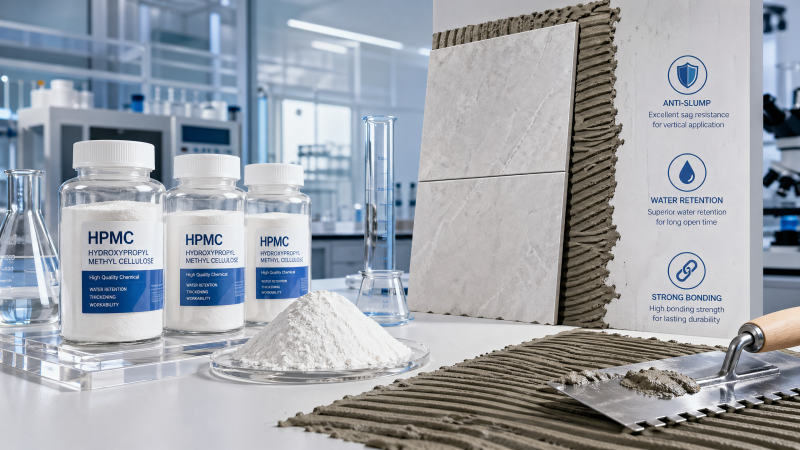
Tile adhesive failures often trace back not to the formula itself, but to choosing the wrong HYDROXYPROPYL METHYL CELLULOSE for tile adhesive. From poor workability and weak bonding to sagging and water retention issues, HPMC grade selection directly affects installation performance. Understanding how viscosity, consistency, and application needs align can help researchers and buyers evaluate more reliable construction material solutions.
Why does the right HPMC grade matter so much in tile adhesive?
For information-driven buyers in the chemicals and construction materials sector, HYDROXYPROPYL METHYL CELLULOSE for tile adhesive is not a minor additive decision. It is a functional component that shapes open time, water retention, anti-sag behavior, spreadability, and application consistency. A mismatch between adhesive formulation and HPMC grade can lead to installation defects within the first 20 to 40 minutes of application or during the early curing stage over 24 to 48 hours.
Tile adhesive systems are sensitive because they must balance several properties at once. Installers need smooth troweling, reliable wetting of the substrate and tile back, controlled slip on vertical surfaces, and enough working time under common jobsite temperatures such as 5°C to 35°C. If the selected HYDROXYPROPYL METHYL CELLULOSE for tile adhesive cannot support this balance, even a formula with cement, sand, and polymer powder in the expected range may still fail in practice.
This is why grade selection should be evaluated by application target rather than viscosity alone. In many projects, researchers compare low, medium, and high viscosity grades without fully assessing solubility behavior, consistency development, or compatibility with redispersible polymer powder. The result is a product that may look acceptable in lab mixing but performs inconsistently on the construction site.
Jinan Ludong Chemical Co., Ltd. focuses on cellulose ethers and integrated construction material solutions. With annual production capacity reaching 45,000 tons and HPMC viscosity control from 400 to 200,000 CPS, the company can support different adhesive design routes, including standard wall tile adhesive, enhanced slip-resistant systems, and formulations requiring adjusted water demand and workability profiles.
What functions does HPMC serve in a cement-based tile adhesive?
- Water retention: helps reduce rapid water loss into absorbent substrates, supporting proper cement hydration during the first few hours.
- Workability control: improves smooth mixing, trowelability, and ease of combing during the normal 15 to 30 minute application window.
- Anti-sag performance: helps keep tiles in position on vertical walls, especially for medium and large formats.
- Open time support: contributes to sustained wetting and bonding performance after mortar is spread.
- Consistency stability: reduces formula variability between batches when raw materials and ambient conditions change within normal ranges.
For buyers comparing suppliers, this means the technical conversation should not stop at “what viscosity do you have?” It should continue to “what application profile does this grade support?” That shift often determines whether a trial becomes a stable commercial product.
Which performance failures are most often linked to the wrong HYDROXYPROPYL METHYL CELLULOSE for tile adhesive?
When tile adhesive underperforms, the failure pattern usually gives clues about HPMC grade mismatch. These symptoms are highly relevant during product development, supplier evaluation, and complaint analysis. Understanding them helps procurement teams avoid focusing only on price per ton while overlooking formulation risk.
A grade with insufficient water retention can cause fast surface drying, poor cement hydration, and reduced effective open time. Installers may report that the adhesive “skins too fast” within 10 to 15 minutes, especially in dry, warm, or windy conditions. A grade with poor consistency control may lead to weak comb stability, uneven spread, or excessive water demand.
On the other hand, an excessively high or unsuitable grade can create its own problems. It may increase stickiness too much, reduce ease of troweling, slow down wetting of the tile back, or make the system feel heavy during mixing. If anti-sag is overemphasized without balancing workability, user acceptance may drop even when laboratory numbers look acceptable.
The table below summarizes common field failures and how they may relate to HYDROXYPROPYL METHYL CELLULOSE for tile adhesive selection.
The same complaint can also have multiple causes, so HPMC should be evaluated together with cement type, filler grading, polymer dosage, and jobsite conditions. Still, in many dry-mix systems, cellulose ether is one of the first variables worth reviewing because it influences several performance points at the same time.
Typical failure patterns in different project scenarios
In interior wall tile adhesive, installers often prioritize anti-sag and smooth combing. In floor applications, wetting and workable open time may carry more weight. In large-format tile systems, the acceptable process window can become narrower, which means grade stability matters more across batch-to-batch production.
For export-oriented manufacturers, this challenge grows because local cement, climate, and sand characteristics vary by region. A formulation that works in one market at 20°C and moderate humidity may need grade adjustments in a hotter or more absorbent environment. That is where a supplier with broader viscosity options and technical coordination becomes valuable.
How should buyers compare HPMC grades beyond viscosity?
Viscosity remains important, but it is only one dimension. Buyers looking for HYDROXYPROPYL METHYL CELLULOSE for tile adhesive should evaluate at least 5 core selection factors: viscosity range, water retention behavior, anti-sag contribution, workability profile, and compatibility with the rest of the dry-mix formula. A technically suitable grade is often identified through this multi-point review, not by one number on a specification sheet.
Jinan Ludong Chemical offers HPMC series products such as type 75 and type 60, covering construction and chemical grades with controlled viscosities from 400 to 200,000 CPS. This matters because tile adhesive formulations do not all target the same rheological profile. Standard ceramic tile adhesive, wall tile adhesive, and larger-format application systems can require different balances of water retention, slip resistance, and installer feel.
A structured comparison helps research teams reduce trial cycles from broad screening to focused validation. Instead of testing too many random options, buyers can predefine the target application, expected water addition range, and performance checkpoints before requesting samples.
The table below shows a practical comparison framework for screening HYDROXYPROPYL METHYL CELLULOSE for tile adhesive in B2B development projects.
This method is especially useful for private-label producers, dry-mix mortar factories, and importers working across multiple product grades. It reduces the risk of choosing an HPMC solely because it performed acceptably in one narrow test but fails in scaled production.
A practical 4-step sample evaluation workflow
- Define the target use case: wall, floor, standard tile, or large format tile, plus expected application climate.
- Set 3 to 5 key performance checks: mixing feel, anti-sag, open time, wetting, and water demand.
- Run side-by-side trials using the same cement, fillers, and polymer powder with controlled mixing time.
- Confirm scale-up stability across at least 2 to 3 production batches before final procurement.
In some cases, buyers also compare cellulose ether families for related applications. For example, depending on formulation goals, some researchers review Methyl Hydroxyethyl Cellulose (HEMC) alongside HPMC to understand differences in workability profile, thermal behavior, or preferred use environment.
What should procurement teams ask suppliers before choosing a grade?
For B2B purchasing, the right technical questions often save more cost than negotiating a slightly lower unit price. A cheaper additive can become expensive if it increases rework, slows production, or causes inconsistent field feedback. Procurement teams should combine technical, supply, and service checks when shortlisting a supplier for HYDROXYPROPYL METHYL CELLULOSE for tile adhesive.
Ludong Chemical’s strength lies not only in product breadth but also in integrated service around cellulose ether applications. With modern production lines, a combination of traditional process know-how and intelligent automated production, and broad viscosity control, the company is positioned to support customers that need repeatability, formulation adaptation, and supply continuity across different regions.
For information researchers, the procurement task usually falls into 3 layers: product fit, production reliability, and technical coordination. Asking structured questions in these 3 areas can prevent delays during qualification and launch.
Use the checklist below when evaluating a new supplier or reviewing an alternative source.
Supplier evaluation checklist for tile adhesive applications
- Can the supplier recommend more than one grade based on wall, floor, or large-format tile use rather than offering a single generic option?
- Is the viscosity range broad enough, such as from low hundreds to high five-digit CPS levels, to support future formulation upgrades?
- Can the supplier coordinate with other dry-mix components such as RDP or HPS when optimizing water retention and workability?
- What is the typical sample support and evaluation cycle, for example 7 to 15 days depending on formula complexity and shipping distance?
- Can the supplier discuss packaging, batch consistency, and shipment planning for small trial quantities, medium commercial quantities, and large recurring orders?
Common procurement mistakes
One common mistake is selecting a grade based only on a benchmark competitor sample without checking raw material differences. Another is assuming that a higher viscosity grade will always improve anti-sag. In reality, overcorrection can damage workability and reduce installer acceptance. A third mistake is separating product selection from supply planning, even though stable batch performance is critical once production moves beyond lab scale.
Some buyers also compare HPMC against related cellulose ethers in adjacent formulations. In these discussions, Methyl Hydroxyethyl Cellulose (HEMC) may appear as a reference point, but the final decision should remain application-driven and trial-verified rather than theory-driven.
How do standards, testing logic, and application scenarios affect grade selection?
In tile adhesive development, grade selection should reflect not only formulation theory but also how the finished product will be tested and used. Different markets may align with different common testing frameworks, and while specific local compliance requirements vary, manufacturers often focus on open time, slip resistance, and adhesion-related performance under controlled conditions. The key point is simple: your HPMC choice should support the performance indicators your market actually cares about.
Application scenario matters just as much as test method. A standard ceramic tile on an indoor wall may tolerate a different rheology profile than a larger porcelain tile or a high-absorption substrate. Installation methods can also shift priorities. Manual troweling, extended working time, or warmer-site installation may each require adjustments to water retention and consistency behavior.
This is why researchers often group tile adhesive projects into 3 broad scenarios before selecting HYDROXYPROPYL METHYL CELLULOSE for tile adhesive: basic interior application, enhanced anti-slip wall application, and more demanding systems needing stronger process control. That segmentation helps narrow trials faster and improve communication between sourcing and technical teams.
The following table offers a scenario-based selection view that can support internal discussion during formulation planning.
A scenario-based approach makes communication more precise. Instead of requesting “an HPMC for tile adhesive,” buyers can ask for a grade recommendation based on installation orientation, climate range, target workability, and expected production scale. That leads to better sample matching and fewer reformulation cycles.
FAQ for researchers and buyers
How do I choose the starting viscosity range for a new tile adhesive project?
Start with the application target, not the catalog first. Define whether the adhesive is for wall or floor use, whether anti-sag is critical, and what water addition range is expected. Then request 2 to 3 candidate grades for comparison under the same formula. This usually gives clearer insight than testing a single option in isolation.
Can one HPMC grade fit all tile adhesive products?
In some narrow product lines, a single grade may cover several related SKUs, but a universal solution is uncommon. Different tile sizes, installation directions, climate conditions, and performance targets often require different balances. Most manufacturers eventually work with more than one grade or at least more than one validated formulation window.
What is the usual sample-to-evaluation timeline?
For many B2B projects, initial sample screening can begin within 7 to 15 days after technical confirmation and logistics arrangement. Full formula validation may take 2 to 4 weeks depending on internal testing steps, comparison rounds, and production scheduling. Complex export projects may require additional time if local raw materials differ significantly.
What should I send a supplier to get better recommendations?
Provide the intended application, target market, climate conditions if known, base formula direction, key performance problems, and whether the system includes RDP or other modifiers. Even 4 to 6 clear technical points can dramatically improve sample relevance and shorten the trial cycle.
Why choose a solution-oriented supplier for HPMC selection and project support?
If your research goal is to reduce tile adhesive failure risk, supplier capability matters almost as much as the grade itself. Jinan Ludong Chemical Co., Ltd. operates as a global manufacturing enterprise focused on cellulose ethers, production, trading, and integrated services. Its product portfolio includes HPMC, RDP, and HPS, which is important for customers who need coordinated input across the whole dry-mix system rather than one isolated additive recommendation.
With annual capacity of 45,000 tons, advanced and comprehensive production lines, and viscosity control from 400 to 200,000 CPS, Ludong Chemical can support customers at different stages: early screening, alternative supplier comparison, product upgrade planning, and recurring volume supply. That combination is especially useful for importers, mortar manufacturers, and private-label brands that need both flexibility and repeatability.
If you are evaluating HYDROXYPROPYL METHYL CELLULOSE for tile adhesive, a practical next step is to discuss 6 specific items with the supplier: target application, desired viscosity direction, workability issues, anti-sag requirement, expected delivery cycle, and sample quantity. This type of focused exchange usually produces better recommendations than a general price inquiry alone.
You can contact Ludong Chemical for parameter confirmation, product selection support, sample evaluation coordination, delivery cycle discussion, customized formulation direction, and quotation communication. For buyers comparing multiple grades, sending your current performance pain points and target market conditions will make the consultation more efficient and more relevant to real project needs.
Send Your Inquiry
We welcome your cooperation and we will develop with you.
