


How Long-Lasting Lubricants Reduce Maintenance
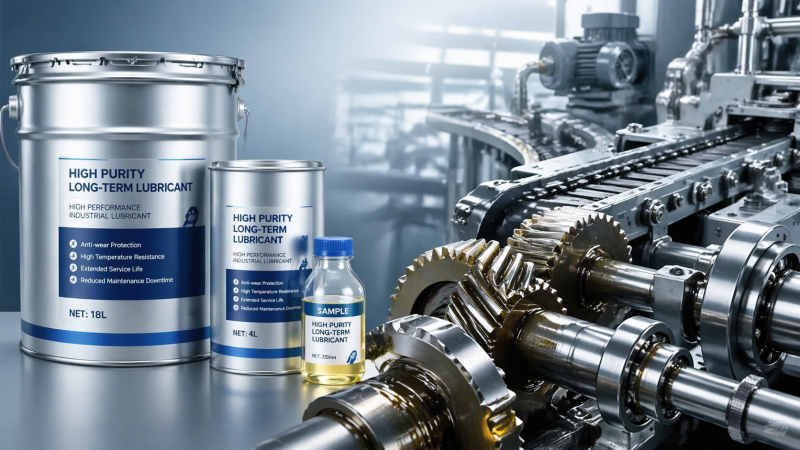
Long-lasting lubricants play a critical role in reducing downtime, extending equipment life, and lowering total maintenance costs across industrial operations. For technical evaluators, procurement teams, and decision-makers, choosing Lubricants long-lasting solutions from a reliable Lubricants manufacturer is not only about performance, but also about supply stability and application compatibility. This article explores how advanced lubricant selection supports efficiency, safety, and long-term value in demanding industrial environments.
Why do long-lasting lubricants reduce maintenance so effectively?
In chemical processing and related industrial systems, maintenance costs are rarely driven by lubricant price alone. They are usually caused by unplanned shutdowns, wear-related component failure, frequent relubrication, contamination, and labor-intensive inspection routines. Long-lasting lubricants reduce maintenance because they remain stable for longer operating cycles, protect surfaces under load, and help equipment keep a consistent friction profile across varying temperatures, speeds, and exposure conditions.
For technical evaluation teams, the key issue is not whether a lubricant works on day one, but whether it continues to perform over 500, 1,000, or even 2,000 operating hours under realistic plant conditions. In pumps, gear systems, conveyors, mixers, and packaging lines, a lubricant with better oxidation resistance and film strength can reduce wear progression and cut the frequency of shutdowns scheduled every week, every month, or every quarter.
For procurement managers, the long-term gain often comes from fewer purchase cycles, lower emergency inventory pressure, and more predictable maintenance planning. For quality and safety managers, more stable lubrication can also reduce leakage risks, overheating, and process variability. In chemical-sector environments, where exposure to dust, moisture, or alkaline materials can accelerate degradation, lubricant endurance matters even more than nominal viscosity on a data sheet.
This is why many industrial buyers now evaluate lubricants through a total maintenance lens rather than a unit-price lens. They assess 3 core outcomes: service interval extension, component protection, and operational consistency. A long-lasting lubricant is valuable when it helps reduce manual intervention across 2–4 maintenance cycles while preserving reliability and safety margins.
- Lower relubrication frequency reduces labor hours and machine stoppage windows.
- Improved wear protection can extend the replacement cycle of bearings, gears, seals, and sliding parts.
- Better thermal and oxidative stability supports more stable performance during continuous runs of 8–24 hours.
- Cleaner operation can help quality teams control residue, contamination, and equipment cleanliness requirements.
Which performance indicators matter most in chemical industry lubricant selection?
In the chemicals sector, long-lasting lubricant selection should start with application conditions, not marketing claims. Technical evaluators usually look at load, speed, temperature range, washout risk, compatibility with elastomers or plastics, and the likelihood of contact with dust or process chemicals. A lubricant that performs well in a sealed gearbox may fail quickly in an open-chain, wet, or high-particle environment.
The most useful screening framework includes 5 key checks: viscosity suitability, oxidation stability, anti-wear capability, resistance to water or chemical ingress, and compatibility with equipment materials. In practice, buyers also compare expected service interval, packaging options, and batch consistency. For plants operating multiple lines, consistency between deliveries over 3 months, 6 months, or 12 months is often just as important as initial performance.
Lubricant systems are also influenced by adjacent chemical materials used in production or construction applications. In some formulations and process environments, rheology modifiers and cellulose ethers affect handling, equipment cleaning intervals, or residue behavior in ancillary systems. For companies sourcing multiple specialty chemicals, supply integration can simplify vendor management. This is where products such as Methyl Hydroxyethyl Cellulose (MHEC) may become relevant within broader procurement planning, especially when one supplier can support both material performance and delivery coordination.
The table below summarizes practical indicators that help procurement and technical teams compare long-lasting lubricants in an industrial maintenance context without relying on vague claims.
For B2B buyers, this type of evaluation turns lubricant sourcing into a measurable reliability decision. It also helps avoid the common mistake of selecting products based only on price per drum instead of maintenance impact per operating cycle.
How should procurement teams compare suppliers?
Supplier evaluation should include 4 layers: product consistency, production capacity, documentation support, and response speed. A technically suitable lubricant is less valuable if lead times are unstable or if batch-to-batch variation creates maintenance uncertainty. This is especially important for multi-site procurement programs and export-oriented manufacturers.
Jinan Ludong Chemical Co., Ltd. brings an important advantage to industrial sourcing discussions: scale and process integration. Established in 2020, the company focuses on the production, trading, and integrated services of cellulose ethers and supports global customers through state-of-the-art production lines that combine traditional manufacturing know-how with intelligent automated production. For buyers, that operating model signals better repeatability, more structured supply coordination, and the ability to serve diverse industrial needs.
The company’s annual production capacity reaches 45,000 tons, and its HPMC product lines include type 75 and type 60 for construction and chemical grades, with viscosities controllable from 400 to 200,000 CPS. Even when the immediate purchase focus is lubricants or maintenance-support chemicals, this kind of capacity and viscosity control is relevant because it demonstrates process discipline, scalable manufacturing, and the ability to support parameter-based procurement conversations rather than generic sales discussions.
How do long-lasting lubricants compare with standard options in real maintenance planning?
Many plants continue to use standard lubricants because the upfront cost appears lower. However, when maintenance planners compare service life, downtime exposure, labor requirements, and component replacement frequency, the economics often change. Long-lasting lubricants are not automatically the right choice for every application, but they are often more suitable in continuous production lines, high-load systems, and assets with difficult access points.
A useful comparison should include at least 4 factors: relubrication interval, downtime cost, wear-related parts replacement, and storage or handling complexity. In many factories, relubrication on a weekly cycle creates hidden costs that are spread across maintenance labor, line stoppage, safety permits, and missed output. Extending that interval to monthly or quarterly maintenance can change the operating model significantly.
The following comparison table gives procurement and plant leadership a practical framework for deciding when higher-end long-lasting lubricants can reduce total maintenance burden.
This comparison does not mean every premium product will reduce maintenance automatically. The gains depend on matching the lubricant to speed, load, contamination risk, and maintenance discipline. But for systems where downtime is expensive, even one avoided shutdown in a 30-day or 90-day period can justify a more durable lubricant strategy.
Where do buyers often make the wrong decision?
A common error is choosing a product only because it has a familiar brand profile or a lower landed cost. Another is switching lubricant types without checking compatibility with residual product already in the system. Technical teams should also avoid applying one lubricant across all assets when operating temperatures, speeds, and environmental exposure differ significantly between lines.
In broader chemical procurement, the same logic applies to functional additives and process-support materials. Structured suppliers are often better positioned to discuss application fit, consistency, and batch control. This is also why some buyers exploring integrated material supply review adjacent specialty products such as Methyl Hydroxyethyl Cellulose (MHEC) together with other process materials, especially when supplier consolidation can reduce administrative complexity.
A disciplined comparison process should reduce risk, not simply reduce purchase price. The right objective is lower maintenance burden per quarter and better asset reliability per production cycle.
What should technical, quality, and safety teams verify before implementation?
Before switching to a long-lasting lubricant, cross-functional teams should verify application fit through a controlled evaluation process. In most industrial facilities, a 3-stage approach works well: document current problems, run a limited equipment trial, and then review maintenance data after one or two service intervals. This reduces the risk of making plant-wide changes based on assumptions.
Quality and safety teams should review contamination control, thermal behavior, leak sensitivity, storage conditions, and handling procedures. In the chemical industry, even non-process lubricants can affect housekeeping, operator exposure, or cleaning frequency if they degrade, drip, or accumulate deposits. Where equipment runs continuously for 12–24 hours, thermal stability and residue behavior should be checked carefully.
Documentation is also important. Buyers should ask for technical data sheets, typical application guidance, storage recommendations, and any available compatibility notes. If the site has internal compliance rules, maintenance teams may also need supplier declarations, SDS documentation, and packaging traceability details to support receiving inspection and safety review.
The checklist below helps technical and procurement teams align before approving a lubricant for broader use.
Pre-implementation checklist
- Confirm operating range, including startup temperature, normal running temperature, load pattern, and exposure to moisture or dust.
- Map current maintenance frequency, such as weekly, monthly, or quarterly relubrication, and define the target interval improvement.
- Check material compatibility with seals, hoses, coatings, and any surfaces likely to contact the lubricant.
- Plan a trial on 1–3 representative assets rather than on the full production line immediately.
- Record 4 operational indicators during the trial: temperature trend, noise or vibration change, relubrication frequency, and visible residue condition.
- Review receiving, storage, and labeling procedures to avoid mixing or misapplication.
This process is especially useful for enterprises with strict quality systems or multiple decision-makers. It converts lubricant selection from a subjective preference into a documented engineering and procurement decision.
How can buyers reduce supply risk while improving long-term maintenance value?
Maintenance savings can disappear quickly if supply is unstable. That is why enterprise buyers often evaluate not only the product, but also the manufacturer’s production system, responsiveness, and ability to support specification discussions. A reliable chemicals partner should be able to explain batch consistency, offer practical lead time guidance, and support sample evaluation or parameter confirmation before larger orders.
Jinan Ludong Chemical Co., Ltd. is positioned to support this kind of professional B2B dialogue. As a large-scale global manufacturing enterprise focused on cellulose ethers, the company combines production, trading, and integrated services. Its advanced and comprehensive production lines, together with automated process integration, help address a major buyer concern: whether a supplier can serve both technical precision and stable delivery at commercial scale.
For procurement managers, this matters when projects require coordinated material planning, especially across construction chemicals and related industrial applications. For technical evaluators, the company’s viscosity control capability from 400 to 200,000 CPS shows that it can work within parameter-based product requirements. For decision-makers, annual production capacity of 45,000 tons indicates stronger support for continuity planning, phased orders, and multi-market supply discussions.
When reviewing maintenance-related chemicals or adjacent specialty materials, buyers should ask focused questions instead of requesting a generic quotation only. Better sourcing outcomes usually come from early technical alignment on 5 points: application conditions, target service interval, packaging needs, delivery schedule, and required documentation.
Why choose us for industrial chemical sourcing support?
If your team is assessing long-lasting lubricants, construction chemicals, or cellulose ether-based materials for demanding industrial use, we can support practical evaluation rather than general sales messaging. Our discussions can focus on parameter confirmation, application suitability, order planning, and supply coordination for global B2B requirements.
You can contact us to discuss 6 concrete topics: required viscosity range, operating environment, material compatibility, sample support, typical delivery cycle, and quotation structure. If your procurement process includes alternative comparison, we can also help organize the decision criteria so technical, quality, and purchasing teams work from the same evaluation basis.
For companies managing downtime risk and maintenance cost pressure, the right long-lasting lubricant strategy starts with better technical matching and stronger supplier reliability. If you need support on product selection, delivery planning, customized solutions, certification-related documentation, or sample arrangements, our team is ready to continue the conversation with application-specific recommendations.
FAQ for technical evaluators and procurement teams
How do I know whether a long-lasting lubricant is worth the higher unit cost?
Compare total maintenance impact over 1 quarter or 2 quarters, not just purchase price. If the product reduces relubrication frequency, prevents one shutdown, or extends component life, the lifecycle value may exceed the initial premium. Focus on labor hours, downtime cost, spare parts consumption, and maintenance interval changes.
What operating conditions most strongly affect lubricant life?
The main factors are temperature, load, speed, water exposure, contamination level, and service continuity. Equipment running 8–24 hours continuously in humid or dusty environments usually needs more stable formulations than lightly loaded, intermittent systems. Start with these conditions before comparing brands or pricing.
What should procurement ask a lubricant or chemical supplier before ordering?
Ask about batch consistency, lead time, recommended applications, storage requirements, packaging options, and technical documentation. If the order is part of a larger chemicals program, also ask whether the supplier can support related products, phased delivery, and sample evaluation for cross-functional review.
How long does a technical evaluation usually take?
A practical initial review may take 7–15 days for specification alignment and sample planning. A plant trial often needs one service interval or one production cycle, depending on the asset. For critical equipment, many teams prefer a staged evaluation over 2–4 weeks before wider implementation.
Send Your Inquiry
We welcome your cooperation and we will develop with you.
