


Lubricants for Industrial Use: Key Tradeoffs
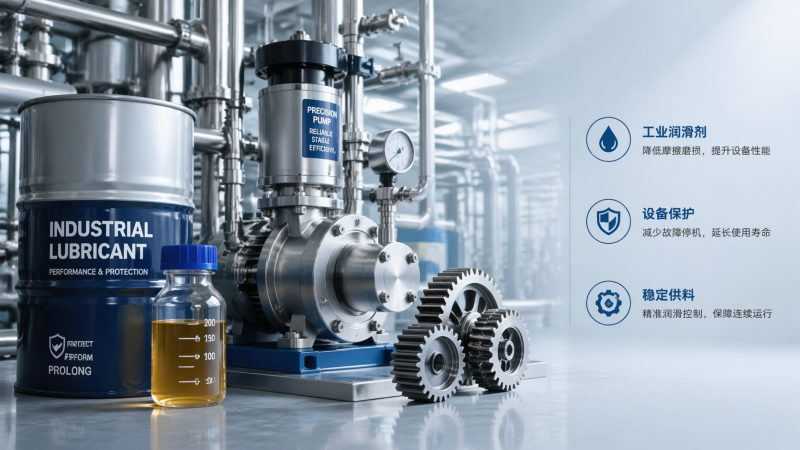
Choosing lubricants for industrial use involves balancing performance, safety, cost, and long-lasting reliability across demanding processes. For technical evaluators, buyers, and quality teams, understanding these tradeoffs is as important as sourcing from a trusted Lubricants manufacturer. In industries that also compare HYDROXYPROPYL METHYL CELLULOSE supplier capabilities, Polyvinyl Alcohol price, and Redispersible Polymer Powder exporter options, informed material selection directly affects efficiency, compliance, and overall production value.
In chemical processing, construction material manufacturing, and related formulation environments, lubricant selection is rarely a simple price decision. It influences equipment life, contamination risk, maintenance intervals, worker safety, and even downstream product consistency. For companies evaluating production inputs and process aids, the right choice often depends on matching operating conditions with a realistic view of tradeoffs rather than chasing one performance indicator alone.
Why Lubricant Tradeoffs Matter in Chemical and Process Industries
Industrial lubricants support rotating equipment, mixers, pumps, gear systems, conveyors, compressors, and hydraulic units operating under heat, load, moisture, and chemical exposure. In many plants, even a small mismatch between lubricant type and application can shorten relubrication cycles from 6 months to 6 weeks, increase wear, or trigger unplanned shutdowns. This is especially relevant in facilities handling cellulose ethers, dispersible powders, or water-sensitive ingredients where process stability matters as much as machine protection.
Technical evaluators usually focus on viscosity grade, oxidation stability, compatibility with seals, and temperature tolerance. Procurement teams often prioritize landed cost, supplier continuity, and batch consistency. Quality and safety managers look at contamination risk, storage behavior, labeling, and regulatory suitability. Decision-makers must align all four views, because a lubricant that reduces unit price by 8% may still raise total operating cost if it increases downtime, bearing replacement frequency, or disposal complexity.
The challenge becomes more visible in mixed-material manufacturing environments. A company producing construction chemicals may assess not only lubricants but also rheology modifiers and functional additives. In such settings, product quality depends on how well the overall system is managed. For example, process teams working with Hydroxypropyl Starch Ether or similar specialty materials often require stable mixing, predictable torque, and low contamination from maintenance materials.
Core tradeoff categories
Most industrial lubricant decisions can be grouped into 4 categories: performance versus cost, protection versus efficiency, safety versus operating flexibility, and standardization versus customization. None of these are purely technical. They affect maintenance planning, spare parts consumption, and supplier management across 12-month to 36-month budgeting cycles.
- Performance versus cost: higher-grade oils and greases usually cost more per kilogram or liter but may extend service intervals by 20%–50%.
- Protection versus efficiency: thicker films improve wear control under load, while lower viscosity can improve energy efficiency in certain systems.
- Safety versus flexibility: food-grade, low-toxicity, or low-odor products may narrow formulation options but reduce compliance risk.
- Standardization versus customization: using 3 lubricant types across a plant is simpler than using 9, but not every asset shares the same duty cycle.
A structured evaluation framework helps teams avoid false savings. Rather than asking which lubricant is cheapest, better questions include how long it lasts, how it performs under contamination, how it affects seal life, and how consistently it can be supplied in drums, pails, or bulk volumes over multiple purchase cycles.
Key Selection Criteria for Technical Evaluation and Purchasing
When comparing lubricants for industrial use, the first step is defining operating conditions in measurable terms. Temperature range, load level, speed, moisture exposure, dust load, and service interval targets all influence selection. A grease suitable at 25°C may fail at 90°C. A hydraulic fluid performing well in a clean indoor line may degrade quickly in dusty or humid environments. Clear process mapping reduces the risk of choosing a product based only on a general-purpose label.
The table below summarizes practical criteria often used by purchasing, engineering, and quality teams during supplier comparison and internal approval.
The most important conclusion is that no single parameter can define suitability. A product with good oxidation resistance but poor water tolerance may be unsuitable for humid blending areas. Likewise, a low-cost option may appear competitive until maintenance frequency rises from once every 4 months to once every 6 weeks.
Practical screening questions
Before finalizing a purchase, many plants use a 5-point screening checklist. It is useful for cross-functional review and faster approval.
- What is the real operating temperature range during peak and off-peak production?
- How often is the equipment exposed to dust, water, washdown, or chemical vapors?
- What service life is expected: 500 hours, 2,000 hours, or a calendar-based interval?
- Can the supplier provide stable batch-to-batch quality and routine technical documents?
- Does the lubricant simplify plant-wide inventory or create another isolated SKU?
For manufacturers such as Jinan Ludong Chemical Co., Ltd., whose production systems combine traditional processing and intelligent automation, lubricant consistency becomes even more important. Automated lines depend on predictable equipment response, while large annual capacity, including 45,000 tons of output across cellulose ether products, requires maintenance strategies that minimize interruption and support continuous throughput.
Performance, Safety, and Cost: The Three-Way Balance
The most common procurement error is treating performance, safety, and cost as independent goals. In reality, they interact. Higher-performance synthetic lubricants may improve oxidation resistance and low-temperature flow, but they can carry a 20%–80% price premium over mineral-based options. Low-toxicity or specialty-compliance products may reduce handling risk, though their availability and packaging flexibility may be narrower in some regions.
Safety matters strongly in chemical plants where accidental contact, mist generation, or fire risk must be controlled. Flash point, volatility, odor, additive profile, and storage stability all deserve review. A lubricant that performs well mechanically but presents difficult ventilation requirements or waste handling burdens may not fit a plant’s operational model. This is why quality and safety teams should be involved early, not only at final approval.
Cost should be measured over the full use cycle. That includes purchase price, lubricant consumption, labor time, filter replacement, energy efficiency impact, disposal cost, and potential downtime. In many cases, the lowest unit-price product is not the lowest annual-cost product. A difference of even 2 hours in unexpected maintenance can outweigh a small saving per drum when critical mixers, extruders, or pumps are involved.
A comparison framework for decision-makers
The following comparison model is useful when ranking lubricant options for industrial use in process manufacturing and construction chemical production.
The practical message is simple: match the lubricant to the consequence of failure. High-speed, high-load, or high-value assets justify a more robust product. Lower-criticality utilities may tolerate a more economical option if monitoring is disciplined and replacement planning is clear.
Common hidden costs
- Shortened bearing or seal life due to poor compatibility.
- More frequent grease application, increasing labor by 15%–30% over a year.
- Deposit buildup that reduces heat transfer or obstructs moving parts.
- Excess lubricant inventory because too many specialized grades are stocked.
For B2B buyers, the best strategy is often to evaluate 2 or 3 shortlisted products under actual site conditions for a defined 30-day to 90-day observation period. That creates a better basis for approval than relying only on brochure claims.
Implementation, Quality Control, and Supplier Alignment
A good lubricant can still fail in use if handling, storage, and application control are weak. Implementation should include product verification, clean transfer practices, labeling, training, and monitoring. In busy plants, cross-contamination between grease families or mixing incompatible oils can create avoidable failures. This is especially important where production environments also manage multiple powder and polymer systems, each requiring stable process conditions and clean equipment behavior.
Quality teams should define clear acceptance points at receiving, storage, and use stages. Basic controls include package integrity checks, batch identification review, first-in-first-out storage, and contamination prevention. Storage temperatures are often best kept in a controlled range such as 5°C–35°C, depending on the product. Transfer tools should be clean, dedicated where possible, and documented in preventive maintenance procedures.
Supplier alignment matters as much as product chemistry. A reliable partner should support documentation, routine communication, stable delivery windows, and practical technical response. This mindset also applies when companies procure adjacent specialty materials from large-scale manufacturers. For example, enterprises working with HPMC, RDP, or Hydroxypropyl Starch Ether often value suppliers that can meet specification consistency and volume planning without disrupting production schedules.
Suggested implementation workflow
A 5-step rollout can reduce transition risk and help procurement, maintenance, and quality teams work from the same checklist.
- Map critical assets by temperature, load, speed, and maintenance interval.
- Shortlist 2–3 lubricant candidates and verify compatibility with seals and current residues.
- Run a controlled site trial with documented operating hours, consumption, and equipment observations.
- Review total cost, not just unit price, including labor, downtime risk, and storage complexity.
- Standardize labels, training, reorder points, and quality records before full conversion.
For companies with integrated production and trading capabilities, supplier selection should also consider scalability. If output plans rise or export demand changes, the chosen lubricant program must still support maintenance consistency. This is the same logic many buyers use when selecting core chemical suppliers: process reliability depends on both material performance and supply stability.
FAQ for buyers and quality managers
How often should industrial lubricants be reviewed?
A practical review cycle is every 6 to 12 months, or sooner if equipment duty changes, ambient conditions shift, or failure patterns rise. Critical assets may need quarterly review with maintenance data.
Is the cheapest lubricant ever the right choice?
It can be acceptable for low-criticality applications with stable conditions, but only if service intervals, compatibility, and handling risks are clearly understood. For mission-critical equipment, lowest price alone is rarely the best criterion.
What should procurement request from suppliers?
At minimum, ask for technical data, recommended applications, storage guidance, packaging options, lead time estimates such as 7–15 days, and a clear process for handling quality concerns or specification questions.
Choosing lubricants for industrial use is ultimately a cross-functional decision. The best results come from aligning technical performance, safety controls, supply reliability, and total cost across real operating conditions. For manufacturers and buyers in the chemical sector, disciplined evaluation leads to better uptime, more stable quality, and fewer avoidable maintenance losses. To discuss material selection, process support, or integrated specialty chemical solutions, contact us today to get a tailored recommendation and learn more about suitable products for your application.
Send Your Inquiry
We welcome your cooperation and we will develop with you.
