


Why Cheap PVA Prices Can Cost More Later
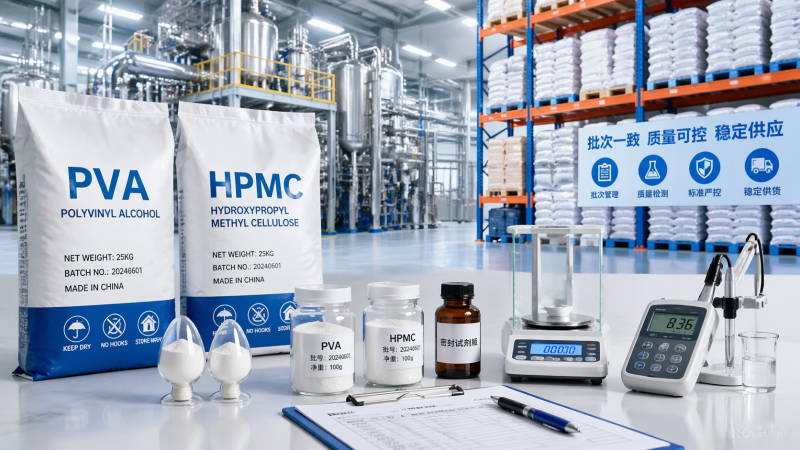
A low Polyvinyl Alcohol price may look attractive at first, but inconsistent quality, unstable supply, and hidden performance risks can raise total costs over time. For buyers, technical evaluators, and quality teams, choosing a reliable Polyvinyl Alcohol distributor or an experienced HYDROXYPROPYL METHYL CELLULOSE supplier matters far more than unit price alone. This article explains why smarter sourcing protects production efficiency, product stability, and long-term profitability.
When teams compare suppliers, the cheapest quote often seems like the fastest path to savings. In practice, however, low-cost Polyvinyl Alcohol can create a chain of expensive problems: unstable viscosity, batch inconsistency, poor film formation, rework, customer complaints, delayed production, and higher compliance pressure. For procurement managers, technical evaluators, quality control staff, and business decision-makers, the real question is not “What is the lowest PVA price?” but “What is the lowest total cost at acceptable risk?”
Why the Lowest Polyvinyl Alcohol Price Is Not Always the Lowest Cost
Polyvinyl Alcohol is a performance-sensitive material. Its value is tied not only to price per ton, but also to how reliably it performs in your formulation, process, and finished product. A cheaper grade may reduce upfront spending, yet increase hidden costs in several areas:
- Production inefficiency: Poor dissolution behavior or inconsistent particle characteristics can increase mixing time and labor.
- Batch variation: Changes in viscosity, hydrolysis degree, or impurity profile can affect final product stability.
- Higher reject rates: Unstable raw materials may lead to more off-spec batches and wasted inventory.
- Customer complaints: End-use performance issues can damage reputation and increase after-sales costs.
- Supply disruption: Low-price suppliers may not provide stable lead times, documentation, or long-term availability.
In other words, a lower invoice price can easily result in a higher total ownership cost.
What Technical Evaluators and Quality Teams Actually Need to Check
For technical assessment personnel and QC teams, price should come after performance fit. Before approving a supplier, focus on the specifications that directly affect process control and end-use results:
- Viscosity consistency: Even small variation may change formulation behavior, coating quality, adhesion, or rheology.
- Degree of hydrolysis: This influences solubility, film properties, water resistance, and compatibility.
- Moisture content: Excess moisture can affect storage stability and formulation accuracy.
- Ash and impurity levels: These can influence clarity, bonding performance, and downstream processing.
- Dissolution speed and handling characteristics: These matter for plant efficiency and reproducibility.
- Batch-to-batch stability: A single good sample is not enough; consistency across deliveries is what protects production.
If a supplier cannot provide reliable certificates, test methods, retained sample support, and clear technical communication, the low price should be treated as a warning sign rather than an advantage.
Hidden Costs That Procurement Teams Often Discover Too Late
Procurement professionals are often asked to lower material costs, but they also carry responsibility for supply continuity and supplier risk. Cheap PVA can become expensive when issues appear outside the quotation sheet.
Common hidden costs include:
- More qualification work: Additional testing, repeated trials, and internal approvals consume time and resources.
- Inventory risk: Uncertain quality often forces companies to hold extra safety stock.
- Delayed production: Material failure can stop or slow manufacturing lines.
- Freight inefficiency: Emergency replacement orders usually cost more than planned sourcing.
- Supplier switching costs: Revalidation, documentation changes, and customer notification all add overhead.
For this reason, experienced buyers evaluate suppliers using a total-cost framework that includes price, consistency, logistics, technical service, responsiveness, and long-term supply reliability.
How Enterprise Decision-Makers Should Evaluate Supplier Value
For business leaders, the supplier decision is ultimately about risk-adjusted return. A low-cost material source only creates value if it supports stable operations and predictable product quality. Otherwise, the business pays in reduced margins, operational disruptions, and weaker customer trust.
A practical supplier evaluation model should include:
- Cost stability over time rather than one-time low quotations
- Technical support capability for troubleshooting and formulation optimization
- Manufacturing strength including capacity, process control, and quality systems
- Documentation and compliance readiness for audits and market requirements
- Scalability to support future volume growth
Manufacturers with integrated production systems and broad application experience can often create more long-term value than traders competing only on price. In construction chemicals and related formulations, buyers frequently compare PVA decisions alongside broader additive sourcing, including materials such as Redispersible Polymer Powder, because compatibility and service support across product lines can reduce sourcing complexity and improve formulation outcomes.
What a Reliable Chemical Supplier Should Offer Beyond Price
In the chemicals industry, serious buyers usually prefer suppliers that combine manufacturing capability, technical transparency, and service responsiveness. This is especially important when sourcing materials used in construction solutions, coatings, drymix mortar systems, adhesives, and other performance-driven applications.
A dependable supplier should be able to provide:
- Stable production capacity to ensure continuous supply
- Controllable specifications based on application needs
- Technical consultation during product selection and validation
- Clear quality documentation including COA and test references
- Fast communication when quality or logistics issues arise
Jinan Ludong Chemical Co., Ltd., established in 2020, operates as a large-scale global manufacturing enterprise focused on the production, trading, and integrated services of cellulose ethers. Its main products include HPMC, RDP, and HPS, supported by modern production lines and integrated solutions. With annual production capacity reaching 45,000 tons and viscosities controllable from 400 to 200,000 CPS across HPMC series products, the company is positioned to support customers who value consistency, scale, and responsive supply rather than short-term price competition alone.
How to Compare Cheap and Reliable PVA Suppliers in a Practical Way
If your team is evaluating suppliers right now, use a structured comparison process instead of relying on a price table alone. A practical approach includes the following steps:
- Define application-critical parameters such as viscosity range, solubility, hydrolysis degree, and storage requirements.
- Request multi-batch samples rather than a single laboratory sample.
- Run plant-level trials under normal production conditions.
- Assess documentation quality and technical response speed.
- Review supply capacity and lead-time stability.
- Calculate total cost including testing, waste, downtime, and complaint risk.
This method helps separate truly competitive suppliers from those offering an attractive price but weak long-term reliability.
Final Takeaway: Buy for Performance Stability, Not Just for a Lower Quote
Cheap Polyvinyl Alcohol prices can cost more later because the visible saving is only one part of the sourcing equation. For technical evaluators, procurement teams, business leaders, and quality managers, the smarter strategy is to prioritize consistent performance, dependable supply, strong technical support, and measurable lifecycle value.
In today’s market, the best supplier is rarely the one with the lowest initial quote. It is the one that helps you reduce production risk, protect product quality, simplify decision-making, and support sustainable profitability. Whether you are sourcing PVA, cellulose ethers, or complementary materials such as Redispersible Polymer Powder, long-term value should always outweigh short-term price temptation.
Send Your Inquiry
We welcome your cooperation and we will develop with you.
