


Blog
What Impacts RDP Wholesale Cost Most
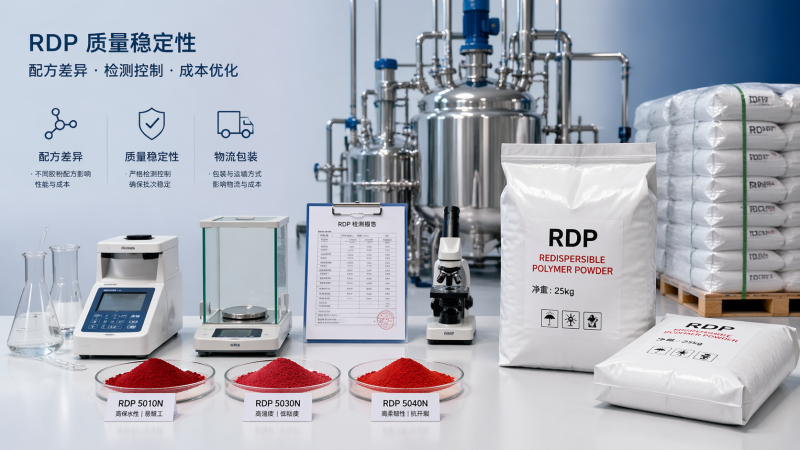
RDP wholesale cost is usually driven by a combination of polymer formulation, raw material volatility, manufacturing scale, powder performance requirements, packaging and logistics, and the overall reliability of the supplier. For procurement teams, the lowest quoted price is rarely the lowest total cost. In practice, a cheaper RDP can create higher risk through unstable bonding strength, poor workability, batch inconsistency, delayed delivery, or quality claims in the field. For technical evaluators, buyers, and decision-makers in construction chemicals, the right question is not only “Why is this RDP price higher?” but “What exactly am I paying for, and where is the risk if I choose the cheaper option?”
That is the key to understanding what impacts RDP wholesale cost most. Buyers comparing a Redispersible Polymer Powder exporter or assessing Redispersible Polymer Powder wholesale offers need to look beyond a basic per-ton figure and evaluate formulation quality, usable performance, compliance, supply stability, and service capability together.
What usually affects RDP wholesale cost more than buyers first expect?
The biggest cost drivers are often not visible in a simple quotation sheet. In most cases, RDP pricing is shaped by six core variables:
- Polymer base and formulation complexity
- Monomer and upstream raw material market conditions
- Production technology and process control
- Quality consistency and testing standards
- Order volume, packaging, and logistics structure
- Supplier reliability, support, and delivery risk
For technical and procurement teams, this means two RDP grades that look similar on paper may have very different real cost structures. A lower-priced material may contain differences in polymer ratio, anti-caking system, ash content, flow behavior, or redispersion performance that affect downstream application results.
How does polymer composition influence RDP price?
Polymer composition is one of the most important pricing factors. Different RDP products are designed for different end-use needs such as tile adhesive, skim coat, self-leveling mortar, EIFS, repair mortar, or putty systems. The type of polymer used and the formulation balance directly affect cost.
For example, products designed for stronger adhesion, better flexibility, improved impact resistance, water resistance, or demanding substrate compatibility generally cost more because their polymer architecture is more performance-oriented. The difference is not just chemical on paper; it determines whether a formulation performs reliably in real construction conditions.
Procurement teams should especially check whether a lower-cost offer has been achieved by reducing effective polymer content or by simplifying formulation design. If the material requires a higher dosage to meet the same performance target, the “cheap” price may disappear quickly at the application stage.
Why do raw material markets have such a strong effect on RDP wholesale pricing?
RDP is linked to upstream petrochemical and polymer supply chains, so fluctuations in raw materials can significantly affect export and wholesale prices. Changes in monomer costs, energy prices, environmental compliance costs, and regional supply-demand imbalances all influence final pricing.
This is why buyers may see noticeable price changes even when the product specification appears unchanged. In a volatile market, suppliers with stronger production integration, better planning, and larger-scale procurement may manage cost swings more effectively than smaller traders with weaker control over supply.
For enterprise decision-makers, this is important because long-term cost stability often matters more than chasing the lowest short-term quote. A supplier that can offer better forecasting, capacity confidence, and consistent delivery may reduce overall procurement risk.
Does manufacturing scale really lower cost?
Yes, but only when scale is supported by stable process control. Large-scale production can reduce unit costs through better raw material procurement, improved line utilization, lower energy cost per ton, and more efficient packaging and shipment planning. However, scale alone is not enough.
What matters most is whether the producer can combine output capacity with quality consistency. Jinan Ludong Chemical, for example, operates large-scale and modernized production lines in construction chemicals, which is important for customers who need not only volume supply but also repeatable quality and flexible delivery arrangements.
For buyers sourcing multiple additives together, supplier capability in related construction materials can also be valuable. A manufacturer experienced in RDP and cellulose ethers may better understand formulation interaction in dry-mix systems. In some procurement scenarios, this cross-category expertise supports more practical technical communication, especially where RDP performance is evaluated together with additives such as Hydroxypropyl Methyl Cellulose.
How much does quality consistency affect the real cost of RDP?
For quality control personnel and technical evaluators, this may be the most important factor of all. A wholesale price only has value if the product performs consistently from batch to batch. In dry-mix mortar applications, instability can lead to visible and costly issues such as:
- Unstable adhesion strength
- Changes in open time and workability
- Poor redispersion behavior
- Inconsistent anti-sag or slip resistance
- Surface defects or reduced crack resistance
- Customer complaints and rework costs
When a supplier invests in laboratory testing, process monitoring, controlled production conditions, and tighter specification management, the quoted price may be higher. But that higher price often reflects lower application risk. For many buyers, especially those serving branded mortar, tile adhesive, or export markets, consistency is not a premium feature; it is a core requirement.
What role do packaging, shipping, and destination market play?
Logistics can materially change RDP wholesale cost, especially in international business. RDP is a powder product, so freight efficiency, moisture protection, palletization, loading strategy, and container optimization all influence landed cost. Buyers should assess:
- Bag size and packaging durability
- Private label or OEM packaging requirements
- Export documentation and compliance needs
- Port distance and shipping route stability
- Order frequency versus full-container efficiency
A low ex-works quote can become less competitive after packaging upgrades, port charges, and shipment complexity are added. This is especially relevant for procurement managers comparing offers from different regions. The useful comparison is not just product price, but total delivered cost under the same commercial conditions.
Why should buyers evaluate supplier reliability, not just quoted price?
Because supply disruption is expensive. A supplier’s true value includes its ability to deliver on time, maintain specification stability, provide technical documents promptly, and respond when formulation or market conditions change. This is where procurement, quality, and management priorities often align.
Reliable suppliers reduce hidden costs by helping buyers avoid:
- Production delays caused by late shipments
- Trial failure due to off-spec batches
- Repeated qualification work for unstable materials
- Internal complaints between procurement and technical teams
- Customer-side field issues and compensation risk
For industrial buyers, a strong Redispersible Polymer Powder exporter should be able to provide not only product supply, but also specification clarity, sample support, traceability, and communication efficiency. That support can be more valuable than a small difference in unit price.
How can procurement teams compare RDP quotes more intelligently?
The best way is to move from price comparison to value comparison. A structured sourcing review should include the following:
- Check the application target
Make sure all suppliers are quoting for the same end-use requirement, not just a generic RDP grade. - Verify key technical indicators
Look at polymer type, ash content, moisture, minimum film formation behavior, redispersion performance, and recommended dosage range. - Calculate effective use cost
Compare performance at actual dosage, not just price per ton. - Review consistency controls
Ask about QA process, batch retention, lab testing, and complaint handling. - Assess delivery capability
Check lead time, capacity, peak-season reliability, and export support. - Consider formulation compatibility
If your systems also use cellulose ether, starch ether, or other dry-mix additives, evaluate technical matching. In some systems, compatibility with Hydroxypropyl Methyl Cellulose can affect final application performance and therefore overall cost efficiency.
What is the best overall judgment on RDP wholesale cost?
The biggest influences on RDP wholesale cost are usually polymer quality, upstream raw material conditions, manufacturing efficiency, quality consistency, and logistics. But from a buyer’s perspective, the most important insight is this: wholesale cost should be judged by total business impact, not invoice price alone.
If a supplier offers stable product quality, scalable production, better technical support, and dependable logistics, a slightly higher quote may actually produce lower total cost and lower operational risk. For technical assessment teams, that means fewer formulation surprises. For procurement, it means better cost predictability. For decision-makers, it means a safer and more sustainable supply relationship.
In short, the cheapest RDP is not always the most economical one. The smartest purchasing decision comes from understanding what drives the price, what performance is truly needed, and which supplier can support both quality and continuity over time.
Send Your Inquiry
We welcome your cooperation and we will develop with you.
