


How to Avoid Polyvinyl Alcohol Quality Issues in Production
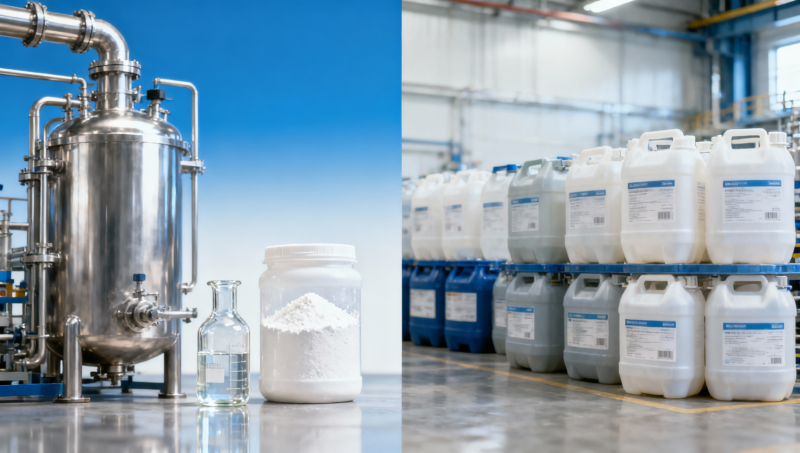
Polyvinyl Alcohol quality issues can directly affect the performance of Redispersible Polymer Powder, Lubricants, and HYDROXYPROPYL METHYL CELLULOSE formulations in chemical production. For technical evaluators, buyers, and quality managers, understanding how to prevent instability, contamination, and batch inconsistency is essential. This guide outlines practical strategies to improve production control, protect product reliability, and support safer, more consistent manufacturing outcomes.
In most production environments, polyvinyl alcohol quality problems do not start with one dramatic failure. They usually begin with small deviations: unstable viscosity, incomplete dissolution, excessive ash, residual acetate variation, moisture fluctuation, or poor storage control. For buyers, technical teams, and plant managers, the practical question is not only how to identify off-spec material, but how to build a process that prevents these issues before they affect formulation performance, customer complaints, or production efficiency.
The most effective approach is to control polyvinyl alcohol quality across the full chain: raw material qualification, supplier assessment, incoming inspection, process standardization, storage discipline, and batch traceability. When these controls are weak, downstream products can show reduced dispersion stability, inconsistent film formation, poor thickening behavior, and avoidable rework costs.
What Quality Issues in Polyvinyl Alcohol Matter Most in Production?
- Viscosity inconsistency: Affects mixing behavior, rheology control, coating properties, and formulation repeatability.
- Degree of hydrolysis variation: Influences solubility, film strength, adhesion, and compatibility with other formulation components.
- Moisture fluctuation: Can create weighing errors, clumping, reduced shelf stability, and handling problems.
- Impurities or contamination: May trigger discoloration, odor, reduced purity, or performance instability.
- Poor particle size consistency: Often causes slower dissolution, fisheyes, agglomeration, or uneven mixing.
- Batch-to-batch variation: Creates formulation adjustment pressure and complicates production planning.
For quality managers and technical evaluators, these issues matter because they are rarely isolated. A small deviation in one parameter can amplify problems elsewhere, especially in systems requiring predictable hydration, suspension stability, or film-forming performance.
Why Do Polyvinyl Alcohol Quality Problems Happen?
Most recurring quality issues can be traced to a limited number of root causes:
- Weak supplier qualification: Some buyers focus only on price and basic specifications, without confirming process capability, consistency history, or contamination control.
- Incomplete incoming inspection: If only appearance or a basic viscosity check is performed, hidden variation may go undetected.
- Uncontrolled storage conditions: Exposure to humidity, heat, or damaged packaging can change handling and performance.
- Non-standard dissolution procedure: Incorrect water temperature, feed rate, mixing speed, or hold time can create false quality failures.
- Cross-contamination in production or repacking: Shared equipment, poor line clearance, or weak housekeeping can introduce foreign material.
- Lack of batch traceability: When problems appear in final formulations, teams cannot quickly isolate whether the issue came from material, method, or environment.
From a business perspective, these failures increase more than lab deviations. They can lead to rejected lots, unstable customer supply, production downtime, complaint handling costs, and reputational damage in distributor networks.
How to Prevent Quality Issues Before Material Enters Production
The best prevention strategy starts before the material is used. Procurement, technical, and quality teams should work together on a practical qualification framework.
1. Define Critical Quality Attributes Clearly
Do not rely on generic product names alone. For each application, define acceptable limits for viscosity, degree of hydrolysis, volatile content, ash, pH, particle size behavior, and dissolution characteristics. If your downstream system is sensitive, set application-based limits rather than only catalog-level specifications.
2. Audit Suppliers Beyond the Datasheet
Ask how the supplier controls polymerization consistency, drying conditions, packaging integrity, and lot traceability. A qualified supplier should be able to explain process controls, not just provide a certificate.
3. Build a Risk-Based Incoming Inspection Plan
Not every batch requires the same testing depth, but high-impact materials should not be released on paperwork alone. A good incoming plan may include:
- Appearance and packaging integrity check
- Lot number and certificate verification
- Viscosity confirmation
- Moisture or volatile content test
- Dissolution performance observation
- Retention sample management
4. Use Trial Validation for New Suppliers or Changed Batches
If a new source is introduced, test it in a real formulation environment before full approval. Lab compliance alone does not guarantee process compatibility.
How to Control Polyvinyl Alcohol During Production
Even good material can perform poorly under weak process control. Production teams should standardize how polyvinyl alcohol is handled, dissolved, and incorporated.
Standardize Dissolution Conditions
Create a written procedure for water quality, charging sequence, temperature window, agitation speed, mixing time, and aging time. This is especially important in systems where viscosity development and hydration behavior affect final consistency.
Control Water Quality
In some applications, minerals, pH variation, or contamination in process water can change dissolution performance or create instability. If recurring issues appear, verify whether the problem is material quality or water variability.
Prevent Cross-Contamination
Use clean transfer tools, validated cleaning procedures, and line clearance checks. This is particularly important when multiple powdered additives are handled in the same area.
Train Operators on Early Warning Signs
Operators should know how to identify clumping, undissolved particles, abnormal foam, odor, color shift, or unusual viscosity build. Early intervention is cheaper than downstream correction.
In related formulation systems, compatibility between functional additives is equally important. For example, in detergent and specialty chemical applications, cellulose ether selection can significantly influence system stability and handling efficiency. Products such as Detergent-grade HPMC are often evaluated alongside other formulation materials to improve consistency, thickening behavior, and process control.
What Quality Managers Should Monitor to Reduce Batch-to-Batch Risk
For quality and safety management teams, prevention depends on trend visibility. Instead of checking each lot as an isolated case, monitor quality over time.
Track Trend Data
Record and review viscosity, moisture, dissolution time, complaint rate, and yield impact by batch and supplier. Small shifts often appear in trends before they trigger a serious production event.
Use Retained Samples and Comparative Testing
When a problem occurs, compare the suspect batch with a previous accepted lot under identical conditions. This helps separate raw material change from process variation.
Set Escalation Rules
Not every deviation should be handled the same way. Define when a batch requires conditional release, additional testing, supplier notification, or full rejection.
Connect Quality Control with Commercial Impact
For enterprise decision-makers, quality metrics should be linked to business outcomes such as production loss, return rate, reformulation cost, and customer retention. This supports better sourcing and investment decisions.
How Buyers and Decision-Makers Can Choose More Reliable Supply Partners
For procurement teams and management, avoiding polyvinyl alcohol quality issues is not only a laboratory challenge. It is a supply reliability decision.
When evaluating suppliers, focus on these questions:
- Can the supplier demonstrate stable large-scale production capability?
- Are specifications supported by real process control and lot traceability?
- Can the supplier support technical communication when formulation issues arise?
- Is there enough production flexibility to maintain consistency during demand changes?
- Are packaging, logistics, and storage recommendations clearly defined?
For distributors and industrial buyers, the most valuable suppliers are those that combine manufacturing consistency with practical technical support. In broader chemical additive sourcing, companies with integrated production systems and controlled capacity are often better positioned to deliver repeatable quality across multiple product categories, including cellulose ethers and other formulation-critical materials.
A Practical Checklist to Avoid Polyvinyl Alcohol Quality Issues
- Approve suppliers using both technical and commercial criteria
- Define application-specific quality limits, not only generic specs
- Inspect incoming lots with risk-based testing
- Validate new suppliers and changed batches in actual formulations
- Standardize dissolution and handling procedures
- Control storage temperature, humidity, and packaging integrity
- Train operators to recognize early abnormal signs
- Maintain retention samples and full batch traceability
- Trend quality data over time to catch weak signals early
- Work with suppliers that can support troubleshooting and consistency
Conclusion
To avoid polyvinyl alcohol quality issues in production, companies need more than a specification sheet. They need a prevention system. The highest-value controls are usually the most practical ones: choosing reliable suppliers, testing what truly affects application performance, standardizing process conditions, and building traceability that supports fast problem solving.
For technical evaluators, this reduces uncertainty. For buyers, it lowers sourcing risk. For quality managers, it improves consistency and compliance. For decision-makers, it protects output, customer satisfaction, and long-term supply stability. When these controls are in place, polyvinyl alcohol becomes a predictable production material instead of a recurring source of variability.
Send Your Inquiry
We welcome your cooperation and we will develop with you.
