


Polyvinyl Alcohol vs Other Binders: What Really Changes?
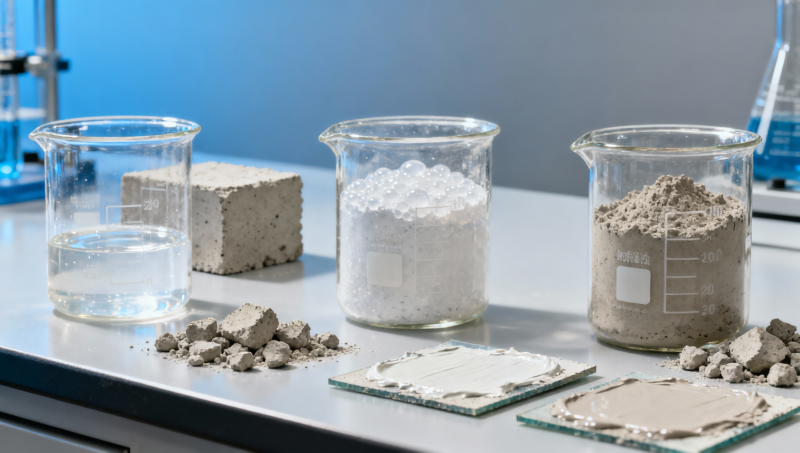
When comparing Polyvinyl Alcohol with other binder systems, the real difference is rarely a single “better or worse” answer. What changes most is the balance between adhesion, water resistance, flexibility, workability, open time, and production stability. For technical evaluators, buyers, QC teams, and business decision-makers, the practical question is this: which binder system delivers the target performance at the lowest acceptable risk and total cost? In construction and chemical formulations, that often means looking beyond Polyvinyl Alcohol alone and evaluating how Redispersible Polymer Powder, HYDROXYPROPYL METHYL CELLULOSE, and supporting additives work together in actual use conditions.
What Really Changes When You Replace Polyvinyl Alcohol with Another Binder?
In most real-world systems, changing the binder affects five performance areas first:
- Adhesion strength: especially to mineral substrates, porous surfaces, and interface layers.
- Workability and application feel: including spreadability, sag resistance, smoothing, and labor efficiency.
- Water retention and open time: critical in tile adhesives, mortars, skim coats, and cement-based products.
- Flexibility and crack resistance: important where movement, impact, or thermal cycling matter.
- Durability and storage stability: including moisture sensitivity, aging behavior, and batch consistency.
So, the real answer is that replacing PVA changes not only bonding, but also the entire formulation balance. This is why technical assessment should focus on system performance, not on one ingredient in isolation.
Why Technical Teams and Buyers Rarely Compare Binders on Price Alone
For procurement and management teams, the visible cost per kilogram is only one part of the decision. A binder with a lower purchase price can increase total cost if it causes weaker adhesion, rework, customer complaints, unstable production, or tighter processing windows.
That is why experienced buyers and technical evaluators usually compare binders using broader decision factors:
- Dosage efficiency: how much is required to reach target performance
- Compatibility: with cellulose ethers, fillers, cement, pigments, and additives
- Manufacturing stability: whether mixing, dispersion, and quality consistency are easy to control
- End-use reliability: whether the formulation performs consistently across climates and substrates
- Supply-chain risk: availability, lead time, quality reproducibility, and supplier support
In other words, what really changes is often the economics of the entire product line, not just the formula sheet.
Polyvinyl Alcohol vs Redispersible Polymer Powder: The Most Important Functional Difference
In many dry-mix construction applications, the comparison between PVA and Redispersible Polymer Powder (RDP) is one of the most relevant. Both can contribute to binding performance, but they do so differently.
Polyvinyl Alcohol is often valued for film-forming ability, adhesion contribution, and usefulness in certain water-based or specialty systems. However, depending on grade and formulation environment, it may show limitations in flexibility, water resistance, or compatibility with some high-performance mineral systems.
Redispersible Polymer Powder, by contrast, is often selected where improved flexibility, enhanced adhesion, impact resistance, and better deformation tolerance are needed in cement-based products. In tile adhesives, external wall putty, repair mortars, and self-leveling systems, RDP often changes the final performance more visibly than PVA alone.
For technical decision-makers, the most important distinction is this:
- If the target is basic bonding or film formation, PVA may be suitable in some systems.
- If the target is higher-performance adhesion plus flexibility and durability in mineral applications, RDP often offers clearer advantages.
This does not mean one fully replaces the other in every case. It means the selection should follow the application stress profile, service environment, and required durability level.
How HPMC Changes the Binder Comparison More Than Many Buyers Expect
One common mistake is evaluating the binder while underestimating the role of HYDROXYPROPYL METHYL CELLULOSE (HPMC). In construction formulations, HPMC strongly affects water retention, thickening, workability, anti-sag behavior, and open time. That means the same binder can perform very differently depending on the HPMC grade and dosage used beside it.
For example:
- A binder with good intrinsic adhesion may still underperform if water retention is poor.
- A system that bonds well in lab testing may become difficult to apply if viscosity build and workability are not properly adjusted.
- Application defects can come from rheology imbalance, not from insufficient binder strength alone.
This is where integrated formulation thinking matters. Manufacturers with broad cellulose ether capabilities can often help customers optimize the full system rather than recommending a single raw material in isolation. Jinan Ludong Chemical Co., Ltd., for instance, focuses on cellulose ethers and construction-related formulation support, with HPMC viscosities controllable from 400 to 200,000 CPS and annual production capacity reaching 45,000 tons. For buyers and distributors, that kind of supply and grade flexibility can reduce sourcing complexity and formulation adjustment cycles.
What QC and Safety Teams Should Watch When Binder Systems Change
For quality control and safety management personnel, the key issue is not simply whether the new binder meets a specification once. The real concern is whether the formulation remains stable across raw material variation, plant conditions, transportation, storage, and end-use environments.
When switching from PVA to another binder system, QC teams should pay close attention to:
- Batch-to-batch consistency in viscosity, film formation, and dispersion behavior
- Moisture sensitivity during storage and production handling
- Drying profile and curing response under different temperature and humidity conditions
- Bond strength retention after water exposure, freeze-thaw cycles, or heat aging
- Interaction with additives such as defoamers, retarders, starch ethers, and process aids
In some formulations, supportive additives can also noticeably improve processing behavior. For example, properly selected Lubricants may help optimize mixing smoothness, reduce friction during application, and improve overall handling, especially when the binder package changes the rheology profile.
For QC teams, this means qualification testing should include not only dry data points, but also real application simulation.
Which Questions Help Procurement and Management Make Better Decisions Faster?
If the audience includes procurement leaders, executives, distributors, and commercial decision-makers, the most useful article content is not a chemistry lecture. It is a decision framework. Before choosing PVA or another binder route, ask these questions:
- What exact performance problem are we solving?
Is the issue bond strength, flexibility, anti-cracking, water resistance, workability, or cost pressure? - Is the product positioned as economy, mid-range, or premium?
A high-performance binder may be unnecessary for a value-grade product, but essential for premium reliability. - What is the service environment?
Interior dry use, humid conditions, exterior exposure, or demanding substrate movement all change the right binder choice. - What is the acceptable processing window?
If production and application conditions vary widely, a more forgiving formulation may be worth more than a lower raw material price. - How reliable is supplier support?
A capable supplier can shorten development time, improve consistency, and reduce technical risk.
This framework helps teams avoid the common mistake of selecting a binder on narrow cost logic while overlooking failure costs and market reputation risk.
When Is Polyvinyl Alcohol Still the Right Choice—and When Is It Not?
PVA can still be a suitable option in applications where its film-forming contribution, adhesion profile, or cost-performance balance aligns with the product target. It may also remain useful where the formulation is already proven, the service environment is moderate, and the production process is built around its handling characteristics.
However, it may be less ideal when the application requires:
- higher flexibility under stress,
- stronger performance in cement-based systems,
- improved resistance to challenging moisture conditions,
- broader tolerance to substrate movement, or
- premium durability in demanding construction use.
In such cases, RDP-centered systems, optimized cellulose ether combinations, and carefully balanced additive packages may deliver better long-term value.
Final Takeaway: Compare Binder Systems by Performance Impact, Not by Category Name
What really changes when you move from Polyvinyl Alcohol to other binders is the full behavior of the formulation: adhesion, water management, workability, flexibility, durability, quality consistency, and total delivered cost. For technical evaluators, procurement teams, QC personnel, and business leaders, the smartest comparison is not “PVA vs others” in theory, but “which system best fits our target application, risk tolerance, and market positioning?”
In many construction formulations, the answer depends on how the binder works together with RDP, HPMC, starch ethers, and processing aids such as Lubricants. The best decisions come from system-level testing, not ingredient-level assumptions.
If your goal is better product performance, stable supply, and more confident formulation choices, evaluate the complete application package—because that is where the real change happens.
Send Your Inquiry
We welcome your cooperation and we will develop with you.
