


How to Compare Polyvinyl Alcohol Grades Before Ordering
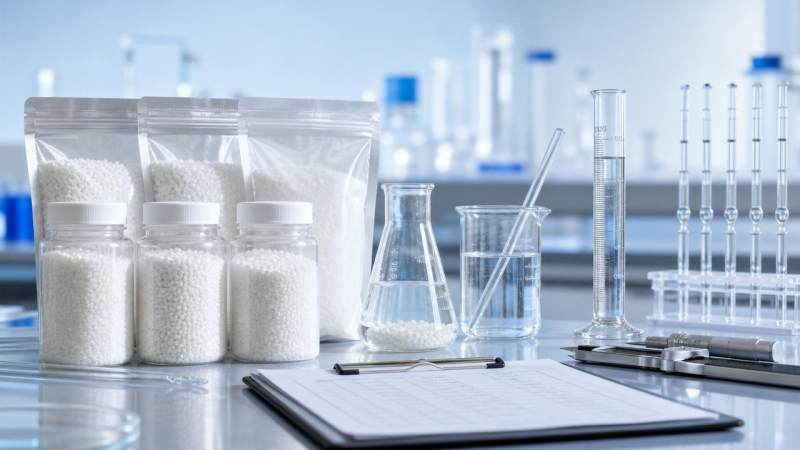
Choosing the right Polyvinyl Alcohol grade before purchasing can directly affect product performance, processing efficiency, and cost control. For procurement professionals, comparing specifications such as viscosity, degree of hydrolysis, solubility, and application compatibility is essential to avoid supply risks and quality issues. This guide will help you evaluate Polyvinyl Alcohol grades more accurately and make smarter sourcing decisions.
What should buyers compare first when selecting a Polyvinyl Alcohol grade?
In chemical procurement, grade comparison should start with functional fit rather than price alone. Polyvinyl Alcohol is used in adhesives, construction additives, paper processing, textile sizing, coatings, films, and emulsification systems, so the right grade depends on the intended formulation and production conditions.
A buyer who only checks a data sheet headline can easily miss critical variables. Two materials may look similar on paper but behave differently in dissolution speed, foam tendency, compatibility with fillers, or storage stability. This is why a structured comparison process matters before issuing a purchase order.
- Confirm the end use first, such as mortar additive, adhesive binder, film-forming agent, suspension stabilizer, or textile treatment aid.
- Match the application with key technical indicators, especially viscosity range, hydrolysis level, and dissolution characteristics.
- Check whether the supplier can ensure lot-to-lot consistency, technical support, and steady delivery under changing demand.
For procurement teams managing multiple raw materials, comparing grades through a fixed checklist reduces trial cost and shortens approval cycles with technical, quality, and production departments.
Which technical parameters matter most for grade comparison?
Before comparing suppliers, buyers should understand the core parameters that define Polyvinyl Alcohol performance. The table below summarizes the most practical indicators and how they influence sourcing decisions in real production environments.
Among these variables, viscosity and degree of hydrolysis usually determine whether a grade can move forward into lab testing. Particle size and moisture then influence handling efficiency and production reliability, especially when batches must run continuously.
Why viscosity should never be judged in isolation
Many buyers focus heavily on viscosity because it is easy to compare numerically. However, viscosity values are meaningful only when the test concentration and temperature are clearly defined. A quoted number without test conditions can lead to wrong assumptions and failed internal trials.
In practice, a higher viscosity grade may improve body and suspension stability, but it can also increase mixing time, energy use, and pump resistance. Buyers should ask whether the production line prefers faster dissolution or stronger thickening, because these goals do not always align.
How hydrolysis level changes application suitability
The degree of hydrolysis affects how easily the polymer dissolves in water and how the final film behaves. Partially hydrolyzed grades often dissolve more readily and can suit certain adhesive or emulsification uses, while more fully hydrolyzed grades may offer better film integrity and resistance in specific systems.
For sourcing teams, this means the best grade is not the most general one. It is the grade that gives predictable performance under the exact process conditions of the plant.
How to compare grades by application instead of by price only
A practical way to compare Polyvinyl Alcohol grades is to map each candidate to its intended application, process demand, and risk level. This approach avoids the common mistake of choosing the lowest quoted cost while ignoring reformulation time, scrap rate, or delayed launch.
The matrix below helps procurement teams connect application scenarios with the most relevant buying criteria.
This type of comparison often reveals that the lowest unit price is not the lowest operating cost. A grade that dissolves faster or performs more consistently can reduce labor time, filter blockage, and correction batches, creating a better total procurement result.
Construction-related formulations require compatibility checks
In construction chemistry, raw materials rarely work alone. Buyers often need to assess how Polyvinyl Alcohol behaves alongside cellulose ethers, redispersible polymer powder, starch ether, fillers, and mineral additives. Incompatible combinations can affect water retention, open time, anti-sag behavior, or powder flow.
This is where a supplier with broader formulation knowledge becomes useful. Jinan Ludong Chemical Co., Ltd. operates large-scale production and integrated services in cellulose ethers, with main products including HPMC, RDP, and HPS. That background supports more practical discussion about interaction between additives, not just isolated raw material quotations.
What risks do procurement teams often overlook before ordering?
Procurement risk in chemicals is rarely caused by one issue alone. It usually comes from a chain of small omissions: unclear specification limits, inconsistent sample standards, incomplete packaging review, and weak communication between purchasing and production teams.
- Approving a sample without locking the exact specification range for routine supply.
- Ignoring how local water quality, temperature, and mixing sequence affect dissolution behavior.
- Comparing offers without considering packaging size, palletization, lead time, and shipping stability.
- Failing to define what technical documents must accompany each batch, such as COA and routine quality data.
For international sourcing, continuity matters as much as technical fit. Even a suitable grade can create costly disruption if the supplier cannot maintain shipment schedules or communicate quickly when market conditions change.
Why sample approval should include process simulation
A lab beaker test is useful, but it should not be the only basis for approval. Buyers should encourage technical teams to simulate actual feeding order, heating conditions, stirring speed, and standing time. That is often where hidden issues appear, especially foam, fisheyes, incomplete hydration, or unstable viscosity build.
When possible, request sample support tied to a specific use case. This creates a clearer link between grade selection and real purchasing performance.
How should buyers evaluate suppliers beyond the product data sheet?
A strong supplier evaluation should combine technical capability, production stability, service response, and future scalability. In chemicals, a supplier is not just a seller of material. It is part of the customer’s quality control and delivery chain.
The checklist below can support a more balanced sourcing decision for Polyvinyl Alcohol and related additives.
Jinan Ludong Chemical Co., Ltd., established in 2020, combines manufacturing, trading, and integrated services. Its production system includes advanced lines and a blend of traditional process know-how with intelligent automation. For buyers, that means discussions can extend beyond a single item toward coordinated material planning and more flexible supply response.
When reviewing options, some buyers also prefer to examine a product page directly for faster alignment between procurement and technical teams, such as Polyvinyl Alcohol.
How do cost, replacement options, and total value compare?
Direct material price remains important, but it should be evaluated together with total operating cost. A cheaper grade may require longer mixing, tighter process control, or higher addition levels. In that case, the apparent saving can disappear quickly.
- Compare dosage efficiency instead of bag price only. Lower dosage can offset a higher unit cost.
- Estimate processing cost, including dissolution time, energy input, and production downtime risk.
- Review replacement options carefully, because not every polymer or binder can reproduce the same film, rheology, or adhesion profile.
For many procurement teams, the goal is not simply to reduce purchase price. It is to lower the full cost of compliant, stable, and repeatable production.
What compliance and documentation should be checked before final approval?
Chemical procurement usually involves internal quality review, logistics review, and in some cases import or downstream customer documentation checks. Requirements vary by country and application, so buyers should confirm the needed document list before final negotiation.
- Request a clear product specification sheet with test methods and acceptance ranges.
- Confirm routine batch documents, such as a certificate of analysis where applicable.
- Check packaging, storage recommendations, and transport conditions to reduce moisture or contamination risk.
- If the application has special regulatory constraints, align those requirements with the supplier before sample approval.
A disciplined documentation process prevents delays later, especially when procurement must coordinate with factories in different regions.
FAQ: common questions buyers ask before ordering
How can I compare two Polyvinyl Alcohol grades if both claim similar viscosity?
Check the test concentration, solution temperature, hydrolysis level, particle size, and dissolution method. Similar viscosity numbers do not guarantee similar processing behavior. Always compare the full specification basis and run application-focused trials.
Which applications require closer grade selection control?
Applications with tight film, adhesion, or rheology requirements need closer control. Examples include coatings, specialty adhesives, textile sizing, and construction systems where Polyvinyl Alcohol interacts with cellulose ethers or polymer powders.
What is the biggest procurement mistake when sourcing this material?
The most common mistake is choosing by unit price without confirming process fit and supply consistency. That can create hidden costs in reformulation, production delays, customer complaints, and repeated quality checks.
Should buyers request samples before placing a bulk order?
Yes. Samples should be tested under actual plant conditions, not only in simplified lab preparation. Buyers should also define whether the approved sample represents the same grade specification that will be supplied in routine production.
Why choose us for your sourcing discussion?
For procurement professionals, the best supplier relationship combines technical understanding with dependable execution. Jinan Ludong Chemical Co., Ltd. brings large-scale manufacturing capability, integrated service thinking, and practical experience in construction-related additives such as HPMC, RDP, and HPS. Its annual production capacity reaches 45,000 tons, and its viscosity control capability across HPMC product lines reflects a strong process management foundation.
This background is valuable when your team needs more than a quotation. You may need help confirming parameters, narrowing down product selection, checking compatibility with adjacent additives, discussing delivery timing, or arranging sample support for internal validation. Those are the issues that influence successful purchasing in real projects.
- Ask for parameter confirmation based on your target application and process conditions.
- Discuss grade selection options if you are balancing performance, budget, and formulation stability.
- Review expected delivery cycles, packaging preferences, and supply planning for regular or urgent orders.
- Request sample support and technical communication to reduce qualification risk before bulk purchasing.
- Clarify documentation and compliance expectations early to avoid delays during approval and shipment.
If your team is comparing grades, evaluating suppliers, or preparing a new sourcing plan, a focused discussion around application requirements, supply continuity, and cost efficiency can lead to faster and safer purchasing decisions.
Send Your Inquiry
We welcome your cooperation and we will develop with you.
