


Polyvinyl Alcohol Solubility Guide for Stable Production
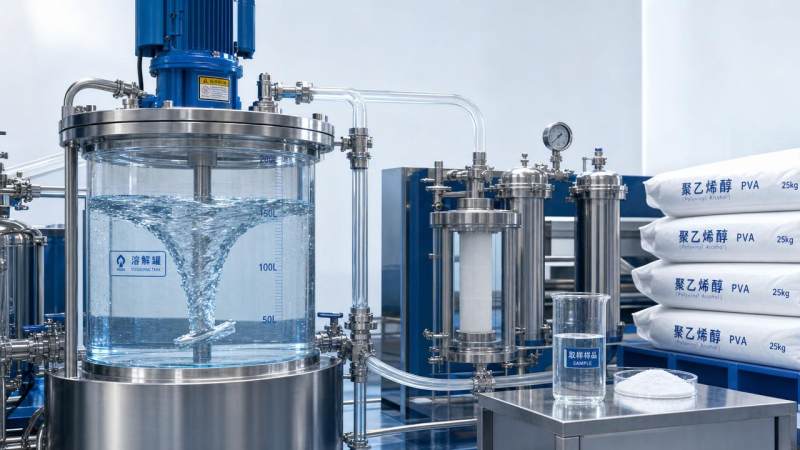
Polyvinyl Alcohol Solubility in Daily Production Settings
Polyvinyl Alcohol solubility affects mixing speed, batch uniformity, filtration load, and final product stability across many chemical processes.
When dissolution conditions are poorly controlled, lumps, gel particles, and uneven viscosity often appear. These issues can interrupt schedules and increase material waste.
In practical operations, stable results depend on matching water temperature, feeding method, agitation strength, and holding time to the selected grade.
This guide explains how Polyvinyl Alcohol behaves in different production scenarios and how to improve dissolution reliability with clear, usable steps.
For companies handling construction and specialty additives, process discipline matters. Jinan Ludong Chemical Co., Ltd. supports stable output through advanced production lines and integrated chemical solutions.
Why Solubility Demands Change from One Process Scenario to Another
Not every Polyvinyl Alcohol application requires the same dissolution route. Water-based adhesives, coatings, binders, and textile baths behave differently.
The key variables are hydrolysis degree, molecular weight, powder particle behavior, and the heating profile used during preparation.
A partially hydrolyzed grade usually dissolves more easily in water. A fully hydrolyzed grade often needs higher temperature and longer mixing time.
That difference changes tank occupancy, energy use, and the risk of undissolved residue. In continuous production, this directly affects throughput stability.
Water quality also matters. Hardness salts, pH shifts, and suspended impurities can alter hydration speed and reduce apparent Polyvinyl Alcohol solubility.
Core judgment points before preparing a batch
- Grade type and hydrolysis level
- Target solution concentration
- Cold water or hot water process route
- Available agitation and heating capacity
- Required filtration and storage conditions
Typical Production Scenarios That Test Polyvinyl Alcohol Solubility
Scenario 1: Fast mixing for water-based adhesive preparation
Adhesive systems often need quick batch turnover. Here, Polyvinyl Alcohol solubility must support short cycle time without visible fisheyes.
A common mistake is adding powder too quickly into hot water. The surface swells first, trapping dry material inside.
A better method starts with controlled dispersion in cool water, followed by gradual heating and enough hold time for full dissolution.
Scenario 2: High-clarity coating or film-forming systems
Film and coating applications demand smooth appearance and low particulate content. In this setting, Polyvinyl Alcohol solubility affects optical quality.
Undissolved gel specks can damage surface finish. Poor temperature control can also create local overcooking and viscosity drift.
Fine filtration after complete dissolution often helps. However, filtration cannot fully fix poor initial dispersion.
Scenario 3: Large-volume batch production with limited tank time
In large tanks, heat transfer and powder wetting become less uniform. Polyvinyl Alcohol solubility may appear acceptable at the top but incomplete below.
This is why impeller selection, circulation pattern, and powder feed location require attention. Dead zones often create hidden undissolved pockets.
Operators should verify not only clarity, but also bottom sampling results and solution consistency after standing.
Scenario 4: Compound systems with other rheology modifiers
Some formulations combine Polyvinyl Alcohol with starch ethers or cellulose ethers. Sequence of addition becomes critical in these blended systems.
For example, Hydroxypropyl Starch Ether may be used in certain water-based formulations to support thickening balance and workability.
If multiple powders hydrate at the same time, localized agglomeration may increase. Separate premixing or staged dissolution usually gives better process control.
How Scenario Demands Change the Best Dissolution Strategy
Practical Recommendations for Better Polyvinyl Alcohol Solubility
Use the right water and temperature window
Clean water improves reproducibility. If hardness is high, test whether scale ions affect clarity, viscosity, or hydration time.
Follow the grade-specific heating profile. Excessive heat may not improve Polyvinyl Alcohol solubility and can increase process instability.
Control powder feeding speed
Slow, even feeding reduces lump formation. Avoid dumping powder into one location with weak circulation.
If needed, create a vortex carefully, but do not introduce excessive air. Foam can interfere with level control and downstream transfer.
Match mixing strength to batch scale
Too little agitation leaves undissolved material. Too much agitation may entrain air and complicate quality checks.
The best balance often comes from moderate shear, full circulation, and enough residence time after heating.
Standardize hold time and filtration checks
Do not judge readiness only by appearance. Stable Polyvinyl Alcohol solubility should be confirmed by viscosity, residue, and clarity checks.
A simple filtration test can reveal hidden undissolved particles before the solution enters the main formulation step.
Common Misjudgments That Cause Solubility Problems
- Assuming every Polyvinyl Alcohol grade dissolves the same way
- Using high temperature too early during powder addition
- Ignoring water hardness and pH variation
- Checking only surface appearance, not full tank uniformity
- Combining multiple powders without a tested sequence
- Reducing hold time to increase throughput without validation
Another common oversight is storing prepared solution too long. Over time, contamination, evaporation, or viscosity shift may affect later use.
In blended systems, the second addition of Hydroxypropyl Starch Ether or similar modifiers should be validated with a small pilot batch first.
A Simple Action Plan for More Stable Production Results
Start by identifying the exact Polyvinyl Alcohol grade, target concentration, and available heating capacity for each batch route.
Then document water quality, powder feeding speed, agitation settings, and hold time. These four items explain most repeatability issues.
Run a small verification test whenever changing season, supplier batch, or mixing sequence. Small changes can alter Polyvinyl Alcohol solubility noticeably.
If recurring problems remain, compare cold dispersion behavior, heating ramp, and tank circulation before adjusting formulation content.
A stable process comes from consistent operating discipline. With the right method, Polyvinyl Alcohol solubility becomes predictable, efficient, and easier to control in long-term production.
Send Your Inquiry
We welcome your cooperation and we will develop with you.
