


Polyvinyl Alcohol for Emulsion Polymerization: What Matters Most
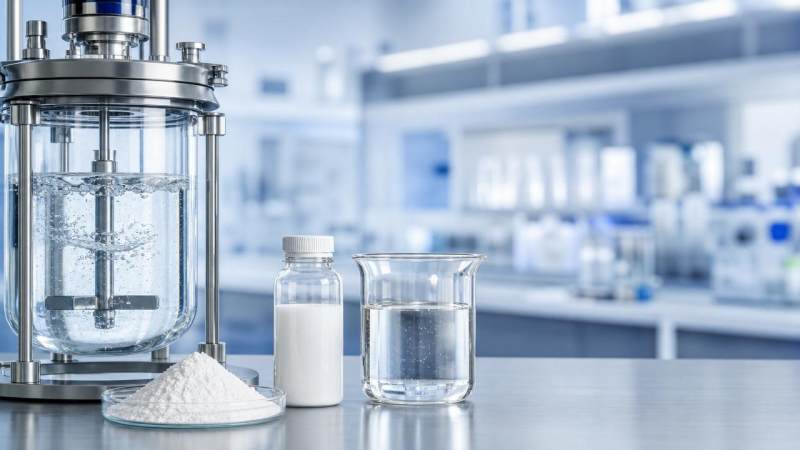
In emulsion polymerization, selecting the right Polyvinyl Alcohol can directly influence particle stability, viscosity control, film formation, and final product consistency. For technical evaluators, understanding hydrolysis degree, viscosity grade, and application compatibility is essential to balancing process efficiency with end-use performance. This article outlines the key factors that matter most when assessing Polyvinyl Alcohol for reliable and scalable formulation results.
Why does Polyvinyl Alcohol selection matter so much in emulsion polymerization?
For technical evaluation teams, Polyvinyl Alcohol is not just a protective colloid. It affects reactor behavior, particle size distribution, mechanical stability, coating performance, and storage consistency. A mismatch between polymerization recipe and PVA grade can create foam, coarse particles, unstable viscosity, or poor redispersibility.
In the chemicals industry, these issues rarely stay inside the reactor. They often appear later as filtration problems, batch inconsistency, drying inefficiency, or customer complaints about final application performance. That is why Polyvinyl Alcohol evaluation should be tied to both process conditions and downstream functional targets.
Jinan Ludong Chemical Co., Ltd. operates large-scale manufacturing and integrated supply services in cellulose ethers and construction-related chemical solutions. For technical buyers, this matters because supplier capability is not only about material supply. It also includes viscosity control, batch management, production continuity, and practical support when formulations must be adjusted under tight delivery schedules.
- Protective colloid efficiency determines particle stabilization during monomer conversion.
- Viscosity behavior affects pumping, heat transfer, agitation, and filtration in production.
- Residual solubility and film properties influence end-use adhesion, flexibility, and water sensitivity.
- Supply consistency determines whether scale-up results can match laboratory screening data.
Which Polyvinyl Alcohol properties should technical evaluators check first?
Before comparing prices or trial sample availability, evaluators should define the technical profile required by the emulsion system. The most important variables are hydrolysis degree, viscosity grade, molecular weight tendency, ash level, volatile content, and compatibility with surfactants, initiators, and monomer types.
The table below summarizes the key Polyvinyl Alcohol parameters and what they usually mean in practical emulsion polymerization assessment.
Among these factors, hydrolysis degree and viscosity grade usually drive the first screening decision. However, technical evaluators should avoid choosing a grade based on one parameter alone. A lower-viscosity Polyvinyl Alcohol may improve reactor handling, yet reduce colloidal protection in demanding systems. A highly hydrolyzed grade may strengthen water resistance, but it may also change dissolution behavior and process timing.
Hydrolysis degree: the first decision point
Partially hydrolyzed Polyvinyl Alcohol typically offers better surface activity and can support finer particle formation in some emulsion systems. Fully hydrolyzed grades often deliver stronger film strength and lower cold-water solubility, which may be preferred where water resistance matters more than initial dispersion ease.
Viscosity grade: not only a handling issue
Viscosity affects more than pumping. It influences shear response, droplet stabilization, solids build, and even drying performance. In scale-up work, a grade that performs well in a small lab reactor may create different circulation and heat removal behavior in industrial equipment.
How do application scenarios change the right Polyvinyl Alcohol choice?
Polyvinyl Alcohol should always be evaluated in the context of monomer type, solids content, drying method, and end-use requirement. Vinyl acetate-based systems, acrylic systems, and copolymer dispersions can respond differently to the same PVA grade.
The table below helps technical teams connect application scenarios with practical selection logic.
This scenario-based approach is especially useful when the emulsion will later become a dry powder ingredient. In such systems, technical teams often assess not only Polyvinyl Alcohol but also the broader additive package, including cellulose ethers and related construction chemicals. In some formulation pathways, the compatibility between protective colloids and Redispersible Polymer Powder becomes a practical development topic rather than a separate purchasing task.
When particle stability is the top concern
Focus on dispersion stability under shear, freeze-thaw sensitivity where relevant, and long-cycle storage behavior. Lab screening should include not only initial particle size, but also stability after thermal aging and mechanical circulation.
When film formation is the top concern
Measure dry film continuity, tensile tendency, adhesion retention, and water sensitivity. A technically stable emulsion is not automatically the best performer in the final application environment.
What are the most common evaluation mistakes?
Technical assessors often face compressed timelines, sample limitations, and pressure to control cost. Under these conditions, Polyvinyl Alcohol selection can become oversimplified. The result is often a hidden process cost that exceeds the apparent material saving.
- Choosing by viscosity value only, without considering hydrolysis degree and actual emulsion behavior.
- Using laboratory dissolution conditions that do not match plant water quality, heating profile, or batch size.
- Ignoring interaction with surfactants, defoamers, plasticizers, or drymix modifiers.
- Comparing supplier samples without checking batch consistency, lead time, and technical support depth.
- Treating powder drying performance as unrelated to the original Polyvinyl Alcohol choice.
A reliable assessment should include dissolution profile, solution clarity, reaction performance, final emulsion stability, and end-use testing. If spray drying or powder reconstitution is part of the chain, those tests should be included early instead of being left for late-stage troubleshooting.
How should technical buyers compare suppliers and grades?
A commercial comparison is useful only if it reflects technical risk. For Polyvinyl Alcohol, the best procurement decision is usually the one with the lowest total formulation cost, not simply the lowest unit price. Stable production, fewer off-spec batches, and smoother scale-up often justify a more disciplined evaluation model.
The following comparison framework can support supplier screening and internal approval discussions.
For international technical buyers, supplier depth matters as much as product data. Ludong Chemical’s large production capacity, integrated manufacturing approach, and viscosity-control capabilities in related cellulose ether products indicate a useful operational advantage: the company is structured to support industrial-scale consistency, not just sample dispatch. That is often valuable when formulations involve several interacting additives across construction and polymer systems.
A practical procurement checklist
- Define the polymerization target: monomer type, solids level, reactor conditions, and final application.
- Shortlist Polyvinyl Alcohol grades by hydrolysis degree and viscosity range.
- Run dissolution and solution stability checks using plant-relevant water and heating conditions.
- Evaluate emulsion particle size, viscosity drift, mechanical stability, and film performance.
- Request supply details such as lead time, packaging, documentation, and sample follow-up support.
Cost, alternatives, and formulation trade-offs
Polyvinyl Alcohol is often compared with other protective colloid or stabilization strategies, including surfactant-heavy systems or mixed stabilizer approaches. Alternatives may reduce one cost item, but they can shift expenses toward foam control, process instability, poorer drying behavior, or weaker final performance.
A technical cost review should include raw material price, dosing level, rejected batch risk, cleaning frequency, drying energy implications, and performance stability across seasonal production changes. In many cases, a slightly higher-grade Polyvinyl Alcohol reduces total cost by lowering process variability.
Where drymix construction applications are involved, formulation decisions may also consider how the emulsion-derived powder interacts with cellulose ethers, starch ethers, and mineral systems. This is one reason integrated suppliers can be useful during development. They can discuss cross-additive compatibility instead of treating each product line in isolation, including applications connected to Redispersible Polymer Powder.
FAQ: what do technical evaluators ask most often about Polyvinyl Alcohol?
How do I choose between partially hydrolyzed and fully hydrolyzed Polyvinyl Alcohol?
Start with the balance between colloidal stabilization, solubility behavior, and final water resistance. Partially hydrolyzed grades often support better surface activity and easier dissolution, while fully hydrolyzed grades may be preferred where stronger film integrity or lower water sensitivity is required. Final choice should come from plant-relevant trials, not theory alone.
What should be tested before approving a new Polyvinyl Alcohol supplier?
At minimum, test dissolution profile, solution viscosity, emulsion particle stability, reactor operability, storage stability, and end-use film performance. Also request specification ranges, recent batch data patterns, packaging details, and expected lead times. Approval should cover both technical fit and supply reliability.
Can a lower-cost grade create hidden processing losses?
Yes. Lower material cost can be offset by slower dissolution, higher foam, unstable particle size, filtration issues, or inconsistent drying results. These losses are especially significant in continuous or high-volume production, where even small viscosity or stability changes can affect output and rework rates.
Is Polyvinyl Alcohol selection different for scale-up versus laboratory work?
Definitely. Scale-up changes mixing intensity, heat transfer, residence time, and water quality influence. A grade that performs well in a beaker or pilot unit may behave differently in a full reactor. Technical evaluators should therefore validate dissolution and polymerization behavior under realistic plant conditions before final release.
Why choose us for technical discussion and sourcing support?
For technical evaluators, the right supplier should help reduce uncertainty, not add another variable. Jinan Ludong Chemical Co., Ltd. combines manufacturing, trading, and integrated services in construction-related chemical materials, supported by comprehensive production lines and annual capacity that reaches 45,000 tons. Its operating model is designed to support diverse formulation requirements and practical supply coordination.
If you are reviewing Polyvinyl Alcohol for emulsion polymerization or related powder applications, you can discuss concrete topics such as parameter confirmation, hydrolysis and viscosity selection logic, compatibility with cellulose ethers, sample support, delivery timing, packaging options, and formulation-oriented quotation communication.
A productive next step is to provide your target monomer system, solids content, process temperature range, and final application goal. Based on that, technical communication can focus on grade screening, trial priorities, and supply feasibility instead of generic product descriptions.
Send Your Inquiry
We welcome your cooperation and we will develop with you.
