


How to Match HPMC Viscosity to Your Formula
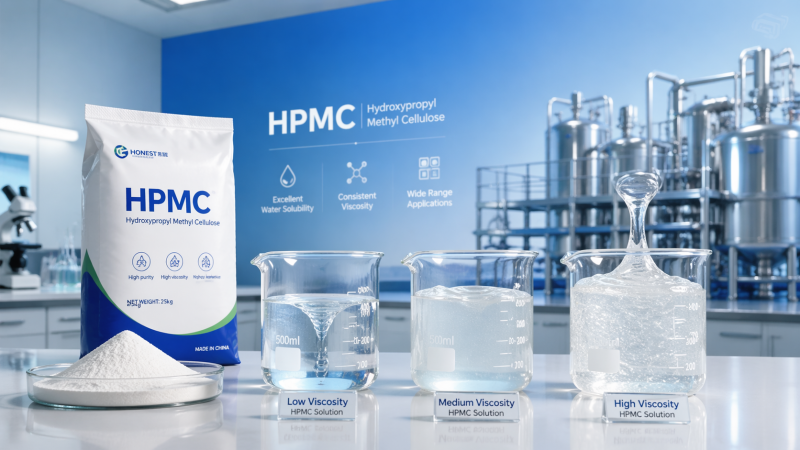
Choosing the right HPMC grade starts with understanding how viscosity affects workability, water retention, adhesion, and stability in your formula. As a trusted HYDROXYPROPYL METHYL CELLULOSE supplier, Ludong Chemical helps buyers, formulators, and quality teams evaluate HYDROXYPROPYL METHYL CELLULOSE high viscosity and HYDROXYPROPYL METHYL CELLULOSE water-soluble performance for construction and chemical applications with greater confidence.
For technical evaluators, viscosity selection is not just a lab parameter. It directly affects pumping, open time, sag resistance, film formation, and batch-to-batch consistency. For procurement teams and decision-makers, the right range also influences storage stability, complaint risk, and total formulation cost. A mismatch can lead to poor application feel, cracking, inadequate water retention, or unnecessarily high raw material loading.
Jinan Ludong Chemical Co., Ltd., established in 2020, operates large-scale cellulose ether production and integrated supply services for global construction and chemical markets. With annual capacity reaching 45,000 tons and HPMC viscosity controllable from 400 to 200,000 CPS, the company supports both standard and application-oriented grade selection. The following guide explains how to match HPMC viscosity to your formula with clearer technical logic and stronger purchasing confidence.
Understanding What HPMC Viscosity Really Changes in a Formula
In practical formulation work, HPMC viscosity is best understood as a control point for rheology and water management rather than a single quality label. As viscosity increases from low ranges such as 400–2,000 CPS to medium and high ranges like 40,000–200,000 CPS, the polymer typically delivers stronger thickening, better anti-sag behavior, and higher water retention. However, those gains may also increase mixing time, slow wet-out, and alter application feel.
In cement-based dry mix systems, viscosity affects at least 4 critical results: workability, open time, water retention, and construction finish. In chemical-grade systems such as detergents, coatings, or cleaning gels, formulators also monitor dissolution speed, clarity, and storage stability over 7, 14, or 28 days. That is why the same HPMC viscosity is not automatically suitable across different product categories.
Why one viscosity number does not tell the whole story
A grade labeled at 50,000 CPS may behave differently depending on substitution level, particle size, pH environment, mixing order, and temperature. Evaluation teams should therefore review not only Brookfield or equivalent viscosity range, but also water-soluble behavior, surface treatment, moisture level, and compatibility with cement, fillers, surfactants, or defoamers.
For buyers comparing suppliers, a useful rule is to check performance in 3 dimensions: laboratory viscosity specification, in-formula rheology, and finished-product stability. A product that meets a nominal viscosity target but causes 10%–15% formulation drift after scale-up may still be the wrong selection.
The table below shows how common viscosity ranges often align with performance priorities in construction and chemical applications.
The key conclusion is simple: higher viscosity is not universally better. The correct choice depends on the balance between application speed, water retention target, and the final user experience your product must deliver.
How to Match Viscosity to Construction and Chemical Application Scenarios
Different formulas require different viscosity windows because each application has its own failure mode. In tile adhesive, the main concerns are open time, non-slip performance, and smooth troweling. In wall putty or skim coat, powder fineness, spreadability, and anti-cracking performance matter more. In chemical formulations, fast hydration and stable thickening may be the first screening criteria.
Application-driven selection logic
A practical approach is to begin with the application method: hand trowel, spray, pump, brush, or pour. Pumpable or sprayable systems often need lower to medium viscosity to avoid excess resistance. Vertical construction systems may prefer higher viscosity to improve sag resistance. In many dry mix formulations, viscosity adjustment is evaluated together with dosage, often in the range of 0.2%–0.6% depending on the formula design.
For buyers managing multiple SKUs, it is often more efficient to shortlist 2 or 3 HPMC ranges for plant trials rather than screen a large number of similar grades. This reduces testing time and makes supplier comparison clearer. Ludong Chemical offers construction and chemical grades including type 75 and type 60, which can help align selection with actual use conditions instead of relying only on catalog labels.
Typical matching checklist
- Define the target application method and whether the material must resist sag on vertical surfaces.
- Confirm the expected open time, water retention level, and application temperature range, such as 5°C–35°C.
- Review the formula system, including cement, gypsum, fillers, pigments, surfactants, and any redispersible polymer powder.
- Test dissolution and mixing behavior at both laboratory scale and production scale.
- Compare 7-day and 28-day stability or application consistency before making a purchasing decision.
In some mortar systems, HPMC is paired with Redispersible Polymer Powder to improve adhesion, flexibility, and crack resistance. When these two materials are combined, viscosity should be chosen with the full binder system in mind, because excessive thickening can mask the intended workability benefit of the polymer powder.
The comparison below can help technical and sourcing teams narrow down viscosity by use scenario.
This scenario-based method reduces trial-and-error. Instead of asking which HPMC is strongest, ask which viscosity gives the most stable processing window for the exact formula and application method you need to support.
Key Testing Parameters for Technical Evaluation and Quality Control
A reliable viscosity decision should be based on controlled testing rather than visual judgment alone. Quality teams usually need to compare at least 5 checkpoints: viscosity consistency, moisture content, dissolution rate, water retention performance, and batch uniformity. If procurement focuses only on unit price per ton, hidden losses may appear later through rework, slower mixing, or customer complaints.
What should be checked before approval
Start by confirming the testing method used for the viscosity value and whether the same method is applied across all suppliers. A difference in concentration, spindle selection, or temperature can make direct comparison misleading. Then review dissolution behavior in your actual production process. For example, a grade that looks acceptable in a 1-liter lab beaker may hydrate differently in a 500 kg mixer.
Water retention and workability should be checked together. A formula can show good apparent thickness but still lose water too quickly under high-temperature or absorbent-substrate conditions. For construction applications, it is useful to assess application feel at 10 minutes, 30 minutes, and 60 minutes after mixing, not just immediately after preparation.
Recommended evaluation sequence
- Verify supplier specification range and test method.
- Conduct small-scale wet-out and dissolution screening.
- Run formula performance tests with at least 2 dosage levels.
- Observe processability under plant-like mixing time, usually 5–15 minutes.
- Review storage and application stability before final approval.
The table below provides a practical QC framework for comparing HPMC grades during sourcing or requalification.
For decision-makers, this evaluation structure supports a lower-risk approval process. It also creates a better basis for supplier discussions when a formula needs adjustment across climate conditions, substrates, or export markets.
Common Mistakes in HPMC Selection and How to Avoid Them
One of the most common mistakes is choosing the highest available viscosity in the belief that it will improve every performance indicator. In reality, excessive viscosity can reduce flow, increase labor difficulty, create poor leveling, and force unnecessary dosage reduction elsewhere in the formula. Another frequent problem is evaluating HPMC in isolation without considering cement type, filler grading, or additive package compatibility.
Typical sourcing and formulation errors
A second mistake is relying on one-time trial results. Raw materials may behave differently across humidity conditions, season changes, or production line variations. A more dependable approach is to complete at least 2–3 rounds of testing, including one plant-scale trial. This is especially important when replacing an incumbent supplier or changing from one viscosity class to another.
A third issue is ignoring dissolution behavior during mixing. If the powder disperses poorly, the formula can show lumps, false viscosity, or delayed hydration. This may be misread as a viscosity mismatch when the root cause is actually process incompatibility. In some systems, pairing HPMC with Redispersible Polymer Powder also requires process review so that thickening and polymer film formation remain balanced.
Risk control points for buyers and QC managers
- Do not compare suppliers only by nominal CPS number; review the test basis and application behavior.
- Avoid switching grades without checking dosage effect on open time, adhesion, and anti-sag performance.
- Confirm packaging, storage condition, and moisture protection for warehouses with long shipping cycles of 2–6 weeks.
- Build approval standards that include both incoming inspection and in-formula validation.
For international procurement, consistent supply capability matters as much as technical fit. Ludong Chemical integrates traditional manufacturing know-how with intelligent automated production and offers a broad controllable viscosity range from 400 to 200,000 CPS. That range gives formulation teams more room to optimize performance without constantly changing suppliers.
The most effective way to avoid mistakes is to treat HPMC selection as a combined technical and commercial decision. When formulation, purchasing, and quality teams review the same criteria, the chance of downstream correction costs becomes much lower.
How to Build a Practical Purchasing and Scale-Up Plan
Once a target viscosity range has been shortlisted, the next step is to create a scale-up plan that links lab approval to commercial supply. This usually involves 3 stages: sample screening, pilot verification, and volume procurement review. Each stage should have clear acceptance criteria so that technical suitability and supply reliability are judged together.
A simple B2B decision framework
Technical evaluators should define benchmark properties first: viscosity class, dosage window, mixing behavior, and final application response. Procurement can then compare MOQ, lead time, packaging format, and lot consistency. Enterprise decision-makers often also ask whether the supplier can support future product extensions, such as moving from standard mortar to premium adhesive or specialized chemical systems.
For many projects, a useful planning cycle is 2–4 weeks for technical confirmation and an additional 1–3 weeks for commercial alignment, depending on export logistics and sample availability. Safety and QC teams should also check storage handling, label traceability, and incoming inspection method before purchase orders are finalized.
Suggested approval criteria
- At least 1 approved benchmark formula with defined dosage and mixing sequence.
- Acceptance range for viscosity and key process observations documented by QC.
- Lead time and supply continuity reviewed for planned monthly demand.
- Clear communication channel for technical support during scale-up and troubleshooting.
Ludong Chemical’s integrated cellulose ether supply capabilities are relevant here because buyers often prefer a partner able to support multiple additive needs across construction systems. With large-scale production lines and flexible viscosity control, the company can help reduce qualification complexity when a customer needs to optimize both present formulas and future product lines.
Matching HPMC viscosity to your formula is ultimately about balancing performance, processability, and supply confidence. If your team is comparing construction or chemical grades, refining dosage, or validating a replacement supplier, a structured evaluation will save time and reduce reformulation risk. Contact Ludong Chemical to discuss your target application, request technical guidance, and get a more suitable HPMC selection plan for your market.
Send Your Inquiry
We welcome your cooperation and we will develop with you.
