


Water-Soluble HPMC: What Buyers Often Miss
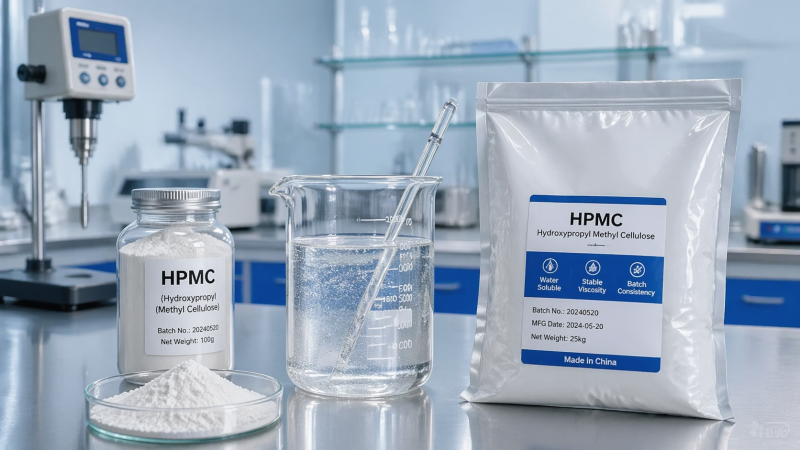
Choosing a HYDROXYPROPYL METHYL CELLULOSE supplier is not just about price or basic specs. For technical evaluators, buyers, and quality teams, water solubility, viscosity stability, batch consistency, and application fit can directly affect project performance and risk. This article explains what many buyers overlook when selecting HYDROXYPROPYL METHYL CELLULOSE water-soluble products, and why working with an experienced global manufacturer matters.
In construction chemicals and related formulations, HPMC is often treated as a standard additive. In reality, small differences in dissolution behavior, substitution consistency, moisture level, and viscosity retention can change open time, sag resistance, water retention, and even customer complaint rates. For B2B buyers, that means technical selection should go beyond a datasheet headline.
For procurement teams and decision-makers, supplier capability also matters at scale. Jinan Ludong Chemical Co., Ltd., established in 2020, focuses on cellulose ethers and integrated supply services, with annual capacity reaching 45,000 tons. Its HPMC portfolio covers type 75 and type 60 for construction and chemical grades, with controllable viscosities from 400 to 200,000 CPS, which gives buyers more room to match application needs instead of forcing one grade into every formula.
Why Water Solubility Is More Than a Basic Property
Many buyers assume water-soluble HPMC is interchangeable as long as it dissolves eventually. That is a costly simplification. The real question is how it hydrates, whether it forms lumps, how fast it disperses in cold or ambient water, and how stable the final solution remains over time. In dry-mix mortar, tile adhesive, putty, gypsum systems, and detergent applications, these differences can affect both process efficiency and end-use performance.
A purchasing decision based only on viscosity, for example 40,000 CPS or 100,000 CPS, may overlook hydration speed and gelation behavior. Two products with similar nominal viscosity can perform differently during mixing within the first 3 to 10 minutes. One may disperse smoothly, while another may agglomerate and require longer mixing energy, raising production time and creating inconsistency across batches.
For quality and safety teams, water solubility also connects to dust control, handling predictability, and operator reproducibility. If powder dispersibility is poor, operators may overmix, add extra water, or alter sequence steps. This can distort factory SOPs and increase rejection risk. In practical purchasing reviews, buyers should assess at least 4 dimensions: dissolution profile, viscosity build-up curve, residue level, and compatibility with the rest of the formula.
What technical teams should verify during sample evaluation
Before approval, it is useful to test not just final viscosity, but also dissolution performance under actual plant conditions. That means using the same water temperature, shear speed, addition sequence, and dosage range that production will use. A laboratory beaker test at 25°C may not reveal the same issues seen on a high-volume mixer running for 8 to 12 minutes in a humid workshop.
- Check dispersion time in water at 15°C to 30°C, especially if the product is used in varying climates.
- Measure viscosity stability after 30 minutes and again after 24 hours to detect drift or unexpected thickening loss.
- Observe undissolved particles, fish eyes, or gel lumps under standard agitation conditions.
- Confirm dosage efficiency, since a 0.1% to 0.3% formulation difference can materially affect total cost in large-volume production.
These checks are especially important when switching suppliers or replacing a known grade with a lower-cost option. A lower unit price can be offset by 5% to 10% more additive usage, slower line throughput, or more frequent rework.
The table below shows the practical difference between basic and deeper HPMC solubility evaluation criteria in chemical purchasing.
The key takeaway is simple: a water-soluble cellulose ether should be judged by process behavior, not by a single claim on paper. Technical evaluators who test under plant-like conditions reduce downstream risk far more effectively than those who compare only headline numbers.
What Buyers Often Miss in HPMC Specification Sheets
Specification sheets are necessary, but they do not always reveal application fit. Buyers often focus on viscosity grade, ash content, moisture, and pH, yet overlook how those values relate to the intended use. In tile adhesive, water retention and open time may be more critical than simply choosing a higher viscosity. In skim coat or putty, anti-sag and workability can be more important than maximizing thickening alone.
Another common blind spot is dosage response. Some HPMC grades deliver target performance at lower addition rates, while others require higher inclusion to reach similar consistency. For a plant consuming 200 to 500 tons of dry-mix product per month, even a dosage difference of 0.05% can influence annual raw material spending and process stability.
Batch consistency is equally important. A supplier may provide a good first sample but struggle to maintain substitution uniformity across repeated production. In large projects or export supply chains, this inconsistency may create color variation, water demand drift, or changes in setting behavior. That is why quality teams should compare at least 3 indicators over multiple lots: viscosity tolerance, moisture range, and application performance in the same benchmark formula.
Key specification questions that should be asked before ordering
- What viscosity test method is used, and at what concentration and temperature is the CPS measured?
- What is the normal lot-to-lot variation range, and how often is in-process quality sampling performed?
- Is the grade optimized for cement-based systems, gypsum-based systems, detergents, or other chemical applications?
- What is the recommended addition range: 0.2% to 0.6%, 0.3% to 0.8%, or another typical window?
These questions help procurement move from generic comparison to practical fit assessment. They also make supplier conversations more productive, especially when technical and commercial teams evaluate together instead of separately.
Application fit matters more than a broad “construction grade” label
Construction grade is too broad to support serious buying decisions. One grade may be suitable for wall putty but less ideal for self-leveling systems. Another may perform well in tile adhesive but not in gypsum plaster. Buyers sourcing additional binders and modifiers often review package compatibility as well, including products such as Polyvinyl Alcohol, when film formation, adhesion balance, or water-sensitive performance must be optimized in a broader formulation system.
This is why experienced manufacturers with broad cellulose ether portfolios are valuable. A supplier able to offer multiple viscosity bands from 400 to 200,000 CPS can usually support more precise grade matching, reducing the need for formulation compromise.
The following table summarizes common mismatch risks between specification-driven buying and application-driven buying.
In short, a useful HPMC specification review should connect test data to dosage, process conditions, and final application behavior. That approach is more reliable than comparing two datasheets line by line without context.
How to Evaluate Supplier Capability Beyond the Product Itself
Even when a water-soluble HPMC grade looks suitable, supplier capability can determine whether the project runs smoothly over the next 6 to 12 months. This includes production scale, consistency management, responsiveness to technical issues, and ability to support both trial and repeat purchase stages. A supplier with unstable output may pass initial testing but fail on long-term delivery reliability.
For B2B chemical purchasing, annual capacity is not just a marketing figure. It relates to scheduling flexibility, lot continuity, and the ability to serve multiple regions without excessive lead-time volatility. Jinan Ludong Chemical’s annual capacity of 45,000 tons indicates the ability to support larger-volume customers that require stable replenishment, especially when demand fluctuates seasonally or project pipelines expand quickly.
Production integration also matters. Manufacturers that combine traditional process know-how with intelligent automation are often better positioned to keep parameters stable and respond to varied customer requirements. That is particularly relevant when customers require different viscosity windows such as 10,000 CPS, 40,000 CPS, or 100,000 CPS for different mortar or chemical systems.
A practical supplier assessment checklist
- Review whether the supplier can provide multiple grades instead of pushing one universal product.
- Ask about standard lead times, sample turnaround, and repeat order delivery windows, such as 7 to 15 days or 2 to 4 weeks depending on volume.
- Check whether technical support can help with dosage adjustment, formula troubleshooting, and comparative testing.
- Confirm how nonconformance is handled, including lot traceability, investigation steps, and replacement procedures.
Decision-makers should also look at communication efficiency. Delayed response during trial stage is often a warning sign. In many projects, the most valuable supplier is not the one with the shortest quotation, but the one that can solve technical variation within 24 to 72 hours and maintain predictable shipping support.
Why integrated product portfolios can reduce formulation risk
A broader additives portfolio can simplify sourcing and compatibility work. Companies working with HPMC often also evaluate RDP, HPS, and supporting additives depending on the formula system. In some applications, buyers may also compare supportive materials such as Polyvinyl Alcohol to optimize bonding, film behavior, or water interaction in adjacent product lines. Integrated sourcing discussions can reduce trial cycles and shorten development time by 1 to 3 rounds.
When a manufacturer understands the interaction among cellulose ether and other construction chemical components, recommendations are usually more realistic. That reduces the risk of selecting an HPMC grade in isolation and then discovering downstream incompatibility during full production.
A Better Buying Framework for Technical, Quality, and Procurement Teams
A disciplined buying process helps reduce hidden cost. Instead of approving HPMC based on one sample and one price quote, buyers should combine technical trials, quality verification, and commercial evaluation. This is especially useful for importers, large dry-mix producers, and companies serving export markets where complaint costs can exceed any initial purchase savings.
One practical method is a 5-step evaluation process. Step 1 is application definition, including substrate, formula system, and target performance. Step 2 is sample screening across 2 to 3 candidate grades. Step 3 is pilot verification under plant conditions. Step 4 is multi-lot consistency review. Step 5 is commercial confirmation covering lead time, packaging, and after-sales response.
Quality teams should document acceptance windows clearly. For example, viscosity tolerance, moisture range, dissolution behavior, and appearance should all be listed in the incoming inspection checklist. Procurement should not finalize annual or quarterly supply agreements until those limits are aligned with actual process performance.
Recommended decision criteria by stakeholder
Different internal teams care about different risks. Aligning these priorities early can shorten approval time and avoid conflict between R&D, QA, and purchasing.
This framework helps organizations make more durable sourcing decisions. It also supports supplier conversations that focus on performance evidence rather than generic claims.
FAQ: common buyer questions
How many lots should be tested before approval?
For routine industrial buying, testing 2 to 3 lots is a practical minimum. One lot may show potential, but multiple lots are needed to judge consistency, especially if the material will be used in high-volume or export-oriented production.
Is higher viscosity always better?
No. Higher viscosity can improve certain properties, but it may also affect mixing, leveling, or dosage efficiency. The right range depends on the application, process conditions, and target performance balance.
What is the biggest mistake in HPMC purchasing?
The most common mistake is selecting by price and nominal CPS alone. That approach often misses hydration behavior, dosage efficiency, and lot stability, which are the factors that usually drive real production cost.
Water-soluble HPMC should be evaluated as a performance material, not just a commodity. Buyers who assess dissolution behavior, application fit, viscosity stability, and supplier capability are better positioned to control quality risk, protect production efficiency, and reduce total procurement cost over time.
For teams sourcing cellulose ethers for construction and chemical applications, working with a manufacturer that offers broad viscosity coverage, scalable capacity, and practical technical support can make a measurable difference in trial speed and long-term supply reliability. If you are reviewing HPMC, RDP, or HPS options for your formulation, now is a good time to compare beyond the datasheet.
Contact us to discuss your target application, request a more suitable grade recommendation, or get a customized supply proposal based on your viscosity range, production process, and purchasing volume.
Send Your Inquiry
We welcome your cooperation and we will develop with you.
