


Blog
How to Screen an HPMC Supplier Fast
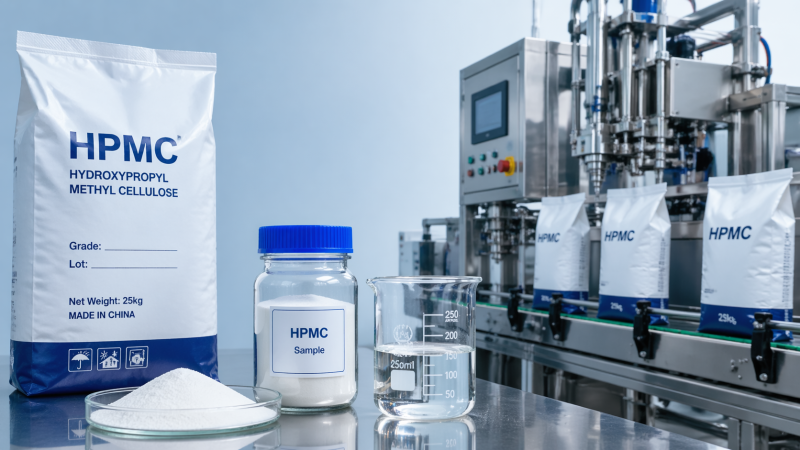
Choosing the right HYDROXYPROPYL METHYL CELLULOSE supplier quickly requires more than checking price lists. For technical evaluators, buyers, and quality teams, the real focus is stable quality, supply capacity, viscosity control, and service support. This guide explains how to screen an HPMC partner efficiently while comparing key indicators such as HYDROXYPROPYL METHYL CELLULOSE high viscosity performance, HYDROXYPROPYL METHYL CELLULOSE water-soluble properties, and related sourcing factors like Redispersible Polymer Powder exporter capability and Polyvinyl Alcohol price.
In practical sourcing, the fastest screening method is not to ask 20 random questions, but to verify 5 core areas in sequence: product fit, quality consistency, production capacity, supply reliability, and technical response. This is especially important in drymix mortar, tile adhesive, skim coat, gypsum systems, detergents, and chemical formulations where viscosity drift, delayed dissolution, or unstable substitution levels can create direct production losses.
For procurement teams and decision-makers, a qualified HPMC supplier should be able to discuss not only price per ton, but also viscosity range, ash control, moisture limits, batch-to-batch variation, lead time, packaging options, and cross-product support. A manufacturer with integrated supply capability in cellulose ethers and related additives usually reduces coordination risk and shortens evaluation from several weeks to a few days.
Define Your Screening Criteria Before Requesting Quotations
Many buyers lose time because they start with quotation comparison before confirming technical requirements. A faster approach is to create a shortlist based on application fit. In construction chemicals, HPMC grades can differ significantly in viscosity from 400 CPS to 200,000 CPS, and this range directly affects water retention, workability, open time, sag resistance, and thickening behavior.
Technical evaluators should first define 4 specification layers: target viscosity, dissolution behavior, application system, and acceptable batch tolerance. For example, tile adhesive formulas may prioritize water retention and anti-slip performance, while self-leveling compounds and gypsum products may require more precise flow balance. If the supplier cannot map product grades to these application targets within 24 to 48 hours, screening should stop early.
A useful shortcut is to ask for the supplier’s standard grade matrix instead of a general catalog. This reveals whether the supplier has practical segmentation by use case, such as construction grade, chemical grade, type 60, type 75, or customized viscosity bands. It also shows whether they understand downstream formulation logic rather than simply reselling generic material.
The 5 questions that save the most time
- What viscosity range can you supply consistently, and what is the normal batch tolerance?
- Which grades are recommended for tile adhesive, wall putty, gypsum plaster, EIFS, or detergent applications?
- What is the typical lead time for one container, and how does it change for repeat orders?
- Can you provide COA, TDS, and retained sample support for each batch?
- Do you also supply RDP, HPS, or adjacent additives to simplify sourcing?
For buyers seeking a practical product reference, a supplier that clearly presents Hydroxypropyl Methyl Cellulose by use scenario, viscosity band, and delivery conditions can usually be evaluated faster than one that only shares a price sheet.
Quick pre-qualification checklist
The table below helps teams filter out unsuitable suppliers in the first round. It focuses on measurable criteria rather than broad claims. In most B2B procurement projects, this type of pre-check can reduce the candidate list from 8 to 10 suppliers down to 2 or 3 qualified options.
The key takeaway is simple: if a supplier cannot answer these foundational questions quickly and precisely, later negotiations on cost, shipping, or annual contracts are likely to become slower and riskier.
Check Quality Consistency, Not Just Sample Performance
A single lab sample may look acceptable, but industrial procurement depends on repeated consistency across multiple lots. In HPMC sourcing, quality screening should include viscosity stability, moisture behavior, particle fineness, pH adaptability, and water-soluble performance. For quality and safety managers, the main issue is not whether one bag performs well, but whether 20 tons or 200 tons behave similarly across production cycles.
Ask suppliers how they control viscosity deviation and whether they can explain testing conditions. A viscosity claim has limited value if the testing method, concentration, and temperature are unclear. In practical evaluation, request 2 to 3 batch samples where possible. This allows your lab to compare hydration speed, lump tendency, dispersion, and final rheology under the same process conditions.
Water-soluble behavior also deserves close attention. In drymix systems, poor dispersion can produce fisheyes, inconsistent thickening, or longer mixing times. In detergent or chemical use, rapid and uniform solubility may matter even more. A supplier should be able to explain whether the product is surface-treated, how it behaves in cold water, and what mixing conditions are recommended.
Lab checks that reveal hidden risk
- Run the same sample at least 2 times under controlled temperature conditions.
- Compare thickening curve and final viscosity, not only initial appearance.
- Measure dissolution time and observe undissolved particles after 10 to 20 minutes.
- Evaluate compatibility with RDP, starch ether, or other additives in the actual formula.
- Keep a retained sample for cross-checking against future shipments.
For safety-focused teams, packaging integrity and storage instructions matter as well. HPMC typically requires dry storage, moisture protection, and stable handling conditions. Suppliers who provide clear packaging specifications, lot identification, and shelf-life guidance make internal quality control easier.
Key quality indicators to compare
The table below summarizes the indicators that usually have the strongest impact during supplier qualification. These are not theoretical values; they affect production stability, complaint risk, and rework cost at the plant level.
If a supplier can document these points clearly and support multi-batch verification, qualification becomes faster because the technical, purchasing, and QC teams can review the same evidence without repeating the process.
Evaluate Manufacturing Strength and Delivery Reliability
Once quality fit is confirmed, the next filter is manufacturing and supply capability. Buyers should verify whether the supplier is a real manufacturer, a trader, or a hybrid operator with integrated sourcing. This distinction affects lead time, production flexibility, complaint handling speed, and the ability to support annual contracts or sudden volume increases.
In the cellulose ether sector, production scale matters because it influences order continuity and grade stability. A company with annual capacity of 45,000 tons and a structured product portfolio is typically better positioned to support both standard and customized requirements than a supplier that only consolidates spot-market material. Capacity alone is not enough, however; buyers should also ask about scheduling, peak-season pressure, and MOQ by grade.
Jinan Ludong Chemical Co., Ltd., established in 2020, operates as a large-scale global manufacturing enterprise focused on cellulose ethers, production, trading, and integrated services. Its portfolio includes HPMC, RDP, and HPS, with viscosities controllable from 400 to 200,000 CPS and annual production capacity reaching 45,000 tons. For buyers who want to simplify sourcing across multiple construction additives, this kind of integrated structure can reduce supplier fragmentation.
How to confirm real supply strength
Do not rely only on brochures. Ask operational questions tied to delivery execution. Examples include monthly output planning, normal production cycle, export packaging format, and contingency response if one line is under maintenance. A competent supplier should answer these in concrete terms, such as 7 to 15 days for standard orders or adjusted timing for customized grades and container consolidation.
It is also useful to assess whether the supplier supports related products like RDP and HPS. This matters because HPMC sourcing rarely happens in isolation for construction chemical producers. If one supplier can support several key additives, your team spends less time aligning shipments, testing compatibility, and checking fluctuating side costs such as Polyvinyl Alcohol price exposure in the broader procurement plan.
Delivery factors that influence supplier choice
- Standard lead time for sample, trial order, and repeat bulk order should be clearly separated.
- Packaging options such as 25 kg bags, palletization, and labeling format should be confirmed before approval.
- Export documentation, batch traceability, and claim response flow should be available in writing.
- Seasonal planning matters; demand peaks can extend lead times by 1 to 3 weeks if capacity is tight.
A supplier that combines traditional production discipline with intelligent automated manufacturing can often respond more flexibly to varying customer needs. That flexibility is valuable when buyers need to switch between construction grades, adjust shipment frequency, or secure repeated viscosity control over long-term supply.
Use a Fast Decision Framework for Procurement, Technical, and QC Teams
The fastest supplier screening happens when procurement, technical, and quality teams evaluate the same shortlist with the same scoring logic. Without a shared framework, one team may focus on unit price while another focuses on viscosity or lab response, causing delays of 1 to 2 weeks. A simple weighted model helps align decisions and makes supplier approval easier for management.
A practical method is to use 4 scoring blocks: technical fit, quality assurance, delivery capability, and commercial support. Technical fit often deserves the highest weight because a cheaper HPMC grade can become more expensive if it increases dosage, prolongs mixing, or causes rework in finished products. This is especially relevant in high-volume mortar plants where small formulation instability can multiply quickly.
Commercial support should include response time, sample turnaround, problem-solving ability, and documentation quality. In B2B chemical purchasing, these factors can be as important as the quoted price. A supplier that responds in 12 hours with complete technical data may save more internal labor than one that offers a slightly lower ton price but requires repeated follow-up.
Recommended supplier scoring table
The following framework can be used for a rapid first-round decision. It works well for technical evaluators, purchasing managers, and business leaders who need a clear go or no-go basis before trial orders.
This structure keeps supplier selection objective. It also helps prevent a common mistake: choosing based only on initial sample approval or headline price. When several departments share one scorecard, screening becomes faster and more defensible.
Common mistakes that slow down screening
Mistake 1: Comparing unlike grades
A 60-grade and a 75-grade product may not behave identically in the same formula even if the price gap looks attractive. Always compare equivalent use conditions, not label similarity.
Mistake 2: Ignoring delivery risk
A low quote loses value quickly if shipment delays stop production. For many factories, one missed delivery can cost more than a moderate price difference per ton.
Mistake 3: Separating technical and commercial review
Technical and sourcing decisions should run in parallel. If commercial review starts only after lab approval, the process often doubles in time.
FAQ and Final Buying Advice
How fast can an HPMC supplier usually be screened?
For standard construction applications, an initial screen can often be completed in 3 to 5 business days if the supplier provides TDS, COA, sample support, viscosity clarification, and lead-time confirmation quickly. Full qualification with plant trials may take 2 to 4 weeks depending on formula complexity and internal approval steps.
Which indicators matter most for high-viscosity grades?
For high-viscosity material, focus on rheology stability, dissolution behavior, water retention, and mixing response under real process conditions. High nominal viscosity alone does not guarantee good field performance. If possible, compare at least 2 batches and observe consistency after storage and re-mixing.
Should buyers source HPMC together with RDP or HPS?
In many construction chemical businesses, yes. Consolidating HPMC, RDP, and HPS with one capable supplier can reduce communication steps, improve formulation coordination, and lower freight management complexity. It also gives procurement teams better visibility into linked input costs and shipment planning.
What is the best final check before placing a bulk order?
Before the first bulk order, confirm one trial shipment, written specifications, packaging details, lot traceability, and complaint response procedure. If needed, review a second reference item such as Hydroxypropyl Methyl Cellulose within the supplier’s broader product system to verify whether long-term cooperation can cover future grades or adjacent additives.
Fast screening is ultimately about disciplined verification. The right supplier should demonstrate stable quality, broad viscosity control, reliable capacity, and responsive service in a way that both technical teams and purchasing managers can validate. If you are evaluating a new HPMC source for construction or chemical applications, now is the right time to request samples, compare specifications, and discuss a tailored supply plan. Contact us to get product details, application guidance, or a customized sourcing solution for your next project.
Send Your Inquiry
We welcome your cooperation and we will develop with you.
