


How to Test MHEC Viscosity Before Production
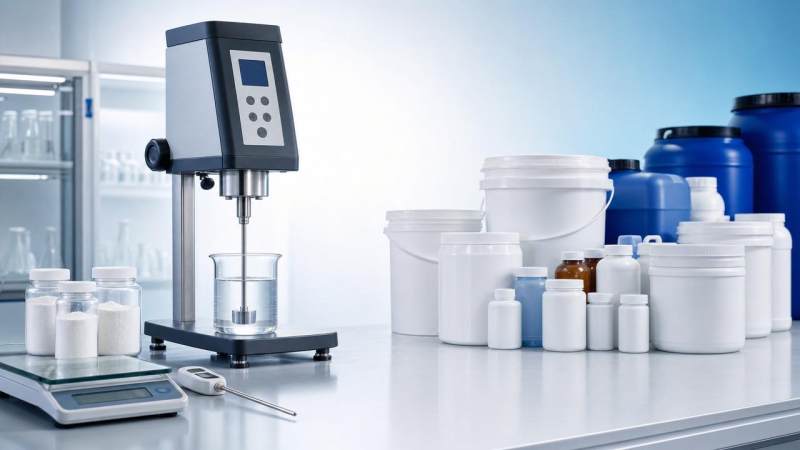
How to Test MHEC Viscosity Before Production
Before scaling up any construction chemical formulation, accurately testing Methyl Hydroxyethyl Cellulose (MHEC) viscosity is essential for quality control, batch stability, and safe production planning.
For QC teams and safety managers, viscosity data helps predict workability, water retention, thickening performance, and processing risks before raw materials enter full-scale manufacturing.
This guide explains why pre-production viscosity testing matters, what factors influence results, and how standardized procedures reduce formulation errors, production delays, and compliance concerns.
Why should Methyl Hydroxyethyl Cellulose (MHEC) viscosity be tested before production?
Methyl Hydroxyethyl Cellulose (MHEC) is a cellulose ether widely used in dry-mix mortar, tile adhesive, skim coat, gypsum plaster, and water-based construction systems.
Its viscosity directly affects water retention, sag resistance, open time, leveling behavior, and final application feel.
A small viscosity deviation may change pumping behavior, mixing efficiency, or on-site workability.
Pre-production testing confirms whether the received Methyl Hydroxyethyl Cellulose (MHEC) batch matches the approved formulation standard.
It also prevents costly corrections after large-volume blending has already started.
In construction chemicals, viscosity is not only a laboratory number.
It is a practical indicator of hydration speed, thickening curve, stability, and compatibility with cement, fillers, polymers, and additives.
When Methyl Hydroxyethyl Cellulose (MHEC) is tested consistently, batch decisions become faster, clearer, and easier to document.
What viscosity standard should be used for Methyl Hydroxyethyl Cellulose (MHEC)?
The first step is selecting a test standard that matches internal specifications and supplier data.
Common methods use a Brookfield rotational viscometer, fixed solution concentration, controlled temperature, and defined spindle speed.
For Methyl Hydroxyethyl Cellulose (MHEC), many laboratories test aqueous solutions at 1%, 2%, or another agreed concentration.
The concentration must never be assumed.
A 2% solution can show much higher viscosity than a 1% solution, even with the same material grade.
Temperature control is equally important.
Methyl Hydroxyethyl Cellulose (MHEC) viscosity can shift when solution temperature changes during hydration or measurement.
A practical QC specification should clearly define these details:
- Sample mass and water mass
- Target solution concentration
- Water temperature before mixing
- Mixing speed and mixing time
- Hydration or standing time
- Measurement temperature
- Viscometer model, spindle, and RPM
- Acceptance range and retest rule
Without these parameters, viscosity values from different laboratories may not be comparable.
A supplier certificate should be checked against the same method, not only against the same nominal viscosity grade.
How do you prepare a reliable Methyl Hydroxyethyl Cellulose (MHEC) solution?
Solution preparation is the most common source of inaccurate Methyl Hydroxyethyl Cellulose (MHEC) viscosity results.
Poor dispersion, trapped air, incomplete hydration, or uneven powder feeding can create false readings.
Begin with clean glassware, deionized water, a calibrated balance, and a mixer suitable for polymer solutions.
Add powder slowly into the vortex, avoiding lumps and dry clusters.
If the powder is added too quickly, the outer layer hydrates first and blocks water penetration.
This creates fish-eyes, which can reduce apparent viscosity or cause unstable readings.
A typical preparation sequence includes:
- Measure water at the required temperature.
- Start stirring at a controlled speed.
- Add Methyl Hydroxyethyl Cellulose (MHEC) gradually.
- Continue mixing until the powder disperses fully.
- Allow complete hydration under defined conditions.
- Remove bubbles before viscosity measurement.
Hydration time depends on grade, particle treatment, substitution structure, and water temperature.
For high-viscosity Methyl Hydroxyethyl Cellulose (MHEC), longer standing time may be required for stable results.
The solution should appear uniform, smooth, and free from visible undissolved particles before testing.
Which factors can distort Methyl Hydroxyethyl Cellulose (MHEC) viscosity results?
Several variables can distort Methyl Hydroxyethyl Cellulose (MHEC) viscosity before production approval.
The most influential factors are concentration error, temperature drift, incomplete hydration, and instrument mismatch.
Even a small weighing mistake can produce a large viscosity difference, especially in high-viscosity grades.
Temperature should be monitored throughout preparation and measurement.
Warm water may improve dispersion, but it can also change the hydration profile.
Cold conditions may delay full thickening and lead to premature low readings.
Instrument settings also matter.
Changing spindle number, RPM, or measurement time can change the reported viscosity.
This is because Methyl Hydroxyethyl Cellulose (MHEC) solutions may show shear-thinning behavior.
Under higher shear, apparent viscosity may decrease, depending on solution structure.
For critical production batches, duplicate testing is recommended.
If the duplicate values differ significantly, review preparation steps before rejecting the material.
How should viscosity data be interpreted for production decisions?
Methyl Hydroxyethyl Cellulose (MHEC) viscosity should be interpreted together with formulation purpose, not as an isolated number.
For tile adhesive, higher viscosity may improve anti-sag performance and water retention.
However, excessive viscosity may reduce spreadability or make mixing more difficult.
For skim coat or putty, balanced viscosity supports smooth application, good leveling, and stable storage behavior.
For gypsum-based systems, hydration speed and compatibility with setting time should also be checked.
A batch may pass viscosity specification but still require application testing.
Therefore, pre-production approval should combine viscosity, moisture, ash content, particle appearance, and trial-mix performance.
Where formulation systems include Hydroxypropyl Methyl Cellulose, comparison testing can help evaluate thickening style, water retention, and compatibility differences.
This is useful when adjusting dry mortar formulas for regional climate, sand grading, or cement source variation.
What is a practical pre-production testing workflow?
A practical workflow keeps Methyl Hydroxyethyl Cellulose (MHEC) viscosity testing repeatable, traceable, and fast enough for production scheduling.
Start by sampling the material correctly.
Take representative samples from sealed bags, drums, or batch containers according to an approved sampling plan.
Avoid testing only surface powder if the batch has been stored for a long period.
Then confirm the sample label, supplier batch number, production date, and storage condition.
The recommended workflow is:
- Review the purchase specification and certificate of analysis.
- Prepare the Methyl Hydroxyethyl Cellulose (MHEC) solution using the approved method.
- Measure viscosity at the defined temperature and instrument setting.
- Record spindle, RPM, torque range, and measurement time.
- Compare results with the acceptance range.
- Run a small formulation trial when the value is borderline.
- Release, quarantine, retest, or reject based on documented rules.
Documentation should be simple but complete.
A viscosity record without method details has limited value during audits or customer complaints.
How can supplier capability reduce viscosity testing risk?
Reliable supplier capability reduces the risk of unstable Methyl Hydroxyethyl Cellulose (MHEC) performance before production.
Stable cellulose ether manufacturing requires controlled etherification, drying, grinding, blending, and quality inspection.
Jinan Ludong Chemical Co., Ltd., established in 2020, focuses on cellulose ethers and integrated construction chemical solutions.
Its main products include HPMC, RDP, and HPS for construction and chemical applications.
Ludong Chemical combines traditional production processes with intelligent automated production systems.
Its annual production capacity reaches 45,000 tons, supporting viscosity control from 400 to 200,000 CPS.
When evaluating cellulose ether suppliers, check consistency data, testing methods, application support, and batch traceability.
For projects using Hydroxypropyl Methyl Cellulose with Methyl Hydroxyethyl Cellulose (MHEC), technical comparison can improve formulation control.
FAQ: quick answers before testing Methyl Hydroxyethyl Cellulose (MHEC)
Conclusion: build viscosity control into production readiness
Testing Methyl Hydroxyethyl Cellulose (MHEC) viscosity before production protects formulation stability, application performance, and manufacturing efficiency.
The key is not only measuring viscosity, but controlling every condition behind the measurement.
Use fixed concentration, controlled temperature, complete hydration, calibrated equipment, and clear acceptance rules.
For high-value construction chemical batches, combine viscosity testing with small-scale application trials before full production.
A disciplined testing workflow helps reduce rework, customer complaints, and avoidable production delays.
Before approving the next Methyl Hydroxyethyl Cellulose (MHEC) batch, review the method, verify repeatability, and document results for traceable production release.
Send Your Inquiry
We welcome your cooperation and we will develop with you.
