


How to balance cost and performance in tile adhesive
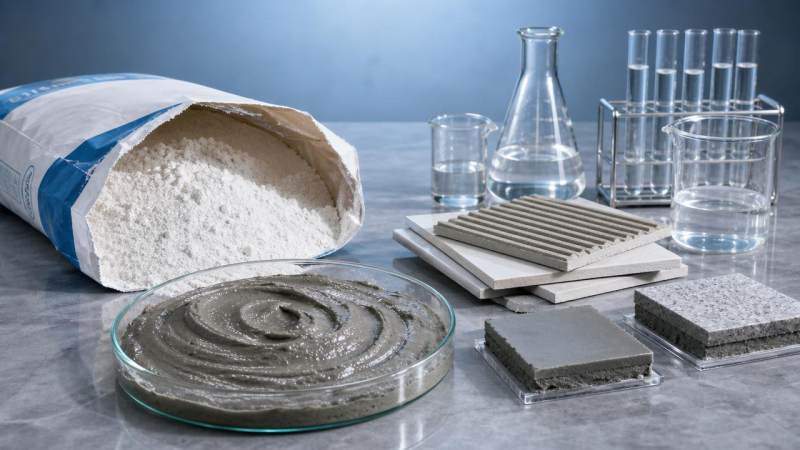
Balancing cost and performance in tile adhesive is not just a technical issue—it directly affects purchasing efficiency and project profitability. For financial decision-makers, selecting the right Redispersible Polymer Powder for tile adhesive can reduce formulation waste, improve bonding performance, and support long-term budget control. Understanding how material choices influence both production cost and application quality is essential for smarter, more competitive investment decisions.
Why does Redispersible Polymer Powder for tile adhesive matter so much to cost control?
In tile adhesive production, raw material cost is visible, but performance-related hidden cost is often larger. A cheaper formulation that causes poor workability, low bond strength, or rework on site can quickly erase any savings.
That is why Redispersible Polymer Powder for tile adhesive deserves close financial review. It directly affects adhesion, flexibility, open time, water retention balance, and resistance to application failure in different substrates and climates.
For approval teams, the real question is not “What is the lowest unit price?” but “What is the lowest validated system cost per square meter installed?” This shift improves procurement quality and reduces downstream claims.
- Lower-quality polymer powder may reduce upfront spending, but it can increase cement demand, raise dosage instability, and create inconsistent field performance.
- A well-matched grade can improve the formula efficiency, helping producers meet target standards without excessive additive loading.
- Stable supply also matters. Delivery delays or batch variation can interrupt production schedules and harm customer confidence.
The finance view: total cost is broader than raw material price
Financial approvers in the chemicals industry typically evaluate material cost, but tile adhesive economics also include scrap rate, return claims, storage losses, mixing efficiency, and consistency across orders. Redispersible Polymer Powder for tile adhesive influences all of these variables.
When the chosen polymer grade improves cohesion and reduces segregation, factories can run more predictably. That means fewer production interruptions, lower complaint risk, and more reliable cost forecasting.
Which performance indicators should financial approvers ask about before approving a grade?
Before approving Redispersible Polymer Powder for tile adhesive, finance teams should ask technical and procurement colleagues for measurable indicators. This helps prevent buying based on price alone or on vague supplier claims.
The table below highlights practical evaluation points that connect performance with budget impact. These indicators are useful when comparing suppliers, grades, or alternative formulations in tile adhesive production.
For finance departments, this kind of framework turns technical language into controllable business metrics. It also makes supplier discussions more objective and easier to audit internally.
Questions worth raising in approval meetings
- Can the selected grade reach the target adhesive class without excessive dosage?
- How stable is the supplier’s viscosity, ash content, and redispersion behavior from batch to batch?
- Will the grade support both standard wall tile and more demanding floor or exterior applications?
- What is the cost of failure if installation quality drops after switching to a lower-price material?
How to compare low-cost and value-balanced formulations
Not every lower-cost formulation is inefficient, and not every premium formula is justified. The correct decision depends on the target market, adhesive classification, substrate complexity, and customer expectations.
The next comparison table can help procurement and finance teams evaluate where Redispersible Polymer Powder for tile adhesive creates measurable value and where overspecification should be avoided.
A value-balanced formulation is often the best decision for financial approvers. It limits avoidable spending but preserves enough technical margin to prevent costly field problems.
In practice, Redispersible Polymer Powder for tile adhesive works best when evaluated together with HPMC, fillers, cement ratio, and target application class rather than as an isolated line item.
What supplier capabilities reduce hidden procurement risk?
For financial decision-makers, supplier strength is a risk-management issue. A technically suitable powder is still a weak choice if the supplier cannot maintain delivery continuity or support formulation adjustment.
Jinan Ludong Chemical Co., Ltd. focuses on cellulose ethers, RDP, and HPS with integrated production and service capability. Its annual production capacity reaches 45,000 tons, and its HPMC viscosity range spans from 400 to 200,000 CPS, giving customers more flexibility when balancing cost and formulation design.
Why this matters in real procurement
- Integrated manufacturing supports better coordination across additives used in drymix mortar and tile adhesive systems.
- Large-scale production can help reduce supply interruption risk during demand peaks or shipping fluctuations.
- A supplier familiar with both traditional processing and intelligent automated production is often better positioned to maintain batch consistency.
Financial approvers should also consider whether one supplier can support broader material planning. For example, some buyers sourcing construction chemicals may also review adjacent products such as Detergent-grade HPMC when consolidating supplier evaluation across business lines.
How should you build a procurement guide for Redispersible Polymer Powder for tile adhesive?
A strong procurement process reduces approval delays and prevents disputes between finance, technical, and purchasing teams. The goal is to create a repeatable selection model rather than relying on one-time judgment.
The table below can be used as a practical approval checklist when comparing Redispersible Polymer Powder for tile adhesive suppliers or reviewing reformulation proposals.
This checklist encourages disciplined comparison. It is especially useful when multiple departments use different criteria and the approval team needs one clear decision framework.
A practical approval sequence
- Define target tile adhesive grade and end-use scenario.
- Compare at least two polymer powder options on dosage and test performance.
- Calculate cost per compliant formulation, not just cost per kilogram.
- Review delivery, packaging, and consistency risk with the supplier.
- Approve pilot production before full purchasing conversion.
Are there common mistakes when balancing tile adhesive cost and performance?
Yes, and they usually occur when decisions are made too quickly or with incomplete cross-functional input. Many companies focus on the visible purchase price and underestimate the system effect of additives.
Frequent misconceptions
- Assuming all Redispersible Polymer Powder for tile adhesive grades are interchangeable if they look similar on paper.
- Approving a cheaper product without checking dosage efficiency in the actual formula.
- Evaluating polymer powder separately from HPMC, cement, filler grading, and target application conditions.
- Ignoring the financial impact of customer complaints, delayed projects, or installer rejection.
Another mistake is treating technical support as optional. In reality, formulation optimization often produces better savings than aggressive raw material downgrading. That is why experienced suppliers can create measurable value beyond the invoice price.
FAQ: what do financial approvers often ask about Redispersible Polymer Powder for tile adhesive?
How do I know whether a lower-priced powder is truly cheaper?
Compare final formulation cost, required dosage, pass rate, and complaint exposure. If a cheaper grade needs more loading or causes unstable production, its true cost may be higher than a more balanced option.
What applications need more careful grade selection?
Exterior walls, large-format tiles, low-absorption porcelain tiles, renovation over existing surfaces, and areas exposed to moisture or temperature fluctuation usually require stronger performance margins. In these cases, Redispersible Polymer Powder for tile adhesive should not be selected on price alone.
What should be included in a supplier quotation review?
Look beyond unit price. Review recommended dosage, packaging, lead time, sample policy, technical support, and any available guidance on compatibility with HPMC and other additives. This gives finance a more accurate cost picture.
Can one supplier support broader additive planning?
Often yes. Companies that produce multiple construction chemical additives can help buyers simplify sourcing and coordination. In some cases, this wider cooperation may extend to non-construction chemical categories such as Detergent-grade HPMC, depending on the buyer’s product portfolio.
Why choose us for cost-performance evaluation and supply support?
For financial approvers, a useful supplier should do more than provide a quotation. The supplier should help convert technical complexity into a clear commercial decision. That includes formulation discussion, dosage comparison, consistency expectations, and delivery planning.
Jinan Ludong Chemical Co., Ltd. combines production, trading, and integrated service capabilities in cellulose ethers, RDP, and HPS. This allows buyers to discuss Redispersible Polymer Powder for tile adhesive within a broader formulation context rather than making isolated purchasing decisions.
- Ask us to review target application requirements and identify suitable polymer powder options.
- Request support on dosage evaluation, formulation matching, and cost-performance comparison.
- Confirm lead time, packaging details, and supply planning for regular purchasing cycles.
- Discuss sample arrangements, testing priorities, and practical selection paths for your tile adhesive market.
- Consult on HPMC viscosity options, customized additive combinations, and quotation communication based on your budget target.
If your team is comparing suppliers or reviewing a reformulation project, contact us with your target adhesive type, expected performance level, and purchasing volume. We can help you evaluate parameters, select suitable materials, discuss delivery cycles, and build a more reliable cost-performance plan.
Send Your Inquiry
We welcome your cooperation and we will develop with you.
