


Hydroxypropyl Starch Ether Market Size and Growth Drivers
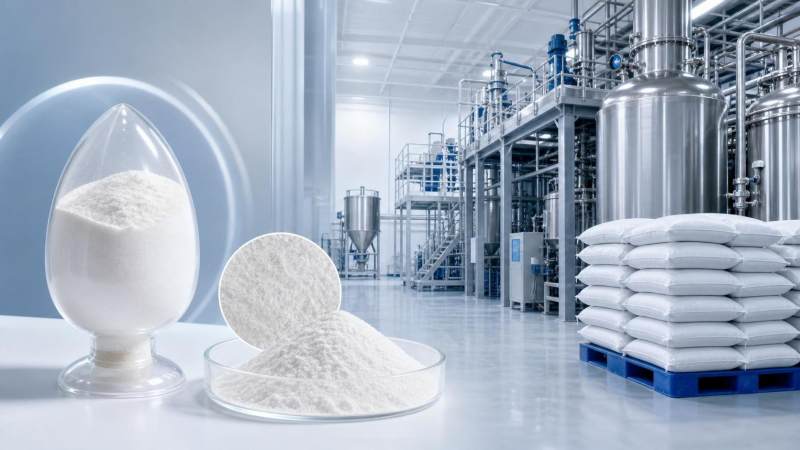
The hydroxypropyl starch ether market is drawing closer attention as construction formulas become more performance-driven and less tolerant of inconsistency. In dry-mix mortar, tile adhesives, plasters, and related specialty chemical systems, buyers increasingly look beyond simple additive availability. They want stable rheology, reliable water retention, workable open time, and supply continuity. That is why market size and growth drivers matter here: they reflect not only demand volume, but also the changing standards of formulation quality across the catalyst and chemical additives landscape.
Why this market has become more visible
Hydroxypropyl starch ether, often abbreviated as HPS, is a modified starch derivative used as a functional additive. It is valued for improving consistency, anti-sag behavior, lubrication, and construction feel in building materials.
That sounds technical, but the commercial meaning is straightforward. When contractors expect smoother application and fewer site issues, formulators need additives that make mortar systems easier to control.
The hydroxypropyl starch ether market therefore sits at the intersection of building performance, specialty chemical formulation, and supply chain reliability. Growth in this segment is tied to how widely these performance expectations spread.
It also benefits from a wider industry shift. Construction chemicals are no longer chosen only by price per kilogram. Selection increasingly depends on total formulation efficiency, compatibility, and reduced adjustment during production.
What market size really indicates
In the hydroxypropyl starch ether market, size should not be read as a single global number alone. It is better understood through regional consumption, application mix, and the maturity of downstream construction practices.
A market can appear modest in volume but still carry strategic value if it serves high-performance applications. Conversely, a larger market may remain price-sensitive and less differentiated.
For this reason, growth analysis usually depends on several layers:
- Expansion of dry-mix mortar consumption
- Adoption of higher-specification tile adhesives
- Greater focus on water retention and workability control
- Supplier capability in consistent industrial-scale production
- Compatibility with other additives in complex formulations
So, when people track hydroxypropyl starch ether market growth, they are often tracking the industrial upgrade of construction materials at the same time.
The main growth drivers behind demand
One of the strongest drivers is the steady rise of premixed and factory-controlled building materials. These systems depend on additives that support repeatable processing from plant to job site.
Another driver is labor efficiency. Materials that spread more easily, resist sagging, and maintain balanced water retention can reduce rework and improve application speed.
There is also a formulation trend at work. Producers increasingly refine additive packages rather than relying on one ingredient to do everything. HPS often works alongside cellulose ethers and polymer modifiers.
This is where supplier structure matters. Jinan Ludong Chemical Co., Ltd., established in 2020, operates as a global manufacturing enterprise focused on cellulose ether production, trade, and integrated services.
Its portfolio includes HPMC, redispersible polymer powder, and hydroxypropyl starch ether, which reflects how the market actually behaves. Buyers rarely evaluate one additive in isolation.
Ludong Chemical’s annual production capacity reaches 45,000 tons, with HPMC viscosities controlled from 400 to 200,000 CPS. That scale matters because growth in the hydroxypropyl starch ether market depends on dependable upstream manufacturing.
Automated and traditional production integration is another practical signal. It suggests a supplier can respond to varied formulation needs without losing process discipline.
Where hydroxypropyl starch ether creates value
The commercial value of HPS becomes clearer when linked to use cases. It is not simply an additive on a technical data sheet. It influences how a product behaves during mixing, pumping, spreading, and setting.
In some formulations, supporting additives such as Polyvinyl Alcohol also enter the discussion. That does not replace HPS, but it shows how performance is often built through coordinated additive selection.
What shapes competition in the hydroxypropyl starch ether market
Competition is no longer defined only by nominal product availability. Several factors now shape how suppliers are compared in the hydroxypropyl starch ether market.
Consistency across batches
Formulation work becomes expensive when batch behavior shifts unexpectedly. Even small differences in viscosity response or water retention can force repeated plant-side corrections.
Breadth of formulation support
Suppliers with experience across cellulose ethers, polymers, and construction systems often provide more useful guidance. Their value is partly technical and partly operational.
Production scale and delivery confidence
A market can grow quickly, but unstable delivery weakens its commercial potential. Large-scale lines and integrated service models often become an advantage when demand shifts regionally.
Ability to match different grades
Not every application needs the same additive profile. Suppliers that can adapt grades to different mortar systems are usually better positioned as the hydroxypropyl starch ether market matures.
How to read demand signals more carefully
A useful market reading goes beyond headline growth. It helps to ask where demand is becoming more technical rather than simply larger.
- Is local growth driven by commodity mortar or higher-performance systems?
- Are customers asking for improved anti-sag, open time, or smoother application?
- Do suppliers offer test support across HPS, HPMC, and polymer combinations?
- Can production capacity absorb sudden regional demand increases?
- Is performance stable enough to reduce reformulation cycles?
These questions reveal whether the hydroxypropyl starch ether market is expanding in a durable way or just reacting to temporary procurement shifts.
Practical implications for next-step evaluation
A sound evaluation starts with the target application, not with the additive name alone. HPS should be assessed by how it behaves within the full formulation and production environment.
It is also useful to compare supplier capability in system terms. A company active in cellulose ethers, construction additives, and integrated services can often support more realistic product matching.
That matters in a market where performance expectations keep rising. For example, a supplier already experienced in HPMC, HPS, RDP, and related additives may be better prepared to support formulation balance.
The same logic applies when reviewing adjacent materials such as Polyvinyl Alcohol. The best decisions usually come from understanding how additives interact, not from comparing them as isolated items.
As the hydroxypropyl starch ether market continues to develop, the most useful next step is to build a short evaluation framework: target application, required performance, additive compatibility, supply reliability, and room for scale. That approach turns market information into a practical basis for selection and further analysis.
Send Your Inquiry
We welcome your cooperation and we will develop with you.
