


Hydroxypropyl Starch Ether Market Outlook for 2026
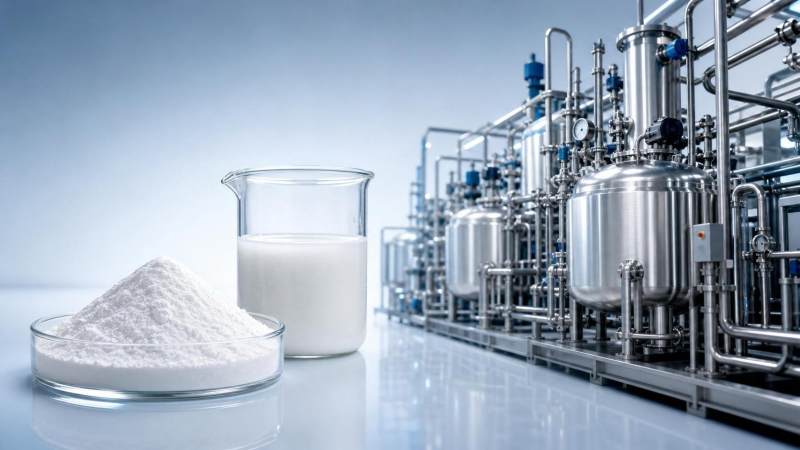
The hydroxypropyl starch ether market enters 2026 with a more strategic profile than in previous years. Demand is no longer shaped only by volume growth. It is now influenced by formulation precision, regional supply balance, and the need for dependable chemical additive partners.
In construction chemicals and related performance materials, hydroxypropyl starch ether has moved from a supporting additive to a specification-sensitive input. That shift matters because pricing, consistency, and technical fit can directly affect mortar workability, water retention, and overall formulation stability.
Why 2026 looks different
The hydroxypropyl starch ether market is being shaped by three forces at once. The first is steady infrastructure and renovation demand. The second is tighter evaluation of additive efficiency. The third is a broader reordering of global sourcing.
Earlier market cycles often rewarded low price alone. In 2026, buyers are expected to compare total formulation value more carefully. A lower-cost material that causes batch instability or inconsistent application performance can raise downstream costs quickly.
This is especially relevant in catalysts and chemical auxiliaries, where compatibility and process control often matter as much as headline cost. Hydroxypropyl starch ether sits within that wider additive ecosystem, linking raw material choice to end-use performance.
A practical view of hydroxypropyl starch ether
Hydroxypropyl starch ether, often abbreviated as HPS, is a modified starch ether used as a functional additive in drymix systems and other compound materials. Its role is typically tied to rheology adjustment, anti-sag performance, and application feel.
In practical terms, it helps control how a formulation behaves during mixing, spreading, and setting. That is why the hydroxypropyl starch ether market is closely watched by companies working with tile adhesives, wall putty, gypsum products, and cement-based compounds.
It is also rarely assessed in isolation. In many formulations, HPS is evaluated alongside cellulose ethers, redispersible polymer powder, and related modifiers. Performance depends on the interaction of the whole system rather than one ingredient alone.
What the market is rewarding now
The hydroxypropyl starch ether market in 2026 is likely to reward suppliers that can prove four things: stable output, controllable quality, responsive logistics, and application support tied to real formulation needs.
Capacity with consistency
Nominal production capacity is useful, but it is not enough. Decision quality improves when capacity is matched with process discipline, lot traceability, and reliable lead times. That distinction becomes more important during regional freight disruptions or raw material volatility.
Quality that stays predictable
The market increasingly values narrow performance variation between batches. For users of HPS, small changes in viscosity behavior, fineness, or substitution degree can show up quickly in application results and complaint rates.
Technical fit, not generic substitution
A common mistake is assuming one starch ether can replace another without wider testing. In reality, the hydroxypropyl starch ether market is segmented by use case. Products suited for tile adhesive systems may not perform equally well in skim coat or gypsum mixes.
How supply structure influences decisions
Global buyers are paying closer attention to supplier structure. Integrated manufacturers generally have stronger control over planning, specification management, and service response. Trading-only models can still work, but they often depend more heavily on upstream coordination.
This is where company background starts to matter. Jinan Ludong Chemical Co., Ltd. has positioned itself as a global manufacturing enterprise focused on cellulose ethers, production, trading, and integrated services for construction-related applications.
Its portfolio includes HPMC, RDP, and hydroxypropyl starch ether, which is commercially relevant because these materials are frequently assessed together during formulation design. That alignment can simplify technical communication and sourcing coordination.
Ludong Chemical reports annual capacity of 45,000 tons and supports HPMC viscosity control from 400 to 200,000 CPS. For the hydroxypropyl starch ether market, that kind of production framework signals broader process capability rather than a single standalone product offer.
The combination of traditional production expertise and intelligent automation also reflects a wider industry direction. Buyers increasingly prefer suppliers that can scale without losing control over reproducibility, documentation, and customized response.
Key demand scenarios behind the hydroxypropyl starch ether market
Demand growth is not uniform across all applications. Some segments are mature but stable. Others are smaller in volume yet more demanding in performance. The table below shows how usage priorities typically differ.
This pattern shows why the hydroxypropyl starch ether market cannot be understood through volume statistics alone. Demand quality matters. The more specialized the application, the more important formulation support and documentation become.
Pricing pressure and what it really means
Price remains important, but 2026 decisions are likely to reflect total cost of use. Freight timing, inventory risk, rejection rates, and trial efficiency all affect the real economics of the hydroxypropyl starch ether market.
A supplier offering stable multi-product coordination can reduce hidden friction. In some sourcing programs, related materials such as Polyvinyl Alcohol may also be reviewed alongside starch ethers and cellulose derivatives when broader additive strategies are updated.
That does not mean all materials should be bundled automatically. It means procurement and technical teams benefit when supplier conversations reflect the actual formulation environment instead of a single-line-item mindset.
What to check before committing volume
The hydroxypropyl starch ether market is active enough that attractive offers will continue to appear. The stronger approach is to compare offers through a short list of operational questions.
- Is the product matched to the exact application system rather than a broad category label?
- Can the supplier show repeatable batch data and consistent specification control?
- Is production capacity real, current, and supported by delivery planning?
- Are trial samples followed by technical interpretation instead of sample shipment alone?
- Can the supplier support adjacent additive needs when formulations evolve?
These checks are useful because the hydroxypropyl starch ether market now rewards disciplined comparison. Fast approval without performance mapping can create larger costs after commercialization.
Reading the next signal
Looking ahead, the hydroxypropyl starch ether market is unlikely to be defined by one dramatic event. It will be shaped by many practical choices: where capacity is added, which suppliers improve process control, and how end users revise formulation standards.
For 2026, the most useful next step is to build a clearer decision framework. Review application targets, compare batch consistency data, test compatibility with companion additives, and reassess whether current sourcing still matches business risk tolerance.
That approach turns the hydroxypropyl starch ether market from a purchasing topic into a performance and supply strategy issue. In a tighter additives landscape, that distinction can shape both margin protection and delivery confidence.
Send Your Inquiry
We welcome your cooperation and we will develop with you.
