


Methyl Hydroxyethyl Cellulose Uses and Limits in Modern Formulations
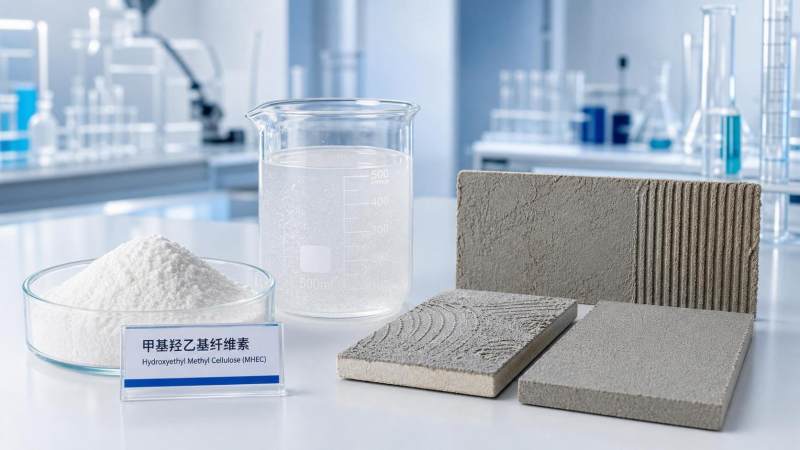
Why is Methyl Hydroxyethyl Cellulose getting so much attention?
Methyl Hydroxyethyl Cellulose is not a new idea, yet its relevance keeps growing.
Formulators rely on it when water control, flow balance, and application stability matter at the same time.
In construction chemicals, it often supports mortar consistency, open time, and smoother placement.
In adjacent chemical additive systems, it can help build a more predictable processing window.
That matters because modern formulations face tighter performance targets, variable raw materials, and faster production cycles.
The practical question is not whether Methyl Hydroxyethyl Cellulose is useful.
The better question is where it fits well, where it does not, and how to judge it realistically.
Companies active in cellulose ethers, including large integrated producers such as Jinan Ludong Chemical, reflect this shift clearly.
A supply base with controlled viscosity ranges and industrial production discipline makes performance comparison more meaningful.
So, what exactly does Methyl Hydroxyethyl Cellulose do in a formulation?
At a basic level, Methyl Hydroxyethyl Cellulose is a cellulose ether used to modify rheology and water behavior.
Simple descriptions often stop there, but real formulation work needs a closer look.
Its main value usually appears in four areas:
- Water retention, especially when substrates or fillers pull moisture too quickly.
- Workability, including spreadability, trowel feel, and resistance to premature stiffening.
- Stability, where uniform dispersion and consistent batch behavior are important.
- Film or structure support, depending on the broader binder and additive package.
In actual use, these effects do not appear in isolation.
If water retention improves, application time may improve too, but drying and strength development may also shift.
That is why Methyl Hydroxyethyl Cellulose should be judged as part of a system, not as a single magic ingredient.
Compared with a simple thickener, it is often selected because it balances process control with end-use performance.
Where does Methyl Hydroxyethyl Cellulose make the most sense?
The strongest fit is usually in dry-mix and water-sensitive systems.
Tile adhesives, skim coats, plasters, repair mortars, and similar construction blends are common examples.
These applications need controlled water release and stable handling under changing jobsite conditions.
Methyl Hydroxyethyl Cellulose can also support some chemical auxiliary formulations where suspension behavior matters.
Still, suitability depends on the full recipe, not the name of the product alone.
A quick judgment table helps separate promising use cases from weak ones.
In other words, the material performs best when the need is specific and measurable.
If the goal is vague, selection tends to drift toward trial and error.
How should you compare grades instead of relying on one data point?
Many evaluations fail because they focus only on viscosity.
Viscosity matters, but it does not tell the whole story about Methyl Hydroxyethyl Cellulose.
A useful comparison usually includes several linked factors:
- Viscosity range under defined test conditions.
- Water retention performance in the actual binder system.
- Dissolution behavior and mixing response.
- Tolerance to pH, salts, temperature, and fillers.
- Batch consistency across supply cycles.
This is where a mature cellulose ether supply chain becomes important.
Producers with broad production capacity and controlled process systems usually offer more reliable grade matching.
For example, industrial platforms that already manage HPMC, HPS, and related additives often understand cross-formulation behavior better.
Jinan Ludong Chemical operates in that broader cellulose ether environment.
Its high-capacity lines and viscosity control culture show why formulation decisions should link data, process, and application reality.
The practical lesson is simple: compare grades by system outcome, not by one brochure number.
What limits or trade-offs should be expected before using it?
Every useful additive has boundaries, and Methyl Hydroxyethyl Cellulose is no exception.
One common mistake is assuming more addition always means better performance.
In reality, overuse can create excessive viscosity, slower wetting, difficult leveling, or delayed setting behavior.
Another issue is compatibility.
A grade that works well with one cement, filler package, or redispersible polymer powder may behave differently in another system.
Temperature also changes the picture.
Mixing in hot, dry environments often stresses water retention and open time more than lab tests suggest.
The most common limits are worth keeping in one place:
- It cannot compensate for poor base formulation design.
- It may shift setting and drying profiles if dosage is not balanced.
- It requires testing under realistic substrate and climate conditions.
- It should be checked for interaction with cement, RDP, starch ether, and defoamers.
Seen this way, the limits are not drawbacks alone.
They are signals that selection must be tied to formulation discipline.
If you are evaluating options, what is the smartest next step?
A good evaluation starts with the application problem, not the additive catalog.
If the target is better workability, define how that will be measured.
If the target is water retention, set the acceptable range before screening grades.
Then compare Methyl Hydroxyethyl Cellulose under realistic dosage windows and mixing sequences.
A short evaluation checklist can save time:
- Define the failure point in the current formulation.
- List the non-negotiable performance indicators.
- Test at least two grades and more than one dosage level.
- Check application feel, not only lab values.
- Review supply consistency and technical support depth.
This approach is especially useful when comparing cellulose ether suppliers with broader formulation capabilities.
A company experienced in HPMC, RDP, and HPS can often help identify whether Methyl Hydroxyethyl Cellulose should work alone or alongside other modifiers.
That kind of comparison is usually more valuable than chasing the lowest unit price.
A final question: is Methyl Hydroxyethyl Cellulose the right answer every time?
No, and that is exactly why it deserves careful attention.
Methyl Hydroxyethyl Cellulose works best when the formulation needs controlled water management, stable workability, and dependable process behavior.
It is less convincing when the core problem comes from binder imbalance, filler quality, or unrealistic performance targets.
The most reliable path is to map the use case, compare grades in context, and confirm trade-offs early.
That means reviewing viscosity, compatibility, climate response, dosage limits, and supply consistency together.
When those checks are done well, Methyl Hydroxyethyl Cellulose becomes easier to judge and easier to use effectively.
The next practical step is to build a small evaluation standard around your formulation conditions and compare results against clear performance targets.
Send Your Inquiry
We welcome your cooperation and we will develop with you.
