


What Is HPMC For Dry Mix Mortar and How Does It Improve Workability?
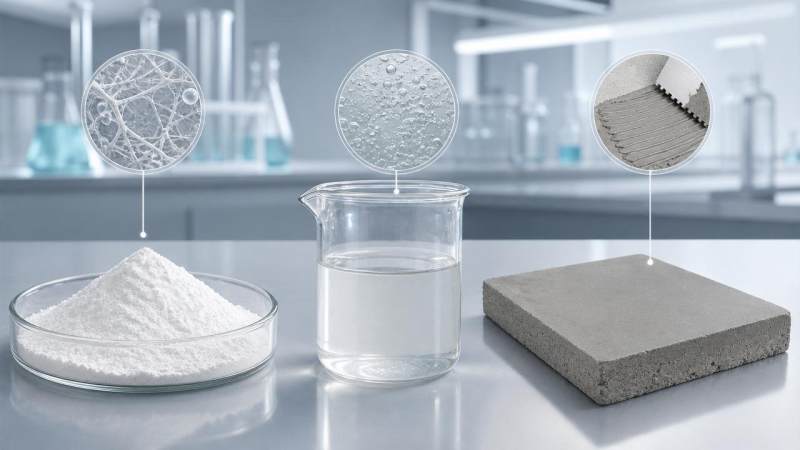
HPMC For Dry Mix Mortar has become a core additive in modern building materials because it changes how mortar behaves during mixing, spreading, and curing. In practical terms, it helps mortar hold water, stay workable longer, bond more reliably, and perform more consistently across different jobsite conditions. That matters in an industry where speed, finish quality, and stable formulation all affect project outcomes and product reputation.
Understanding what HPMC does in dry mix mortar
HPMC stands for hydroxypropyl methylcellulose, a cellulose ether widely used as a functional chemical additive in cement-based and gypsum-based dry mix systems.
When water is added to the dry blend, HPMC dissolves and forms a protective colloidal system. This changes the rheology of the mortar and improves how the mix handles under a trowel or pump.
So, HPMC For Dry Mix Mortar is not just a thickener. It is a performance modifier that balances water retention, anti-sag behavior, open time, adhesion, and application comfort.
That balance is especially important in construction chemicals, where small formulation differences can create visible changes in cracking resistance, surface smoothness, and labor efficiency.
Why workability is the main discussion point
Workability is often the first property noticed on site. If mortar feels too dry, drags during spreading, or loses water too fast, application becomes slower and less uniform.
HPMC For Dry Mix Mortar improves workability by retaining water inside the system. Cement and fillers then hydrate more evenly, while the mix stays plastic for a longer period.
This creates several direct benefits:
- Smoother troweling and easier leveling
- Less tearing and dragging during application
- Better anti-sag performance on vertical surfaces
- Longer open time for adjustment and finishing
- More stable performance in hot or absorbent conditions
In other words, workability is where formulation quality becomes visible. A mortar may meet basic technical requirements, but poor handling can still limit its real-world value.
How HPMC affects key mortar properties
The effect of HPMC For Dry Mix Mortar can be understood more clearly by looking at the properties it influences at the same time.
These effects are linked. Better water retention often supports adhesion. Better rheology often improves surface feel. That is why additive selection is usually based on performance balance rather than one isolated number.
Where HPMC For Dry Mix Mortar is commonly used
Different mortar systems need different performance profiles, but HPMC appears across many major categories of dry mix products.
Tile adhesives
Here, HPMC supports slip resistance, workable open time, and proper wetting of the tile back and substrate. Those factors directly affect placement and bond reliability.
Wall putty and skim coat
A smooth hand feel matters in finishing products. HPMC helps create spreadability, edge stability, and a more refined surface during application.
Plaster and rendering mortar
For thicker layers, consistent water retention and anti-sag performance become critical. The additive helps keep the mortar cohesive and easier to shape.
Self-leveling and specialty systems
Some specialty formulations use HPMC in carefully controlled amounts, often together with polymer powders or starch ethers, to tune flow and stability.
Why the market pays attention to grade and viscosity
Not every cellulose ether behaves the same way. Viscosity, substitution level, thermal gel characteristics, and dissolution performance all shape how a mortar responds.
This is why HPMC For Dry Mix Mortar is usually selected by application target rather than by name alone. A tile adhesive and a skim coat may require very different rheological behavior.
Jinan Ludong Chemical Co., Ltd. operates in this context as a large-scale cellulose ether supplier with integrated production, trading, and service capabilities. Its HPMC portfolio includes construction and chemical grades such as type 75 and type 60, with viscosity control ranging from 400 to 200,000 CPS.
That range matters because formulation work often depends on matching viscosity to substrate absorption, desired open time, mixing method, and target application thickness.
How HPMC fits into a broader additive system
Dry mix mortar performance rarely comes from one ingredient alone. HPMC usually works alongside cement, fillers, polymer modifiers, and other specialty additives.
For example, redispersible polymer powder can strengthen flexibility and adhesion, while starch ethers help fine-tune sag resistance and handling behavior.
In some formulations, related cellulose ether options such as Methyl Hydroxyethyl Cellulose (HEMC) may also be considered when a different balance of workability, water retention, or temperature tolerance is needed.
From a formulation perspective, the real question is not whether HPMC is useful, but how it interacts with the rest of the recipe under actual mixing and application conditions.
Practical points when evaluating HPMC For Dry Mix Mortar
A strong evaluation process usually looks beyond a single datasheet value. Real performance depends on how the additive behaves inside the full mortar system.
- Check water retention under realistic substrate absorption conditions
- Compare hand feel, spreading resistance, and leveling performance
- Observe anti-sag behavior on vertical test panels
- Measure open time against the intended construction rhythm
- Review batch consistency and dissolution behavior during mixing
- Match viscosity range to product type instead of chasing the highest number
Supply stability also deserves attention. For commercial production, consistent output, traceable quality control, and responsive technical support are often as important as laboratory results.
That is one reason large integrated producers attract attention. Ludong Chemical reports annual capacity of 45,000 tons and combines traditional process knowledge with intelligent automated production, which helps support diverse global formulation needs.
A clear way to move from research to selection
The value of HPMC For Dry Mix Mortar becomes clearer when it is judged by the final application result rather than by theory alone. Better workability means faster placement, more stable finish quality, and fewer avoidable application issues.
For the next step, it helps to define the mortar type, target consistency, substrate conditions, and required open time first. After that, compare cellulose ether grades by real formulation tests, not only by catalog descriptions.
A structured review of viscosity range, water retention behavior, additive compatibility, and supplier production stability will make product selection more reliable and more useful in long-term mortar development.
Send Your Inquiry
We welcome your cooperation and we will develop with you.
