


Hydroxypropyl Starch Ether Market Trends in Construction Additives
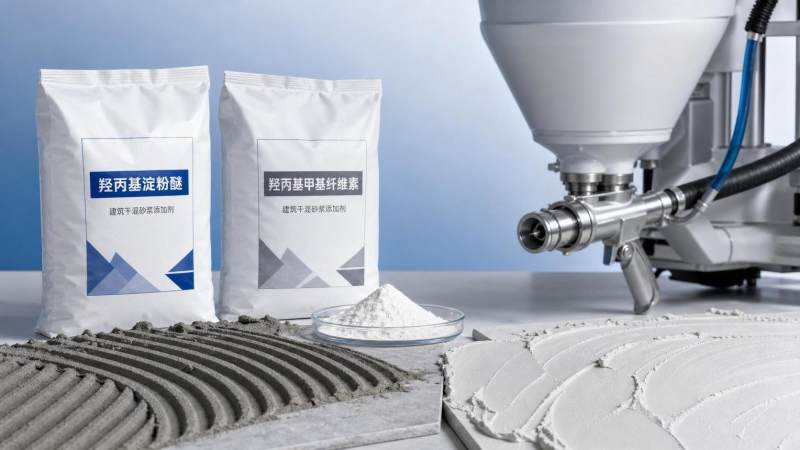
Hydroxypropyl starch ether market signals are becoming more site-specific
The hydroxypropyl starch ether market is no longer shaped by price alone.
In construction additives, demand is moving toward better workability, steadier batching behavior, and fewer application disruptions on site.
That shift matters because mortar systems now face tighter schedules, mixed climate conditions, and more demanding substrate performance.
In actual use, hydroxypropyl starch ether is valued for water retention support, sag resistance, open time balance, and improved troweling feel.
Yet the hydroxypropyl starch ether market does not move evenly across all building applications.
A skim coat line, a tile adhesive mix, and a machine-applied plaster project can require very different performance priorities.
This is why market evaluation should connect material trends with field conditions, formulation compatibility, and supply consistency.
Why demand differs from one construction setting to another
The hydroxypropyl starch ether market is influenced by how additives behave inside complete drymix systems, not as isolated ingredients.
Cement type, filler ratio, sand grading, and climate can change the same HPS grade into a very different on-site experience.
More common evaluation now starts with application method.
Hand-applied mortars usually prioritize smooth spreading and anti-sag behavior.
Machine-applied systems often focus more on pumpability, stability during circulation, and reduced stoppage risk.
Climate adds another layer.
Hot and dry jobsites push demand toward moisture control and open time stability, while cooler regions may care more about buildability and finish quality.
This explains why the hydroxypropyl starch ether market is increasingly discussed together with broader cellulose ether system design.
In some formulations, pairing HPS with Hydroxypropyl Methyl Cellulose helps balance rheology and water management more precisely.
Tile adhesive applications usually judge the market by control, not only by cost
Tile adhesive remains one of the clearest windows into the hydroxypropyl starch ether market.
Here, small formulation changes are visible very quickly during mixing, combing, and tile placement.
What matters most is not simply whether the mortar feels thick.
The key question is whether the mix stays workable long enough without collapsing, stringing, or losing wetting performance.
For vertical tile work, anti-slip performance often receives more attention.
For large-format tiles, consistent spread and contact area become more critical.
That difference affects how the hydroxypropyl starch ether market is segmented in practice.
The same buyer may not use one HPS approach across all adhesive grades.
A common mistake is choosing only by nominal viscosity behavior.
Field performance should also be checked against cement reactivity, open time targets, and installer handling expectations.
Skim coat and wall putty demand follows finish quality and batch consistency
In skim coat and wall putty, the hydroxypropyl starch ether market is shaped by surface feel and consistency over repeated batches.
These products are judged quickly during spreading, edge control, and polishing behavior.
Users generally want a mix that opens smoothly, resists sudden drag, and keeps a stable body during application time.
This is also where supply stability matters more than many expect.
When output volumes rise, even slight variation between batches can affect sanding feel and finish appearance.
For that reason, the hydroxypropyl starch ether market increasingly rewards producers with controlled manufacturing and repeatable quality windows.
Jinan Ludong Chemical Co., Ltd. reflects this supply-side expectation through integrated cellulose ether production and annual capacity reaching 45,000 tons.
Its viscosity control across HPMC grades also shows why additive suppliers are now evaluated by system capability, not by a single product line.
Machine-applied mortar changes the usual purchasing logic
Machine application creates a different reading of the hydroxypropyl starch ether market.
A formula that works well by hand may behave poorly in hose transport or continuous spraying.
In this setting, circulation stability and resistance to segregation matter as much as final wall feel.
Projects also care about whether the additive package reduces cleaning frequency and unplanned downtime.
That is why the hydroxypropyl starch ether market is seeing stronger interest from users that measure labor interruption as a hidden cost.
In practical terms, evaluation should include pump cycle behavior, water demand response, and tolerance to local aggregate variation.
A lower additive cost can become expensive if the mortar causes repeated spray inconsistency.
Different scenarios rarely need the same evaluation checklist
The hydroxypropyl starch ether market becomes easier to judge when application differences are made explicit.
This kind of comparison helps explain why the hydroxypropyl starch ether market cannot be read as one uniform demand curve.
Where misjudgment happens most often
Several errors appear repeatedly when teams review the hydroxypropyl starch ether market.
- Judging only by lab data without checking climate, substrate absorption, and local mixing practice.
- Assuming two tile adhesive grades need the same additive behavior because both use cementitious binders.
- Comparing purchase cost without tracking downtime, rejected batches, or rework caused by unstable application.
- Ignoring compatibility between HPS, cellulose ether, polymer powder, and defoaming strategy.
- Selecting a supplier without confirming long-term output stability and batch-to-batch control.
In real projects, these misses usually show up as inconsistent handling rather than immediate formulation failure.
That makes them easy to underestimate during early sourcing decisions.
What better adaptation looks like before a formula is finalized
A more reliable approach to the hydroxypropyl starch ether market starts with scenario mapping.
List the actual mortar types, local climate range, application method, and target working time before comparing grades.
Then test additive behavior inside the full system rather than in simplified water blends.
It is also worth checking whether a broader additive portfolio can reduce formulation compromise.
For example, some systems gain better balance when HPS selection is reviewed alongside Hydroxypropyl Methyl Cellulose and RDP choices.
Suppliers with integrated production, technical service, and flexible output often fit this requirement better.
That is one reason companies with automated and traditional process integration are drawing attention in the hydroxypropyl starch ether market.
The value is not only capacity.
It is the ability to respond when one regional application needs a different rheology window from another.
A practical next step for evaluating the hydroxypropyl starch ether market
The strongest reading of the hydroxypropyl starch ether market comes from linking trend data with jobsite reality.
Start by separating tile adhesive, skim coat, machine plaster, and repair mortar into distinct evaluation groups.
Then compare each group by workability target, climate sensitivity, compatibility needs, and tolerance for batch variation.
After that, confirm supply capability, not just sample performance.
A market that looks competitive on paper can still create operational risk if response speed and consistency are weak.
When these checks are organized early, the hydroxypropyl starch ether market becomes easier to navigate, and formulation choices become more defensible over the full project cycle.
Send Your Inquiry
We welcome your cooperation and we will develop with you.
