


ISO 16368:2026 Released for MEWP Safety; GB/T 38303 Revision Launched
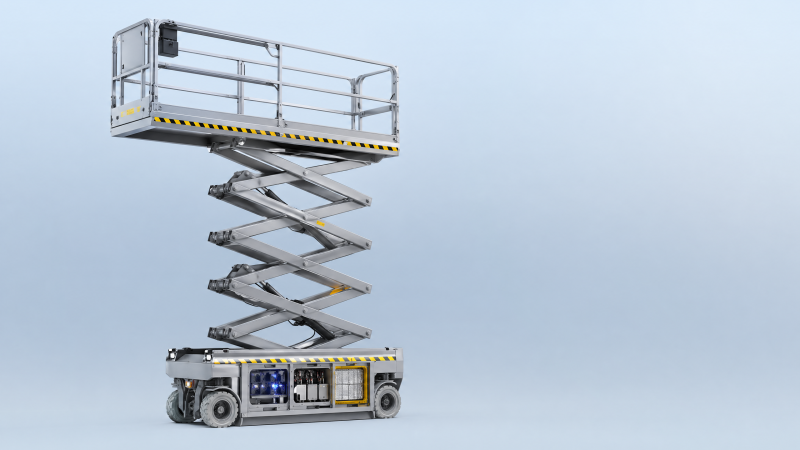
On 28 April 2026, ISO/TC 195 officially published ISO 16368:2026, Mobile Elevating Work Platforms (MEWPs) — Design and Safety Requirements. This update introduces mandatory clauses on AI-based anti-overturning warning, battery thermal runaway isolation, and multi-source positioning emergency communication. The standard directly affects manufacturers, exporters, rental operators, and safety compliance providers in the construction access, facility maintenance, and industrial services sectors — particularly those engaged in international trade or serving high-risk work environments.
Event Overview
On 28 April 2026, the International Organization for Standardization (ISO) Technical Committee 195 (ISO/TC 195) released ISO 16368:2026, titled Mobile Elevating Work Platforms (MEWPs) — Design and Safety Requirements. The new edition adds three mandatory safety requirements: (1) AI-powered anti-overturning early warning systems; (2) physical isolation mechanisms for lithium-ion battery thermal runaway; and (3) multi-source positioning-enabled emergency communication capability. On the same day, China’s Standardization Administration announced the initiation of the revision process for GB/T 38303–2020, aiming for an equivalent national standard by Q4 2026. Export-oriented enterprises must complete certification to ISO 16368:2026 by March 2027.
Industries Affected by Sector
MEWP Manufacturing Enterprises
Manufacturers are directly affected because the new standard mandates hardware and software upgrades across product lines. Impact includes redesign of control logic for stability monitoring, integration of redundant thermal barrier materials in battery compartments, and embedded GNSS + cellular + Bluetooth positioning modules for emergency signaling. Compliance requires changes to type-test protocols and documentation traceability.
Export-Oriented Trading Companies
Trading companies distributing MEWPs into EU, Australia, Canada, and other markets recognizing ISO standards face revised technical barriers to entry. Impact manifests in delayed shipments if products lack updated CE-type examination reports referencing ISO 16368:2026, and increased pre-shipment verification costs due to expanded test scope.
Rental and Fleet Management Operators
Rental firms operating internationally — especially those with cross-border equipment leasing contracts — may encounter contractual non-compliance risks. New clauses on real-time stability monitoring and emergency communication could trigger updates to fleet maintenance schedules, operator training modules, and incident reporting procedures under insurance or regulatory frameworks.
Safety Certification and Testing Service Providers
Third-party testing labs and certification bodies must align their assessment checklists and accredited test methods with the new clauses. Impact includes recalibration of dynamic stability test rigs, validation of AI algorithm responsiveness under edge-case scenarios, and verification of thermal containment performance under simulated fault conditions.
Key Focus Areas and Immediate Actions for Stakeholders
Monitor official implementation timelines and transitional provisions
While ISO 16368:2026 is published, national adoption timelines vary. Stakeholders should track formal announcements from ISO national members (e.g., ANSI, BSI, SAC) and confirm whether grandfathering applies to existing certified models during the 2026–2027 transition window.
Prioritize product families with high export exposure or battery-integrated platforms
Not all MEWP types carry equal risk under the new clauses. Scissor lifts with large lithium-ion packs and self-propelled boom lifts deployed in telecom or wind energy maintenance are higher-priority candidates for immediate design review and prototype validation.
Distinguish between regulatory signal and operational readiness
The launch of ISO 16368:2026 signals tightening global safety expectations, but actual enforcement depends on jurisdictional adoption. For example, EU Machinery Regulation (EU) 2023/1230 does not yet reference the 2026 edition. Stakeholders should treat this as a forward-looking benchmark, not an immediate legal requirement outside voluntary certification schemes.
Initiate internal gap assessments and supplier coordination now
Manufacturers should conduct internal audits against the new clauses, focusing on firmware validation processes, battery enclosure design drawings, and emergency comms module sourcing. Coordination with component suppliers — especially for AI inference chips and thermal barrier materials — should begin ahead of Q3 2026 to avoid lead-time bottlenecks.
Editorial Perspective / Industry Observation
Observably, ISO 16368:2026 reflects a broader shift toward integrating digital safety functions — such as predictive stability analytics and fail-safe communications — into mechanical access equipment. Analysis shows this is less a sudden regulatory pivot and more a consolidation of field-proven innovations already piloted by leading OEMs since 2022. From an industry perspective, the simultaneous launch of GB/T 38303 revision suggests China intends to maintain technical alignment with global safety baselines, rather than diverge through localized specifications. Current attention should focus on how quickly national accreditation bodies adopt the standard into their certification schemes — which will determine whether it functions primarily as a market differentiator or a de facto trade gatekeeper by mid-2027.
This update marks a step toward harmonized, technology-augmented safety governance for MEWPs — but its practical impact remains contingent on regional implementation pace and enforcement rigor. It is best understood not as an immediate compliance deadline, but as a directional signal shaping R&D roadmaps, procurement criteria, and cross-border service agreements over the next 18 months.
Source: ISO/TC 195 Official Release (28 April 2026); Standardization Administration of China (SAC) Public Notice No. 2026-04-28. Ongoing monitoring required for national adoption status in key markets (e.g., EU, UK, Australia, USA), as well as final publication date of revised GB/T 38303.
Send Your Inquiry
We welcome your cooperation and we will develop with you.
