


India to Impose 15% Safeguard Duty on Hydraulic Valves, ECP Components
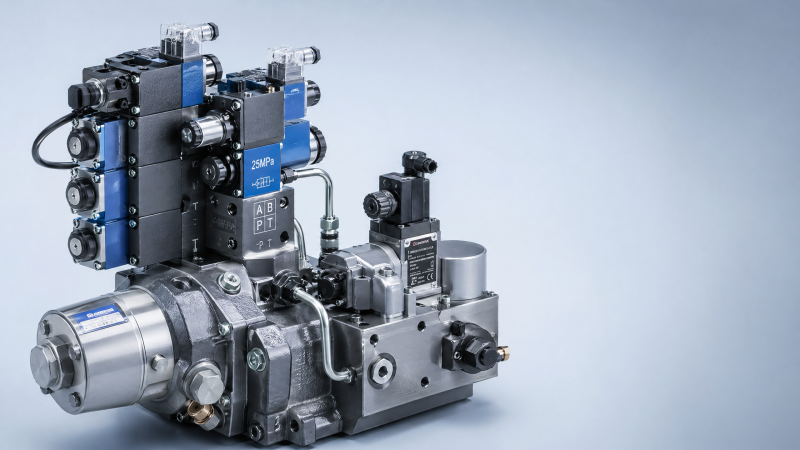
India’s Ministry of Commerce and Industry announced on April 28, 2026, an investigation into imports of hydraulic control valves and electro-hydraulic servo pumps—key components for construction and industrial machinery. The move signals potential trade policy shifts affecting global hydraulic equipment suppliers, particularly those in China. Stakeholders in fluid power systems,工程机械 OEMs, and cross-border supply chain operators should monitor developments closely.
Event Overview
On April 28, 2026, India’s Ministry of Commerce and Industry issued a public notice initiating a safeguard investigation under the Safeguard Measures Rules. The investigation covers hydraulic control valves and electro-hydraulic servo pump assemblies. A preliminary determination indicates that if import surges are found to cause serious injury to domestic producers, a provisional safeguard duty of 15% may be imposed for three years starting in Q3 2026.
Industries Affected by Segment
Direct Exporters (China-based Hydraulic Component Manufacturers)
These firms face immediate tariff exposure on finished or semi-finished valve and pump assemblies shipped to India. Since the proposed duty applies at the customs entry point, landed cost competitiveness may erode unless offset by local value addition.
CKD/SKD Assembly Operators (Indian Joint Ventures or Local Partners)
Companies establishing CKD (Completely Knocked Down) assembly centers—such as those recently announced in Chennai and Pune—will shift from importing fully assembled units to importing kits. This avoids the safeguard duty but introduces new operational dependencies: local logistics coordination, quality control alignment, and compliance with Indian manufacturing registration requirements.
Industrial Machinery OEMs Sourcing Hydraulics for Indian Market
OEMs integrating hydraulic valves or servo pumps into excavators, cranes, or material handling systems may face component cost inflation or lead time volatility during the transition period. Their BOM (Bill of Materials) planning must now account for dual-sourcing scenarios—imported vs. locally assembled parts.
Supply Chain & Logistics Service Providers
Firms managing cross-border freight, customs brokerage, or bonded warehousing for hydraulic components will see volume and routing adjustments. Increased CKD kit shipments require revised documentation protocols (e.g., classification under HS codes for unassembled parts rather than finished goods), potentially triggering additional classification reviews.
What Relevant Companies or Practitioners Should Monitor and Do Now
Track official timelines and scope definition
The investigation is in its preliminary phase. Stakeholders should monitor the Directorate General of Trade Remedies (DGTR) for the final notification—including exact product coverage (e.g., whether specific pressure ratings, flow capacities, or control types are included), effective date, and duration of any provisional measure.
Verify HS code classification for current and planned shipments
Whether a shipment qualifies as ‘hydraulic control valve’ or ‘electro-hydraulic servo pump assembly’ under India’s Customs Tariff Act determines applicability. Firms should audit their export documentation and consult licensed customs agents to assess reclassification risk ahead of Q3 2026.
Distinguish between policy signal and enforceable obligation
The April 28 notice is a procedural step—not a final duty imposition. Analysis shows this reflects growing policy emphasis on import substitution in capital goods subcomponents, but actual implementation remains contingent on DGTR findings and WTO-consistent justification. Business decisions based solely on the preliminary notice carry execution risk.
Prepare CKD logistics and supplier qualification protocols
For firms pursuing local assembly, current readiness includes validating local vendor capacity for housing, sealing, calibration, and testing; mapping required certifications (e.g., BIS registration for certain hydraulic components); and aligning quality assurance processes with original design specifications.
Editorial Perspective / Industry Observation
Observably, this safeguard investigation is less an isolated trade action and more a structural indicator of India’s tightening focus on localized value addition in high-precision engineering inputs. From industry perspective, it mirrors parallel efforts in solar inverters and semiconductor packaging tools—where regulatory scrutiny increasingly targets imported subsystems rather than end products. Analysis suggests the 15% rate is calibrated to incentivize assembly without fully blocking market access. It is currently best understood as a policy signal—not yet an operational constraint—but one requiring proactive supply chain recalibration, especially for Chinese exporters with >15% revenue exposure to India’s construction equipment segment.
Conclusion
This development underscores how trade policy tools are evolving toward targeted, component-level interventions in industrial supply chains. For stakeholders, it is not primarily about tariff arithmetic—it is about reassessing where value is captured, where compliance thresholds lie, and how quickly physical and administrative infrastructure can adapt. Currently, it is more accurate to interpret this as a formalized early-warning mechanism than a finalized trade barrier.
Source Attribution
Main source: Official notice issued by India’s Ministry of Commerce and Industry, dated April 28, 2026.
Points under ongoing observation: Final DGTR determination timeline, definitive product scope, and confirmation of provisional duty implementation date and conditions.
Send Your Inquiry
We welcome your cooperation and we will develop with you.
