


Indonesia Enforces 45% Local Content for Construction Machinery in 2026
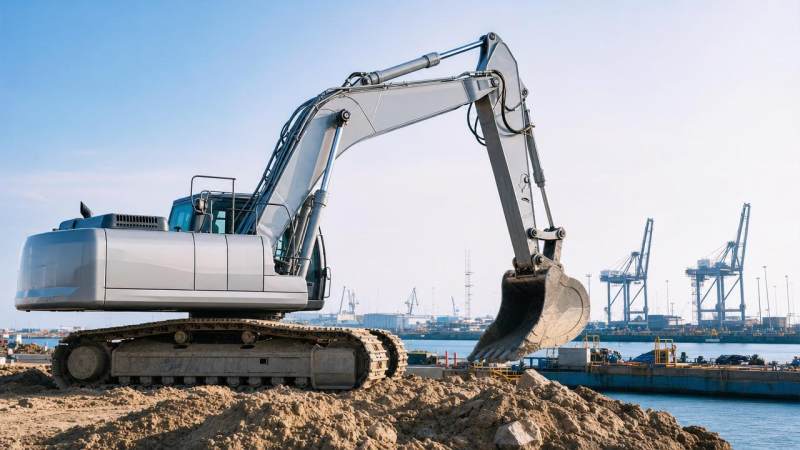
On May 3, 2026, Indonesia’s Presidential Regulation No. 22/2026 entered into force, mandating a minimum 45% local content requirement — including local assembly, local certification, and local service network coverage — for construction machinery procured under all central government-funded infrastructure projects (e.g., highways, ports, power plants). This regulation directly affects international equipment manufacturers, trade intermediaries, and supply chain service providers operating in or exporting to Indonesia’s infrastructure sector.
Event Overview
On May 3, 2026, the Indonesian Presidential Secretariat issued Presidential Regulation No. 22 of 2026. The regulation stipulates that, effective from 2026, all infrastructure projects funded by central government budgets must procure construction machinery with a local content level of no less than 45%. Local content is defined to include locally assembled units, locally certified products, and equipment supported by an established local after-sales service network. The rule applies explicitly to highway, port, and power plant projects. Chinese original equipment manufacturers (OEMs) may comply via joint ventures with Indonesian partners or authorized local certification pathways to maintain eligibility for public tenders.
Industries Affected
Direct Exporters and OEMs
Manufacturers exporting complete construction machinery units (e.g., excavators, wheel loaders, cranes) to Indonesia will face tender disqualification unless their offerings meet the 45% local content threshold. Compliance is not based on origin of components alone but requires demonstrable local value addition — such as final assembly, certification by Indonesian authorities (e.g., KAN-accredited bodies), or verified local service infrastructure.
Local Assembly and CKD/KIT Partners
Indonesian firms engaged in contract manufacturing, semi-knocked-down (SKD) or completely knocked-down (CKD) assembly, or certification facilitation are positioned to benefit. Their role shifts from logistical support to a formal compliance enabler: they now serve as essential intermediaries for foreign OEMs seeking tender access. Revenue models may evolve toward certification fees, assembly margins, and service network licensing.
After-Sales Service and Technical Support Providers
Companies offering maintenance, spare parts distribution, technician training, or digital fleet management in Indonesia must now align operations with regulatory expectations of ‘local service network’. The regulation implicitly raises the bar for service coverage density, response time documentation, and local workforce certification — turning service capability into a quantifiable compliance criterion.
Supply Chain and Logistics Intermediaries
Firms managing cross-border component shipments, customs clearance for assembly kits, or bonded warehouse operations for localized production will experience increased volume and complexity. Requirements for traceability — linking imported subassemblies to final certified units — may necessitate enhanced documentation systems and audit-readiness for local content verification.
What Enterprises and Practitioners Should Monitor and Do Now
Track official implementation guidelines and verification protocols
The regulation confirms the 45% threshold and scope but does not yet specify how local content will be measured, audited, or certified. Stakeholders should monitor announcements from the Ministry of Industry (Kemenperin) and the National Standardization Agency (BSN), particularly regarding calculation methodology (e.g., value-added vs. headcount vs. FTE-based metrics) and third-party validation requirements.
Assess eligibility pathways for priority machinery categories
Not all construction equipment types carry equal weight in current infrastructure pipelines. High-priority categories — such as hydraulic excavators for road earthworks or mobile cranes for port terminal upgrades — warrant immediate compliance planning. Companies should map their product portfolio against publicly announced 2026–2027 project lists (e.g., via the Ministry of Public Works and Housing’s e-procurement portal) to prioritize adaptation efforts.
Distinguish policy intent from operational readiness
While the regulation is legally effective as of May 3, 2026, procurement timelines for major projects often lag issuance by 6–18 months. Tender documents may not reflect the new rule until Q3 2026 onward. Enterprises should treat early 2026 tenders as transitional cases — verifying clause-by-clause whether local content conditions apply — rather than assuming blanket enforcement from day one.
Prepare documentation and partnership frameworks ahead of tender cycles
OEMs intending to use local assembly or certification routes should formalize agreements with Indonesian partners before tender submission deadlines. Required documentation may include joint venture certificates, factory audit reports, service center accreditation letters, and localized technical manuals. Pre-emptive alignment on data-sharing protocols (e.g., for service ticketing or spare parts traceability) helps avoid last-minute compliance gaps.
Editorial Perspective / Industry Observation
Observably, Presidential Regulation No. 22/2026 signals a structural shift — not merely a procurement tweak — in Indonesia’s infrastructure industrial policy. It moves beyond traditional import substitution rhetoric by embedding local value addition into tender eligibility criteria, thereby converting regulatory compliance into a prerequisite for market access. Analysis shows this is less about immediate revenue impact and more about long-term positioning: firms that establish verifiable local capabilities now gain first-mover advantage in future project waves, while those delaying adaptation risk exclusion from multi-year infrastructure pipelines. From an industry perspective, the regulation functions primarily as a coordination mechanism — incentivizing foreign OEMs and domestic partners to co-develop localized business models — rather than a standalone trade barrier.
It is currently more accurate to interpret this regulation as a binding framework with phased operationalization, not an immediately enforceable quota across all tenders. Its real-world effect will depend heavily on how verification bodies interpret ‘local service network’ and whether ministries issue unified guidance on acceptable evidence formats. Continuous monitoring of tender award notices and BSN/Kemenperin circulars remains essential.
Conclusion: Presidential Regulation No. 22/2026 marks a formal institutionalization of localization as a non-negotiable condition for participation in Indonesia’s public infrastructure procurement. Its significance lies not in short-term compliance cost, but in its role as a catalyst reshaping OEM-partner relationships, service delivery standards, and supply chain design logic for the construction machinery sector. For stakeholders, it is best understood today as a strategic inflection point — requiring calibrated preparation, not reactive crisis management.
Source: Official Gazette of the Republic of Indonesia (Lembaran Negara Republik Indonesia), Presidential Regulation No. 22 of 2026, signed May 3, 2026; confirmed via press release by the Presidential Secretariat (Setkab.go.id), May 3, 2026. Implementation details — including verification procedures, definitions of ‘local service network’, and exemptions — remain pending official guidance from the Ministry of Industry and the National Standardization Agency (BSN). These elements are subject to ongoing observation.
Send Your Inquiry
We welcome your cooperation and we will develop with you.
