


Is HYDROXYPROPYL METHYL CELLULOSE water-soluble in cold water?
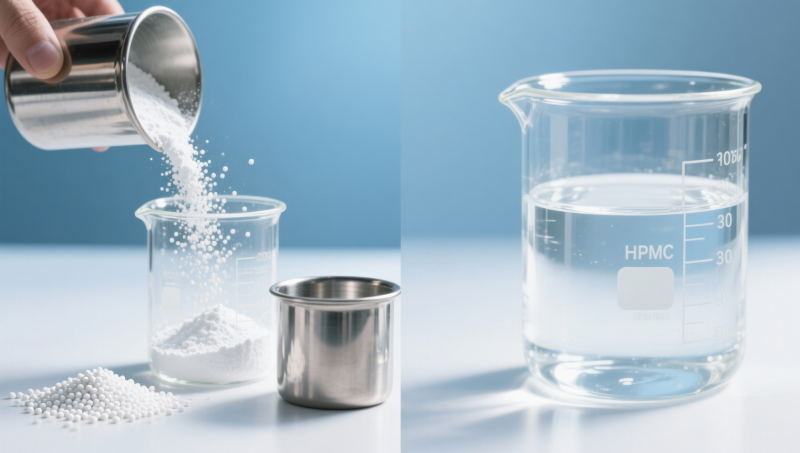
Is HYDROXYPROPYL METHYL CELLULOSE water-soluble in cold water? In most practical cases, yes—but the real answer depends on grade, surface treatment, dispersion method, and the application target. For buyers, formulators, QA teams, and business evaluators, this is not just a lab question. It directly affects mixing efficiency, gelation behavior, viscosity development, production stability, and ultimately HYDROXYPROPYL METHYL CELLULOSE price-performance. For construction and chemical users, understanding how HPMC behaves in cold water helps reduce formulation risk and supports better sourcing decisions.
Quick answer: yes, HPMC can be water-soluble in cold water, but the dissolution behavior matters
Hydroxypropyl methyl cellulose (HPMC) is generally considered water-soluble, and many grades are designed to dissolve in cold water after proper dispersion. However, users should distinguish between being dispersible in cold water and forming a clear, fully hydrated solution immediately.
When HPMC contacts water, the outer layer can hydrate first and form a colloidal film. If the material is added incorrectly, this can cause agglomeration or “fish eyes,” slowing full dissolution. In practice, whether HPMC performs well in cold water depends on:
- Product grade and substitution level
- Surface-treated vs. non-surface-treated HPMC
- Water temperature
- Mixing speed and feeding method
- Target viscosity range, such as 400 to 200,000 CPS
- The final application system, including mortar, detergent, coating, or chemical formulations
So, if the business question is “Can HPMC be used in cold-water processing?” the answer is usually yes. If the technical question is “Will every HPMC grade dissolve the same way in cold water?” the answer is no.
What buyers and technical evaluators actually need to confirm before purchasing
For technical assessment personnel, commercial teams, and enterprise decision-makers, the main issue is not simply solubility. It is whether the selected HPMC grade matches the production process and quality target.
The most important evaluation points include:
- Cold-water dispersion performance: Does it disperse evenly without severe clumping?
- Hydration time: How long does it take to reach stable viscosity?
- Viscosity consistency: Is batch-to-batch control reliable?
- Application fit: Is the grade optimized for construction, detergent, or another chemical system?
- Process compatibility: Can it work with existing mixing tanks, dosing methods, and production temperatures?
- Supply stability: Can the manufacturer maintain quality and volume over time?
For procurement and distribution channels, this matters because two products may both be labeled HPMC, but their actual usability in cold-water systems can differ significantly. A low purchase price may lead to higher production loss if dissolution is poor or viscosity development is unstable.
Why HPMC sometimes clumps in cold water
One of the most common misunderstandings is that if HPMC is “cold-water-soluble,” it should disappear instantly after being poured into water. That is not how cellulose ethers usually behave.
Clumping typically happens because the particle surface hydrates too quickly, creating a gel layer around dry powder inside. This prevents water from penetrating the core efficiently. As a result, operators may see lumps that look undissolved even though the material itself is water-soluble.
This is why process design matters as much as raw material selection. Common causes of poor cold-water dissolution include:
- Dumping a large amount of powder into still water
- Insufficient agitation during feeding
- Using the wrong sequence of addition
- Selecting an unsuitable grade for the formulation system
- Assuming all HPMC types behave identically
For quality control and safety management personnel, preventing clumps is also important because poor dispersion can create inconsistent viscosity, non-uniform product performance, and unnecessary rework.
How to test whether an HPMC grade is suitable for your cold-water process
A practical evaluation should go beyond a datasheet review. Before final sourcing or qualification, teams should verify real operating behavior under plant-relevant conditions.
A useful testing approach includes:
- Confirm the target application
Construction mortar, tile adhesive, skim coat, detergent, or chemical blends all place different demands on HPMC. - Define the water temperature range
“Cold water” in one plant may mean 10°C, while another may work at 25°C. This affects hydration speed. - Measure dispersion quality
Observe whether powder wets out evenly or forms fish eyes. - Track viscosity development over time
Check not only final viscosity but also how quickly and consistently it develops. - Evaluate formulation interaction
Salts, surfactants, fillers, cementitious materials, and other additives can influence behavior. - Check repeatability across batches
A stable supplier should provide consistent results, not just a good sample.
In some formulation environments, users also compare HPMC with complementary binders or film-forming materials such as Polyvinyl Alcohol, especially when balancing water retention, adhesion, and process behavior.
What this means for construction and chemical applications
In construction systems, HPMC is widely valued for water retention, thickening, workability improvement, and open-time control. In these applications, cold-water behavior affects mixing convenience and on-site consistency. A well-selected grade can improve mortar uniformity and reduce operator complaints during batching.
In chemical and detergent-related systems, the importance of cold-water solubility may be even more visible, because rapid and uniform hydration can directly influence appearance, rheology, and manufacturing efficiency.
That is why experienced suppliers do not treat HPMC as a generic commodity only. They help customers align product type, viscosity range, and process requirements. Jinan Ludong Chemical, as a large-scale manufacturer focused on cellulose ethers, provides HPMC series products including type 75 and type 60, with controllable viscosities from 400 to 200,000 CPS. For customers evaluating large-volume supply, this kind of production flexibility is often as important as the lab result itself.
How to make a better sourcing decision
For business evaluators and decision-makers, the right question is not simply “Is HPMC soluble in cold water?” but rather:
- Which HPMC grade is suitable for our exact process?
- Will it dissolve or disperse efficiently under our mixing conditions?
- Can the supplier provide stable quality at commercial scale?
- What is the true cost impact after considering mixing time, rejects, and batch consistency?
A qualified supplier should be able to support technical selection, provide clear application guidance, and maintain dependable output. This becomes especially important for distributors, agents, and industrial buyers who need both performance confidence and long-term supply assurance.
In multi-material systems, some buyers also assess related additives alongside HPMC, including redispersible polymer powder and, in selected use cases, Polyvinyl Alcohol, to optimize final formulation economics and performance.
Conclusion
Yes, HYDROXYPROPYL METHYL CELLULOSE is generally water-soluble in cold water, but practical success depends on much more than that simple answer. Grade selection, dispersion method, hydration speed, viscosity target, and application environment all determine whether the material performs well in real production.
For technical teams, the priority should be testing cold-water behavior under actual process conditions. For procurement and management teams, the priority should be total value: product suitability, supply stability, quality consistency, and technical support. When these factors are evaluated together, it becomes much easier to choose the right HPMC solution with lower risk and stronger commercial confidence.
Send Your Inquiry
We welcome your cooperation and we will develop with you.
