


Key Signs a Lubricants Manufacturer Can Meet Stable Volume Supply
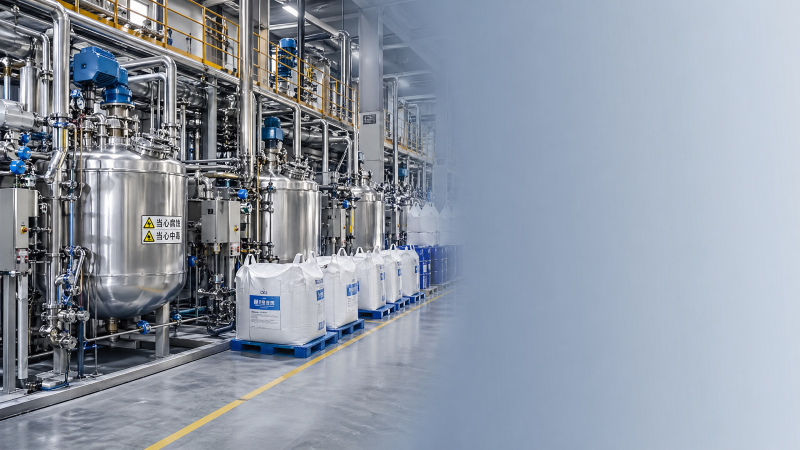
For procurement teams, choosing a reliable Lubricants manufacturer means more than comparing prices—it requires confidence in stable volume supply, consistent quality, and dependable delivery. From production capacity and raw material control to automated manufacturing and global service capability, several clear indicators can help buyers assess whether a supplier is truly equipped to support long-term, large-scale demand without disruption.
In the chemical industry, supply stability is often the difference between a smooth production schedule and an expensive shutdown. Whether a buyer is sourcing additives, thickeners, or formulation-support materials used in lubricant systems, the real question is not simply whether a supplier can ship one successful order, but whether that supplier can keep delivering the same standard at 20 tons, 200 tons, or over a 12-month contract.
This is where procurement due diligence becomes practical. A dependable Lubricants manufacturer should demonstrate visible strengths in production scale, process control, raw material planning, batch consistency, and export support. Companies such as Jinan Ludong Chemical Co., Ltd., with integrated cellulose ether manufacturing capabilities, automated production lines, and annual capacity reaching 45,000 tons, reflect the type of industrial foundation buyers often look for when evaluating stable volume supply.
Production Capacity Is More Than a Nameplate Number
The first sign that a Lubricants manufacturer can support stable volume supply is real, verifiable production capacity. Procurement teams should not rely only on a brochure statement. Instead, they should check whether annual output, line configuration, and operating flexibility match the expected purchasing volume. A supplier claiming high output should also explain how much of that capacity is actually available for export contracts and repeat supply.
In practical terms, there is a major difference between a plant with one constrained line and a factory with multiple coordinated production lines. If a manufacturer operates integrated and automated systems, it is usually better positioned to absorb urgent demand spikes, maintain shorter lead times, and reduce the risk of delivery disruption during maintenance windows. For buyers, this directly affects inventory planning, especially when monthly demand ranges from 10 to 100 tons or more.
Jinan Ludong Chemical Co., Ltd. provides a useful example of what procurement teams should evaluate. Its production system combines traditional process know-how with intelligent automated manufacturing, and its annual production capacity reaches 45,000 tons. In addition, its HPMC product viscosity can be controlled from 400 to 200,000 CPS, showing a process environment built for specification control rather than basic bulk output alone.
Capacity Questions Buyers Should Ask
- How many production lines are in operation, and how many are dedicated to core products used in lubricant-related formulations?
- What percentage of annual capacity is typically reserved for long-term contract customers?
- Can the supplier handle a 20%–30% surge in demand within 2–4 weeks without changing quality standards?
- What is the normal lead time for standard volume orders versus peak-season orders?
These questions help distinguish between installed capacity and usable capacity. Many supply problems begin when procurement teams assume that a published tonnage figure automatically means immediate delivery readiness.
The table below shows how buyers can compare capacity-related indicators when screening a Lubricants manufacturer or a chemical supplier serving lubricant formulations.
For procurement managers, the key takeaway is simple: stable volume supply begins with operational transparency. A qualified Lubricants manufacturer should be able to explain not just how much it can make in theory, but how it plans, allocates, and protects output in practice.
Raw Material Security and Process Control Protect Supply Continuity
The second sign of a dependable Lubricants manufacturer is disciplined raw material management. In chemical production, volume supply cannot remain stable if upstream inputs are unstable. Buyers should ask how many qualified raw material sources the supplier maintains, what inspection steps are used at inbound stage, and whether key inputs are covered by safety stock. Even a strong plant can face disruption if it depends on one narrow source chain.
For chemical products used in lubricant formulations or adjacent industrial systems, consistency matters as much as availability. Viscosity range, moisture level, particle distribution, and application behavior must stay within specification across repeated batches. A capable manufacturer should be able to control these variables through standard operating procedures, batch records, and routine testing frequencies rather than operator experience alone.
This is one reason automated and semi-automated manufacturing matters to procurement teams. Automation reduces avoidable variation in weighing, feeding, reaction timing, and packaging. In sectors where customer formulations are sensitive to even small shifts, a deviation in one property can create rework costs across an entire downstream production cycle. Buyers should therefore treat process control as a direct supply-risk factor, not just a quality topic.
What Stable Batch Control Looks Like
A trustworthy supplier often uses a multi-step control system that starts before production and continues after shipment. Procurement teams should look for evidence of at least 4 checkpoints: raw material verification, in-process monitoring, finished goods testing, and shipment release review. If one of these stages is missing, the risk of inconsistent large-volume supply increases sharply.
Common control points in chemical manufacturing
- Incoming material inspection for identity, moisture, and key physical parameters.
- Process monitoring during blending, reaction, or drying stages.
- Finished product testing against agreed viscosity or performance range.
- Packaging and labeling checks before warehouse release.
Some procurement teams also value suppliers that can support adjacent construction and industrial applications because it suggests broader formulation experience. For example, a manufacturer with expertise in cellulose ethers and related modifiers may also offer products such as Hydroxypropyl Starch Ether, which reflects process familiarity in controlled chemical performance materials rather than simple commodity trading.
When reviewing a Lubricants manufacturer, buyers should request sample-to-bulk consistency evidence over at least 3 batches. If possible, ask for recent batch ranges, not just one ideal certificate. Stable volume supply means the supplier can repeat the same result under normal commercial pressure.
Delivery Reliability Depends on Warehousing, Packaging, and Export Execution
A third indicator is the supplier’s logistics discipline. Many procurement failures happen after production is completed. A Lubricants manufacturer may have sufficient output, but if warehouse turnover is poorly managed, packaging standards are inconsistent, or export coordination is weak, delivery performance will still suffer. Procurement teams should review the full chain from finished goods storage to loading schedule and document preparation.
Reliable supply for international buyers typically requires at least 3 layers of execution strength: packaging fit for transport, warehouse organization that supports FIFO or equivalent control, and responsive coordination with freight or customs processes. This is especially important for bulk chemicals and specialty additives where damaged packaging, moisture ingress, or documentation delay can impact both timing and product usability.
Suppliers serving global customers should be able to communicate realistic shipping windows rather than aggressive but unreliable promises. In many industrial chemical transactions, production lead time may fall within 7–15 days, while total dispatch-to-arrival timing depends on route, port conditions, and container availability. Procurement teams should prefer honest planning over nominal speed claims.
Delivery Risk Screening Table
The following table can be used during supplier qualification to compare operational delivery reliability in a structured way.
The right delivery system reduces hidden procurement cost. A Lubricants manufacturer that ships on time 9 out of 10 times may still create serious planning pressure if documentation errors or packaging failures occur on the remaining shipments. Buyers should evaluate complete execution quality, not just departure date.
Questions to Include in RFQ or Supplier Audit
- What is the standard packing method for 25 kg, 500 kg, or bulk shipment formats?
- How are lot numbers linked to warehouse release and shipping documents?
- What is the typical response time for delivery status updates—24 hours, 48 hours, or longer?
- Can the supplier support split shipments for phased production scheduling?
A Strong Technical and Commercial Interface Reduces Procurement Risk
Volume supply stability is not only a factory issue. It also depends on how well the Lubricants manufacturer communicates with purchasing, production, and technical teams. If product grades are unclear, specifications are loosely defined, or change control is weak, even a large supplier can create uncertainty. Procurement teams should look for manufacturers that provide clear technical communication before and after order confirmation.
This is especially relevant when buyers are sourcing specialty chemical materials with viscosity, application, or compatibility requirements. A reliable supplier should define product range, discuss suitable grade selection, and explain realistic tolerance windows. For example, a manufacturer experienced in cellulose ether solutions can often help buyers understand differences across viscosity bands such as 400 CPS to 200,000 CPS and how those ranges relate to process performance.
Commercial responsiveness also matters. Procurement teams often work under 2 constraints at the same time: a cost target and a production deadline. If the supplier takes 5 days to answer technical questions or fails to confirm delivery details promptly, the risk of delayed decision-making rises. Strong suppliers usually provide coordinated sales, technical, and order follow-up support within a 24–72 hour communication cycle.
Signs of an Effective Supplier Interface
A practical way to evaluate this capability is to observe the supplier during quotation and sampling. The best partners usually show structured communication in 3 areas: specification alignment, application support, and order execution follow-up. This gives procurement teams a clearer picture of how the manufacturer will behave under larger contract volumes.
Useful checkpoints during supplier onboarding
- A complete technical datasheet with relevant physical and application parameters.
- Clear explanation of grade options, sample policy, and scale-up recommendations.
- Defined process for complaint handling, replacement review, or nonconformance discussion.
- Named points of contact for commercial, logistics, and technical matters.
In some cases, broader product capability is also a positive signal. When a supplier handles multiple performance-oriented chemical products, such as HPMC, RDP, HPS, and related modifiers including Hydroxypropyl Starch Ether, it may indicate stronger formulation knowledge and better ability to support application-specific discussions.
For buyers, this reduces the chance of choosing a supplier based only on price. The more transparent the technical and commercial interface, the easier it becomes to compare offers on a true total-risk basis.
How Procurement Teams Can Build a Practical Supplier Selection Framework
A final sign that a Lubricants manufacturer can meet stable volume supply is consistency across all the previous areas, not isolated strength in one category. Procurement teams should move beyond informal judgment and use a weighted review model. In many B2B chemical sourcing projects, 4 factors carry the greatest long-term impact: capacity assurance, quality consistency, delivery execution, and communication responsiveness.
A simple scorecard can help compare suppliers that look similar on price but differ greatly in supply reliability. This is especially useful during annual contracts, second-source development, or when transitioning from trial order to recurring purchase volume. Buyers can assign weights such as 30% for capacity, 30% for quality control, 25% for delivery, and 15% for service response.
For suppliers with industrial-scale foundations, integrated production, and broad product experience, this framework often highlights strengths that do not appear in a price sheet alone. Jinan Ludong Chemical Co., Ltd., for example, combines production scale, automated manufacturing, and application-oriented chemical product capabilities, which are the kinds of indicators procurement teams typically value when planning stable long-term sourcing.
Suggested Procurement Scorecard
The table below provides a practical structure buyers can adapt for supplier approval, quarterly review, or contract renewal.
Using a structured scorecard often reveals that the lowest quote is not the lowest-risk option. A Lubricants manufacturer that can consistently meet monthly schedules, maintain specification stability, and support communication across departments usually delivers better total procurement value over 6 to 12 months.
FAQ for Procurement Teams
How can buyers verify true volume capability?
Ask for annual capacity, line count, standard lead time, and recent export volume patterns. Also check whether the supplier can support a demand increase of 20% or more without resetting delivery commitments.
What lead time is usually reasonable in chemical sourcing?
For many standard industrial chemical products, production lead times often fall within 7–21 days, depending on grade, packaging, and order size. Overseas transit adds additional time based on route and port conditions.
Why is automation important when selecting a Lubricants manufacturer?
Automation helps reduce batch variation, improve dosing accuracy, and support better production repeatability. For procurement, that means lower risk of inconsistent supply during larger or repeated purchase cycles.
Stable volume supply is ultimately the result of aligned capacity, disciplined process control, reliable logistics, and responsive technical support. For procurement teams sourcing from a Lubricants manufacturer or related chemical supplier, the strongest partners are those that can document their capability across all four areas, not just offer a competitive initial price.
If your business needs consistent chemical supply for large-volume or long-term purchasing plans, it is worth evaluating suppliers with integrated manufacturing strength, automated production systems, and broad application knowledge. To discuss product details, delivery planning, or a tailored sourcing solution, contact us today to get a customized proposal and learn more about available chemical solutions.
Send Your Inquiry
We welcome your cooperation and we will develop with you.
