


MHEC Compatibility in Ready-Mix Formulas
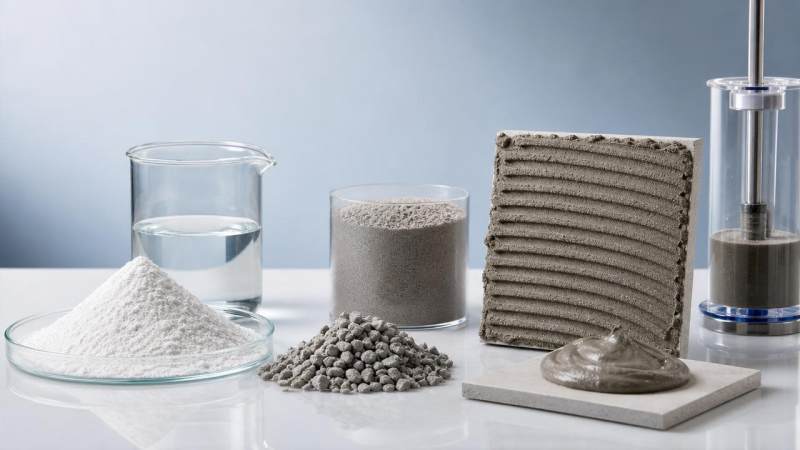
In ready-mix mortar and construction chemical formulations, compatibility determines whether a product delivers stable workability, water retention, open time, and final performance under real jobsite conditions. Methyl Hydroxyethyl Cellulose (MHEC) plays a critical role in balancing rheology and application behavior, but its effectiveness depends on how well it interacts with cement, fillers, polymers, starch ethers, and additives. This article examines the key compatibility factors technical evaluators should consider when selecting and optimizing MHEC for ready-mix formulas.
Why MHEC Compatibility Needs a Checklist Approach
Ready-mix systems contain many active and inactive components. Each one can influence hydration, viscosity build-up, sag resistance, adhesion, or setting behavior.
Methyl Hydroxyethyl Cellulose (MHEC) is rarely evaluated alone. Its real value appears when it performs consistently inside a complete dry-mix formula.
A checklist reduces trial errors. It helps compare grades, control batch variation, and identify hidden incompatibilities before full-scale production.
For construction chemicals, compatibility is not only a laboratory topic. It directly affects pumpability, trowel feel, slip resistance, and customer complaints.
Core Methyl Hydroxyethyl Cellulose (MHEC) Compatibility Checklist
- Check cement type first, because Portland cement, sulphoaluminate cement, and blended binders can change MHEC hydration speed and viscosity response.
- Measure water demand carefully, since Methyl Hydroxyethyl Cellulose (MHEC) increases water retention but may require dosage adjustment for workable consistency.
- Compare viscosity grades under formula conditions, not only in water, because salts, alkalinity, and fillers affect thickening efficiency.
- Evaluate delayed solubility when mixing is short, as poor dispersion may create fisheyes, lumps, or unstable mortar texture.
- Test open time on realistic substrates, because MHEC film behavior changes with absorption rate, temperature, and humidity.
- Observe anti-sag performance vertically, especially in tile adhesive, plaster, and skim coat formulas with high filler loading.
- Verify compatibility with redispersible polymer powder, as polymer film formation and MHEC water retention must support adhesion development.
- Assess interaction with starch ether, because combined rheology can improve trowelability but may increase stickiness if overdosed.
- Screen air entrainment level, since Methyl Hydroxyethyl Cellulose (MHEC) may influence foam stability and final density.
- Confirm thermal stability in hot climates, where viscosity loss can reduce hang, spread control, and application comfort.
Binder System Compatibility
Cement chemistry is the first checkpoint. High-alkaline systems can accelerate swelling, while some blended binders slow the viscosity build-up.
MHEC should provide enough early body without preventing cement hydration. Excessive dosage may delay setting or reduce early strength.
When fly ash, slag, or limestone powder is used, run comparative tests. These materials can change water absorption and mortar consistency.
A stable Methyl Hydroxyethyl Cellulose (MHEC) grade should maintain viscosity across reasonable cement source changes, not only with one laboratory sample.
Filler and Aggregate Compatibility
Fillers influence rheology through particle size, shape, and surface absorption. Fine calcium carbonate often increases smoothness but raises water demand.
Coarse sand reduces stickiness but may weaken cohesion. MHEC selection should balance particle suspension with application feel.
Clay contamination is a common risk. Even low clay levels can absorb water and reduce the effective performance of MHEC.
Use sieve analysis and methylene blue testing when raw material variation appears. These checks help explain sudden viscosity loss.
Polymer and Additive Interaction
Redispersible polymer powder improves flexibility, adhesion, and abrasion resistance. However, it must work with MHEC rather than compete for water.
In some formulations, Polyvinyl Alcohol may support film properties and bonding behavior. Its use should be tested with the complete MHEC system.
Defoamers, accelerators, retarders, superplasticizers, and hydrophobic agents can also change Methyl Hydroxyethyl Cellulose (MHEC) behavior.
Do not judge compatibility by visual mixing alone. Check wet density, air content, spread, sag, and strength after curing.
Application Scenario: Tile Adhesive
Tile adhesive needs open time, slip resistance, wetting, and final adhesion. Methyl Hydroxyethyl Cellulose (MHEC) contributes to all four properties.
For large-format tiles, stronger anti-sag performance is needed. Choose an MHEC grade that builds structure without making the mortar too sticky.
Open time should be tested after skin formation begins. A formula may feel workable but still lose bonding ability too early.
Application Scenario: Skim Coat and Wall Putty
Skim coat formulas require smooth spreading, water retention, and easy sanding. MHEC compatibility with fillers is especially important here.
Too much viscosity can cause heavy trowel drag. Too little viscosity can produce poor coverage and weak surface uniformity.
Methyl Hydroxyethyl Cellulose (MHEC) should be compared at different dosages. The best result often appears between maximum viscosity and best workability.
Application Scenario: Plaster and Rendering Mortar
Plaster needs pumpability, cohesion, water retention, and sag control. MHEC helps stabilize mortar during transport and application.
Machine-applied mortars require special attention. Shear conditions can reduce apparent viscosity during pumping and rebuild structure after spraying.
Test both hand application and mechanical spraying if the same product will serve multiple construction methods.
Commonly Overlooked Compatibility Risks
Raw Material Moisture Variation
Moist fillers can reduce free mixing water. This changes the apparent performance of Methyl Hydroxyethyl Cellulose (MHEC) and may create batch inconsistency.
Mixing Sequence Problems
Poor dry blending can cause MHEC agglomeration. Additives with very fine particles should be dispersed evenly before water addition.
Temperature-Sensitive Testing
Laboratory tests at comfortable temperatures may not reflect summer jobsites. Evaluate MHEC performance under hot and dry conditions.
Over-Reliance on Viscosity Numbers
A high viscosity label does not guarantee better mortar. Real compatibility depends on rheology profile, water retention, and application response.
Ignoring Storage Stability
Dry-mix products may sit for months. Check whether Methyl Hydroxyethyl Cellulose (MHEC) maintains performance after humidity exposure and storage aging.
Practical Testing Method for MHEC Selection
- Define target application properties, including open time, sag resistance, spread value, water retention, and final strength requirements.
- Prepare a control formula using current cement, fillers, polymer powder, starch ether, and selected construction additives.
- Compare at least three MHEC grades with different viscosity levels and modification profiles under identical water addition.
- Adjust water gradually, because equal dosage does not always mean equal workable consistency in ready-mix formulas.
- Record fresh mortar behavior after five, fifteen, thirty, and sixty minutes to capture workability retention.
- Test cured performance, including adhesion, compressive strength, shrinkage, and surface quality after standard conditioning.
- Repeat the best formula with alternative cement or filler batches to confirm compatibility under supply variation.
Quality Indicators for a Reliable MHEC Grade
Reliable Methyl Hydroxyethyl Cellulose (MHEC) should show consistent particle size, controlled moisture, stable viscosity, and predictable dissolution.
In construction chemicals, batch-to-batch stability matters as much as peak performance. Small variations can disrupt automated dry-mix production.
Jinan Ludong Chemical Co., Ltd. focuses on cellulose ether production, trading, and integrated services for global construction applications.
With annual capacity reaching 45,000 tons, Ludong Chemical supports HPMC series products and related construction solution development.
Its viscosity control range from 400 to 200,000 CPS supports diverse formula requirements across mortar, putty, adhesive, and chemical-grade systems.
Execution Tips for Formula Optimization
- Start with the lowest effective MHEC dosage, then increase only when water retention, cohesion, or open time remains insufficient.
- Keep water addition controlled, because uncontrolled water changes can hide real compatibility problems inside the formula.
- Use application tests, not only instruments, since trowel feel and surface finish often reveal practical formulation issues.
- Document every raw material source, batch number, and mixing condition to make MHEC evaluation repeatable and traceable.
- Revalidate the formula after changing cement, polymer, filler fineness, or seasonal production conditions.
Summary and Action Guide
Methyl Hydroxyethyl Cellulose (MHEC) compatibility determines whether a ready-mix formula performs reliably beyond the laboratory.
The strongest evaluation method combines binder checks, filler analysis, additive screening, application testing, and storage verification.
Before approving a grade, test MHEC inside the complete formula. Include realistic substrates, climate conditions, and raw material variation.
For stable ready-mix performance, build a documented checklist and update it whenever the formulation or supply chain changes.
Send Your Inquiry
We welcome your cooperation and we will develop with you.
