


MHEC Selection Tips for Putty and Plaster Formulations
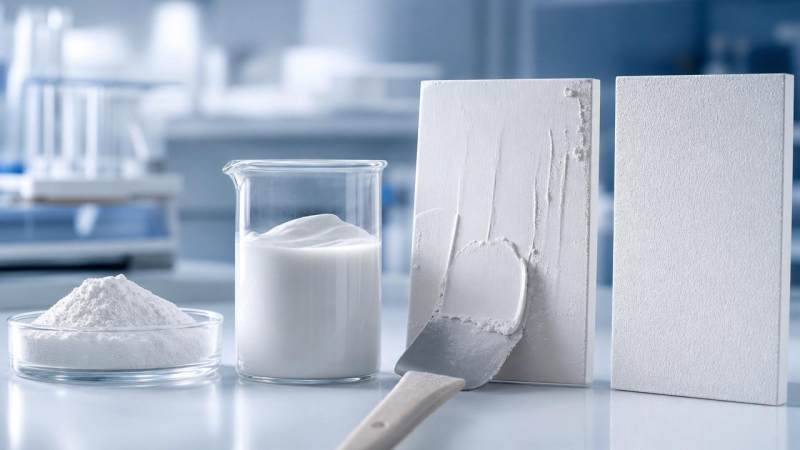
MHEC Selection Tips for Putty and Plaster Formulations
Choosing the right Methyl Hydroxyethyl Cellulose (MHEC) now matters more than ever in drymix construction chemistry.
Performance expectations are rising, while application conditions vary across climates, substrates, and labor practices.
In putty and plaster systems, Methyl Hydroxyethyl Cellulose (MHEC) strongly affects water retention, sag resistance, open time, and finish quality.
For formulation decisions, careful selection improves consistency, reduces rework, and supports stable large-scale production.
This article reviews current performance trends, selection drivers, practical evaluation points, and response strategies for better formulations.
Why MHEC selection standards are becoming more demanding
The construction chemicals market is shifting from basic thickening needs toward balanced rheology and reliable jobsite behavior.
As a result, Methyl Hydroxyethyl Cellulose (MHEC) is no longer judged by viscosity alone.
Formulators increasingly compare anti-sag performance, smooth spreading, mixing speed, and compatibility with cement, gypsum, lime, and fillers.
Another clear signal is the need for stable performance under faster application cycles and wider temperature variation.
Poorly matched grades can lead to roller drag, knife marks, cracking risk, or delayed setting behavior.
This trend favors suppliers with controlled production, broad viscosity coverage, and dependable batch consistency.
Jinan Ludong Chemical Co., Ltd. supports this demand through integrated cellulose ether manufacturing and scalable output.
Its production system combines traditional process knowledge with intelligent automation for controlled quality and flexible supply.
The main forces shaping MHEC use in putty and plaster
Several factors are pushing Methyl Hydroxyethyl Cellulose (MHEC) selection toward more targeted formulation design.
These forces make application-focused Methyl Hydroxyethyl Cellulose (MHEC) evaluation more useful than simple catalog comparison.
What changes first in formulation performance when MHEC shifts
A small change in Methyl Hydroxyethyl Cellulose (MHEC) grade can alter several linked properties at once.
Putty formulations
In wall putty, the first visible effect is usually knife feel during spreading.
If the grade is too low in structure, the material may slump or feel watery.
If it builds too much viscosity too fast, scraping can become heavy and leave marks.
Water retention also affects hydration, surface dryness, sanding behavior, and crack control.
Plaster formulations
In plaster, the grade influences pumpability, vertical hold, feather edge quality, and open time.
A mismatch may reduce productivity by causing poor spray pattern, sagging layers, or uneven finishing windows.
Where lightweight fillers are used, structure development becomes even more important.
Some systems also benefit from synergy with Hydroxypropyl Starch Ether for improved anti-sag and application feel.
How to judge the right MHEC grade beyond viscosity alone
Viscosity remains important, but smart selection of Methyl Hydroxyethyl Cellulose (MHEC) needs a broader checklist.
- Water retention under actual substrate absorption conditions
- Consistency of wetting and dissolution during mixing
- Initial and final workability window
- Slip, lubrication, and hand feel during application
- Sag resistance on vertical surfaces
- Compatibility with cement, gypsum, lime, and redispersible polymer powder
- Effect on setting profile and surface drying balance
- Final surface quality, crack tendency, and repair ease
For many drymix systems, medium and high viscosity grades are compared first.
However, identical viscosity does not guarantee the same Methyl Hydroxyethyl Cellulose (MHEC) performance in finished formulas.
Particle size, substitution pattern, and production stability all influence the final result.
Ludong Chemical offers cellulose ether viscosity control from 400 to 200,000 CPS.
That range helps match different putty and plaster performance targets with more precision.
The most useful testing priorities for faster formulation decisions
A structured approach reduces trial cycles when screening Methyl Hydroxyethyl Cellulose (MHEC).
- Set one reference formula and change only the cellulose ether grade.
- Measure water demand, mixing time, and viscosity development.
- Check spreading, anti-sag behavior, and open time on realistic substrates.
- Observe setting, drying uniformity, and surface defects after curing.
- Repeat under hot and normal conditions to reveal climate sensitivity.
This method shows whether a grade performs well only in the lab or also in practical application.
When formulations require additional structure control, Hydroxypropyl Starch Ether can be evaluated alongside cellulose ether.
The goal is not maximum thickness, but balanced workability and stable construction behavior.
What deserves closer attention in the next stage of material selection
The next phase of demand will likely favor Methyl Hydroxyethyl Cellulose (MHEC) grades with stronger application specialization.
Three priorities stand out for future-ready formulation work.
- More stable performance across raw material changes
- Better balance between water retention and smooth finishing
- Higher consistency from pilot testing to full production scale
Supply reliability also matters because interrupted quality control can force costly reformulation.
Large-scale producers with integrated manufacturing are better positioned to support continuity and technical adjustment.
Jinan Ludong Chemical Co., Ltd., founded in 2020, operates as a global cellulose ether manufacturing and service enterprise.
Its major portfolio includes HPMC, RDP, and HPS for comprehensive construction solutions.
With annual capacity reaching 45,000 tons, it can support stable long-term development for construction chemical formulations.
Practical next steps for selecting MHEC with confidence
Start by defining the real performance target of the putty or plaster, not just the nominal viscosity range.
Then compare Methyl Hydroxyethyl Cellulose (MHEC) grades using the same raw materials, water ratio, and application method.
Focus on water retention, anti-sag behavior, finish quality, and batch repeatability together.
A well-selected Methyl Hydroxyethyl Cellulose (MHEC) grade supports smoother application, fewer defects, and stronger formulation stability.
For better results, combine supplier data with real substrate testing and climate-based validation.
That approach leads to more reliable formulation decisions and stronger long-term product performance.
Send Your Inquiry
We welcome your cooperation and we will develop with you.
