


How MHEC Affects Water Retention and Open Time
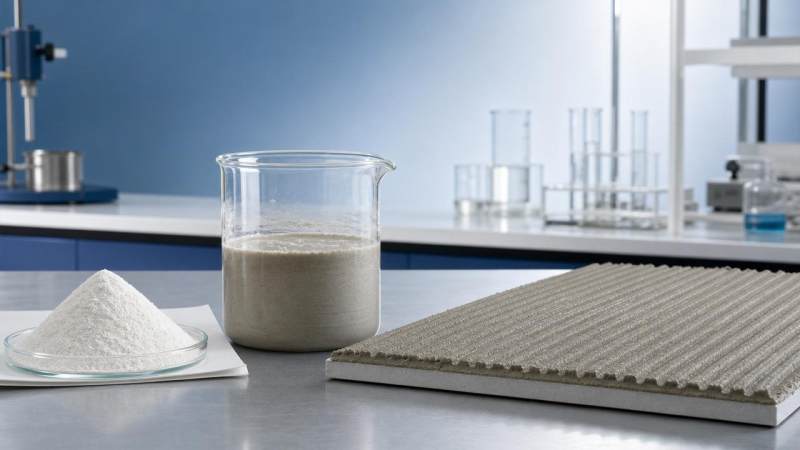
How Methyl Hydroxyethyl Cellulose (MHEC) Influences Water Retention and Open Time
For technical evaluators assessing formulation performance, Methyl Hydroxyethyl Cellulose (MHEC) plays a critical role in balancing water retention and open time in construction materials.
Its influence goes far beyond thickening. It affects workability, adhesion, hydration efficiency, and surface stability during application and curing.
When Methyl Hydroxyethyl Cellulose (MHEC) is matched correctly, mortar, tile adhesive, skim coat, and plaster can perform more consistently under changing jobsite conditions.
This guide explains what to check, what changes performance, and how to evaluate MHEC for better water retention and longer usable open time.
Why a Structured Evaluation Is Necessary
Water retention and open time are closely linked, but they are not identical. A formula may hold water well yet still lose surface tack too quickly.
A structured review helps separate viscosity effects, thermal gel behavior, substrate suction, and additive interactions that influence MHEC performance.
This matters in construction chemicals, where slight formulation changes can alter cement hydration, sag resistance, spreadability, and bonding reliability.
Producers with broad cellulose ether capability, such as Jinan Ludong Chemical Co., Ltd., support this process through controlled viscosity ranges and integrated production quality.
Core Points to Check When Evaluating MHEC
- Check water retention under realistic substrate absorption, because highly porous bases can quickly expose whether the selected MHEC grade truly protects free water.
- Measure open time together with wetting ability, since longer exposure is only valuable when the material still transfers, bonds, and levels properly.
- Compare viscosity at equal dosage levels, because apparent thickening alone may hide differences in hydration speed and film-forming behavior.
- Review particle size and dissolution profile, as poor dispersion can create lumping, delayed thickening, and unstable consistency during mixing.
- Test compatibility with cement, gypsum, starch ether, and redispersible polymer powder, because additive interactions often shift open time more than expected.
- Observe surface skinning behavior in warm or dry conditions, since Methyl Hydroxyethyl Cellulose (MHEC) must maintain moisture without sacrificing application feel.
- Evaluate sag resistance and anti-slip performance together, because formulations with improved water retention still need strong placement stability.
- Confirm repeatability across batches, especially for large-scale production, where small viscosity shifts can change jobsite open time and water demand.
How MHEC Improves Water Retention
MHEC forms a hydrated polymer network in the wet mix. That network slows water migration into porous substrates and reduces rapid evaporation.
In cement-based materials, better retained water supports more complete hydration. This improves strength development, cohesive structure, and reduced application defects.
Higher water retention also helps prevent premature drying at the exposed layer. That is especially important in thin-bed systems and high-temperature application environments.
However, very high retention is not automatically better. Excessive retention may influence setting profile, drying rate, or surface hardness, depending on the binder system.
Key variables affecting retention
- Dosage level
- Viscosity grade
- Substitution pattern
- Binder chemistry
- Ambient temperature and airflow
- Substrate suction rate
How MHEC Extends Open Time
Open time describes how long a fresh applied layer remains workable and capable of proper bonding. It is a practical performance window, not only a lab number.
MHEC extends this window by retaining moisture near the surface and slowing formation changes that reduce transfer efficiency or adhesive contact.
In tile adhesives, this means better tile wetting after a waiting period. In skim coats, it supports smoother finishing and reduced drag during reworking.
Performance can be further tuned with complementary cellulose ether options, including Hydroxypropyl Methyl Cellulose, depending on system needs.
Application-Specific Considerations
Tile adhesives
For tile adhesive formulas, check tensile adhesion after open time exposure, not only fresh consistency. Surface drying often appears before obvious bulk water loss.
Methyl Hydroxyethyl Cellulose (MHEC) should help maintain transfer, anti-slip behavior, and spreadability on absorbent and low-absorbent tiles.
Cement render and plaster
In renders and plasters, water retention supports cement hydration and reduces rapid drying cracks. Open time also affects leveling, scraping, and surface correction.
The right MHEC grade should improve hand feel while preserving mechanical stability and avoiding excessive stickiness during trowel movement.
Skim coats and wall putty
These systems require a careful balance between smooth application and moisture control. Too little retention causes drag, while too much may slow surface readiness.
Evaluate polishing ease, edge stability, and repairability after short waiting intervals. Open time should support finishing, not only mixing convenience.
Gypsum-based products
Gypsum systems react differently from cement. Here, MHEC affects water distribution, workability, and surface response without following identical setting behavior.
Compatibility testing is essential because retarding or thickening effects may shift more sharply in gypsum formulations than in cementitious systems.
Frequently Overlooked Risks
Relying only on nominal viscosity is a common mistake. Two grades with similar viscosity can behave differently in dissolution rate, retention efficiency, and open time.
Ignoring climate effects creates misleading conclusions. Temperature, humidity, and wind exposure can strongly alter the visible contribution of MHEC in field use.
Underestimating raw material variation is also risky. Sand grading, cement type, lime content, and filler fineness all influence required cellulose ether adjustment.
Testing only immediate workability can miss failures. Open time must be verified after waiting intervals that reflect actual installation or finishing delays.
Overdosing to fix one issue may create another. Better retention can come with slower setting, heavier feel, or changed surface behavior if balance is lost.
Practical Execution Advice
- Define target water retention and target open time separately before screening grades.
- Run side-by-side tests at equal dosage, then adjust one variable at a time.
- Use realistic substrate panels and ambient conditions during evaluation.
- Record spreadability, tack, anti-slip, wetting, and final bonding results together.
- Confirm production consistency through repeat batch checks before final selection.
Broad supply capability also supports faster optimization. Jinan Ludong Chemical offers cellulose ether solutions with controlled viscosities from 400 to 200,000 CPS.
Its integrated manufacturing approach and annual capacity of 45,000 tons help maintain stable quality for global construction chemical applications.
Where formulation goals differ, comparing MHEC with Hydroxypropyl Methyl Cellulose can also support more precise selection.
Final Takeaway and Next Step
Methyl Hydroxyethyl Cellulose (MHEC) affects both water retention and open time through moisture control, rheology, and application stability.
The best evaluation method is practical and comparative. Check retention, bonding window, substrate behavior, and additive compatibility as one connected system.
With a clear testing sequence, it becomes easier to select the right MHEC grade, improve consistency, and achieve stable construction performance under real conditions.
Send Your Inquiry
We welcome your cooperation and we will develop with you.
