


MHEC Supply Trends for Construction Chemicals
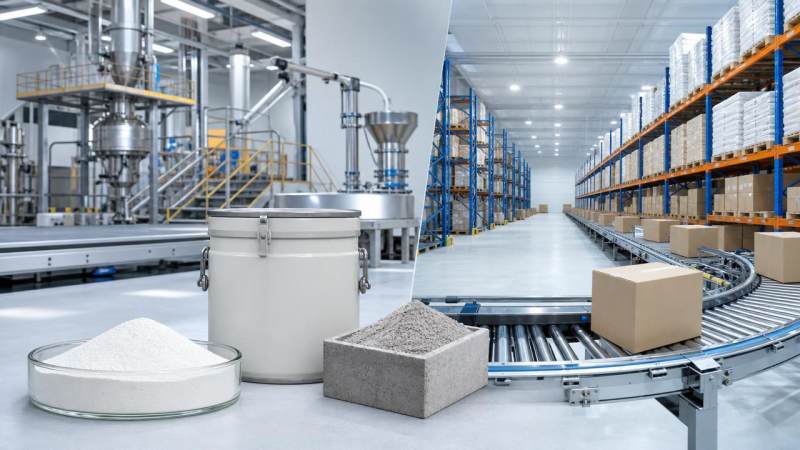
As construction chemical markets adapt to tighter quality demands, cost pressures, and shifting global supply chains, Methyl Hydroxyethyl Cellulose (MHEC) is becoming a critical ingredient for manufacturers seeking reliable performance in mortars, tile adhesives, plasters, and other dry-mix systems.
For business decision makers, understanding MHEC supply trends is essential to securing stable procurement, optimizing formulation costs, and choosing partners with scalable production capacity, technical consistency, and long-term service capabilities.
Why MHEC Supply Has Become a Board-Level Procurement Issue
For construction chemical producers, Methyl Hydroxyethyl Cellulose is no longer viewed as a simple additive purchased mainly by price comparison.
Its influence on water retention, workability, open time, sag resistance, and application stability directly affects product performance in real projects.
When MHEC supply becomes unstable, manufacturers face more than delayed shipments. They may need emergency reformulation, additional testing, and customer complaint management.
This is why decision makers are paying closer attention to supplier capacity, batch consistency, lead times, and technical response capabilities.
The overall market direction is clear: buyers are moving from transactional purchasing toward strategic sourcing with qualified, scalable, and technically competent partners.
Core Market Drivers Behind Current MHEC Supply Trends
The first major driver is continued demand for dry-mix mortar systems in residential, commercial, and infrastructure construction worldwide.
As labor costs rise, contractors increasingly prefer ready-formulated products that deliver predictable application behavior and reduce on-site mixing errors.
MHEC supports this transition by improving water retention and consistency, helping mortars perform under varied temperature, humidity, and substrate conditions.
The second driver is stricter quality expectation from project owners, distributors, and construction brands competing in professional building materials markets.
A tile adhesive or plaster product that performs inconsistently can damage brand reputation faster than a small raw material saving can justify.
The third driver is regional supply chain diversification, as companies reduce dependence on single-source procurement after recent logistics disruptions and cost volatility.
What Business Buyers Actually Need From MHEC Suppliers
Enterprise buyers generally care less about textbook definitions and more about whether MHEC can support stable production and reliable customer outcomes.
The first requirement is consistent viscosity control, because even small variation can change thickening behavior and finished product handling properties.
The second requirement is dependable water retention performance, especially for cement-based mortars that must maintain hydration and adhesion during application.
The third requirement is compatibility with the buyer’s full formulation, including cement, gypsum, fillers, starch ethers, polymer powders, and functional additives.
In many systems, MHEC must work alongside additives such as Redispersible Polymer Powder to balance adhesion, flexibility, and surface performance.
The fourth requirement is transparent communication, including technical documentation, sample testing support, and realistic guidance about substitution or grade selection.
Capacity and Scalability Are Becoming Key Supplier Differentiators
As construction chemical producers expand across regions, small or unstable suppliers may struggle to match changing order volumes and delivery schedules.
Scalable production capacity allows manufacturers to plan longer sales cycles, support distributors, and avoid interruptions during seasonal demand peaks.
Jinan Ludong Chemical Co., Ltd., established in 2020, reflects this trend toward integrated cellulose ether manufacturing and global service capability.
The company operates comprehensive production lines for cellulose ethers and related construction chemical solutions, combining traditional process discipline with intelligent automation.
Its annual production capacity reaches 45,000 tons, covering HPMC series products such as type 75 and type 60.
For buyers, this kind of capacity matters because stable upstream manufacturing reduces the operational risk of sudden shortages or unpredictable allocation.
Quality Consistency Matters More Than the Lowest Quoted Price
In procurement discussions, the lowest unit price can appear attractive, especially when construction markets face margin pressure and competitive bidding.
However, MHEC cost should be evaluated through total formulation value rather than raw material price alone.
A low-cost grade that causes poor workability, inconsistent water retention, or unstable viscosity can increase complaint costs and production adjustments.
Decision makers should ask whether the supplier can maintain repeatable specifications across batches, not only whether a single sample performs well.
They should also consider whether the supplier understands construction chemical applications rather than selling MHEC as a generic industrial material.
The stronger procurement question is not “Which supplier is cheapest?” but “Which supplier protects product stability and long-term market reputation?”
How Global Supply Chain Changes Are Shaping MHEC Procurement
Global chemical supply chains have become more sensitive to freight cost fluctuations, regional policy changes, energy prices, and raw material availability.
For MHEC buyers, this creates a stronger need for supply planning, buffer inventory, and supplier diversification without sacrificing formulation consistency.
Many companies now prefer partners that can provide stable production schedules and flexible order handling for different market demand patterns.
Regional distributors also expect reliable lead times, because delayed cellulose ether shipments can block finished product output for multiple categories.
Another trend is closer supplier evaluation before contract commitment, including factory capability, export experience, technical documentation, and customer service responsiveness.
Companies that treat MHEC as a strategic input can negotiate better continuity, reduce emergency purchasing, and improve production planning accuracy.
Application-Specific Demand Is Driving More Precise Grade Selection
Different construction chemical products require different MHEC performance profiles, making grade selection increasingly important for cost and quality control.
Tile adhesives often need excellent water retention, open time, slip resistance, and smooth troweling to meet contractor expectations.
Cement renders and plasters may focus more on pumpability, anti-sag behavior, surface finishing, and consistent workability over application time.
Gypsum-based products require careful balance between thickening, water demand, setting behavior, and compatibility with other additives.
Self-leveling and specialty dry-mix systems may need lower viscosity influence while maintaining stability and controlled rheological behavior.
Business buyers should therefore avoid one-grade-fits-all procurement and instead align MHEC specifications with product category, climate, and user scenario.
Technical Service Is Becoming Part of the Supply Value
A strong MHEC supplier does more than deliver material; it helps customers reduce uncertainty in formulation development and production scaling.
Technical service can include grade recommendations, viscosity comparison, formulation adjustment suggestions, and troubleshooting for field performance issues.
This support is valuable when customers enter new markets, replace suppliers, or respond to changes in cement and filler characteristics.
For decision makers, supplier technical ability shortens development cycles and reduces hidden costs associated with repeated laboratory trials.
It also helps procurement, R&D, and production teams communicate around measurable performance instead of relying only on price quotations.
In mature construction chemical businesses, technical alignment is often the difference between a supplier relationship and a commodity transaction.
How to Evaluate an MHEC Supplier Before Signing a Contract
Decision makers should begin by reviewing production capacity, manufacturing control systems, product range, and experience in construction chemical applications.
Next, they should request representative samples from actual production grades, not only laboratory-prepared materials optimized for initial approval.
Testing should cover viscosity, water retention, workability, open time, sag resistance, and compatibility with the company’s existing formulation system.
Buyers should also compare batch-to-batch stability through repeated testing, especially before large-scale substitution in established commercial products.
Commercial evaluation should include payment terms, lead time reliability, documentation support, packaging options, and ability to handle growing demand.
A structured evaluation protects companies from choosing suppliers that look competitive during quotation but create operational risk after implementation.
Balancing Cost Optimization With Product Performance
Cost optimization remains essential, but it should be achieved through formulation efficiency, stable sourcing, and correct grade matching.
A suitable MHEC grade may allow manufacturers to reach target performance at an efficient dosage, improving overall cost effectiveness.
In contrast, an unsuitable grade may require higher dosage or additional additives, reducing the apparent savings from a lower purchase price.
Decision makers should evaluate cost per finished formulation performance, not simply cost per kilogram of cellulose ether.
This approach is especially important for mid-to-high-end dry-mix products where brand reliability and contractor satisfaction drive repeat purchasing.
Procurement teams should work with technical teams to calculate realistic value, including rejection risk, reformulation time, and customer service cost.
Why Integrated Construction Chemical Solutions Are Gaining Attention
Another important market trend is the move toward integrated raw material support rather than fragmented single-product purchasing.
Construction chemical manufacturers increasingly prefer suppliers that understand the interaction between cellulose ethers, polymer powders, starch ethers, and dry-mix systems.
Ludong Chemical’s portfolio includes HPMC, RDP, and HPS, supporting broader formulation needs across mortar, adhesive, and plaster applications.
Although Methyl Hydroxyethyl Cellulose remains the focus for many buyers, related products can influence total system performance and sourcing simplicity.
An integrated supplier can help customers coordinate additive selection, reduce communication complexity, and accelerate new product development.
This model is especially valuable for companies expanding product lines or entering regions where application conditions differ significantly.
Risk Management Strategies for MHEC Buyers
To manage MHEC supply risk, companies should avoid depending on short-term spot purchasing for strategically important product lines.
Longer-term agreements, rolling forecasts, and supplier communication can help stabilize availability and reduce emergency procurement pressure.
Buyers should maintain qualified alternative grades, but these alternatives must be tested before supply disruption occurs.
Inventory policies should reflect demand seasonality, shipping distance, customs timelines, and the commercial importance of affected finished products.
Quality risk can be reduced through clear specifications, retained samples, incoming inspection, and documented approval procedures for any grade changes.
Strong risk management turns MHEC procurement from reactive purchasing into a controlled business process supporting market continuity.
What Future MHEC Supply Trends Mean for Decision Makers
The future MHEC market will likely favor suppliers with scale, process control, technical support, and export-ready service systems.
Demand will continue shifting toward application-specific grades as construction chemical brands differentiate through quality, ease of use, and reliability.
Price competition will remain, but buyers will increasingly measure supplier value through consistency, formulation support, and dependable delivery.
Automation and production management will also become more important as customers expect tighter viscosity control and stable product parameters.
Companies that establish strong supplier partnerships early may gain better purchasing security and faster technical response during market volatility.
For decision makers, MHEC sourcing should therefore be part of broader product competitiveness and operational resilience planning.
Conclusion: Choosing MHEC Supply Partners for Long-Term Value
Methyl Hydroxyethyl Cellulose plays a decisive role in the performance, consistency, and market acceptance of many construction chemical products.
The most important supply trend is not only rising demand, but the shift from price-based purchasing to strategic supplier selection.
Business buyers should evaluate capacity, batch consistency, application knowledge, technical service, and integrated solution capability before making procurement decisions.
Suppliers such as Jinan Ludong Chemical, with large-scale production and construction chemical experience, reflect the direction of the market.
By treating MHEC as a performance-critical ingredient, companies can reduce risk, improve formulation value, and build stronger competitive positions.
The right sourcing strategy helps manufacturers secure stable supply today while preparing for more demanding construction chemical markets tomorrow.
Send Your Inquiry
We welcome your cooperation and we will develop with you.
