


MHEC in Cement Mortar: Key Performance Effects
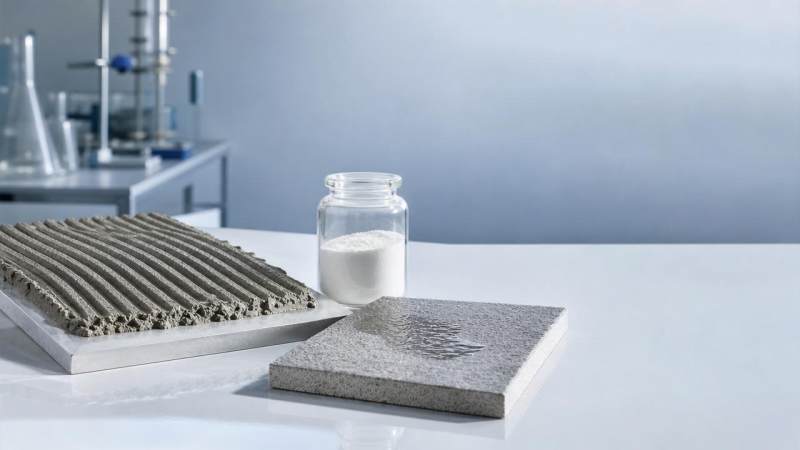
For technical evaluators assessing cement mortar performance, Methyl Hydroxyethyl Cellulose (MHEC) is a critical additive that directly influences workability, water retention, adhesion, open time, and overall application stability. Understanding how MHEC functions in mortar formulations helps optimize consistency, reduce cracking risks, and improve on-site efficiency across diverse construction conditions. This article examines the key performance effects of MHEC in cement mortar and provides practical insights for selecting suitable cellulose ether grades for reliable, high-quality building material systems.
In dry-mix mortar evaluation, small dosage changes can cause measurable differences in troweling feel, sag resistance, surface finishing, and bond reliability.
For procurement engineers and formulation specialists, the challenge is not only choosing an additive, but matching grade behavior to application conditions.
How Methyl Hydroxyethyl Cellulose (MHEC) Works in Cement Mortar
Methyl Hydroxyethyl Cellulose (MHEC) is a non-ionic cellulose ether used to modify the rheology and hydration environment of cement-based materials.
In mortar, it dissolves during mixing, forms a viscous aqueous phase, and helps distribute water more evenly around cement and mineral particles.
Core mechanisms in a 3-phase mortar system
A cement mortar system usually contains binder, aggregate, and polymer-modified water phase. MHEC acts mainly in the water phase.
Its thickening effect improves particle suspension, while its water-holding capacity reduces premature moisture loss to absorbent substrates or dry air.
Typical addition levels are commonly in the range of 0.1%–0.6% by dry mortar weight, depending on target application and viscosity grade.
Why evaluators should focus on balance, not maximum viscosity
Higher viscosity is not always better. Excessive thickening may slow wetting, increase mixing energy, or reduce smoothness during application.
Technical evaluation should measure at least 4 linked properties: water retention, consistency, open time, and final bond strength.
- Water retention supports hydration and reduces surface burning on porous substrates.
- Rheology controls slump, sag, pumpability, and trowel response.
- Open time allows practical adjustment during 10–30 minute site operations.
- Adhesion stability helps maintain bond after curing, thermal movement, and moisture variation.
Key Performance Effects in Cement Mortar Applications
The value of Methyl Hydroxyethyl Cellulose (MHEC) becomes clear when performance is tested against real construction conditions, not only laboratory consistency.
Common evaluation temperatures range from 5°C to 35°C, while substrate absorption, mixing water, and resting time may vary by project.
Water retention and hydration control
MHEC helps retain water in the mortar matrix, supporting cement hydration during the first 24 hours after application.
This is especially important for thin-bed tile adhesives, plastering mortar, skim coats, and repair mortars applied at 2–10 mm thickness.
Workability, anti-sag, and open time
Good workability means the mortar spreads easily, holds shape, and remains adjustable without excessive stickiness on tools.
For wall applications, anti-sag performance may be evaluated at layer thicknesses of 3 mm, 5 mm, and 8 mm.
The following table summarizes typical performance effects that evaluators should examine when comparing MHEC grades in cement mortar formulations.
The table shows that MHEC selection should be based on combined behavior, because one property often influences another during installation.
Compatibility with polymer-modified systems
In tile adhesive and repair mortar, cellulose ether often works with redispersible polymer powder to enhance flexibility and bonding.
Some formulations also use Polyvinyl Alcohol in chemical systems where film formation, adhesion, or protective colloid behavior is required.
Compatibility checks should include dry blending uniformity, wetting speed, air content, and strength development over 7 and 28 days.
Selection Criteria for Technical Evaluators
Selecting Methyl Hydroxyethyl Cellulose (MHEC) requires more than reading a viscosity number on a specification sheet.
A reliable evaluation considers formulation design, application thickness, regional climate, mixing method, and expected shelf stability.
Viscosity grade and dosage window
Cellulose ether viscosity is commonly tested in aqueous solution under controlled concentration, temperature, and spindle conditions.
For construction applications, practical viscosity ranges may vary from several thousand CPS to over 100,000 CPS depending on formulation targets.
Jinan Ludong Chemical Co., Ltd. supplies cellulose ether systems with controllable viscosity from 400 to 200,000 CPS for different construction needs.
Six evaluation checkpoints before approval
- Confirm target mortar type, such as tile adhesive, plaster, masonry mortar, or self-leveling underlayment.
- Set a dosage ladder, commonly 0.15%, 0.25%, 0.35%, and 0.45%.
- Measure flow or consistency immediately, after 10 minutes, and after 30 minutes.
- Check water retention on both dense and absorbent substrates.
- Evaluate bond strength at 7 days and 28 days when relevant.
- Run stability checks after dry-mix storage under normal warehouse conditions.
The table below provides a practical decision matrix for matching MHEC characteristics with common cement mortar application requirements.
This matrix helps evaluators avoid overgeneralization. The same MHEC grade may perform differently in 2 different mortar systems.
Supply consistency and technical support
For B2B buyers, batch consistency is as important as initial test performance, especially when annual demand reaches several hundred tons.
Ludong Chemical operates integrated cellulose ether production lines and provides construction solution support for customers requiring stable formulation performance.
With annual production capacity reaching 45,000 tons, the company can support both routine procurement and project-based technical adjustment.
Formulation Implementation and Testing Workflow
A structured workflow reduces the risk of approving an unsuitable Methyl Hydroxyethyl Cellulose (MHEC) grade based on limited indicators.
For most cement mortar projects, a 3-stage process is recommended: screening, formulation optimization, and pilot production validation.
Stage 1: laboratory screening
Laboratory screening should use controlled mixing water, fixed mixing speed, and consistent resting time, usually 3–5 minutes before testing.
At this stage, evaluators compare MHEC grades against a reference formula to identify clear gains or unacceptable deviations.
Stage 2: formula adjustment
Once the preferred MHEC direction is identified, adjust cement, filler, polymer powder, starch ether, and defoamer levels carefully.
A change of only 0.05% cellulose ether may noticeably affect flow, air entrainment, and trowel drag in sensitive formulations.
Recommended validation checklist
- Dry powder flowability after blending and after 7–15 days of storage.
- Wet mortar consistency under normal, low-temperature, and high-temperature conditions.
- Surface finish, tool release, and edge stability during manual application.
- Bond strength, shrinkage observation, and crack tendency after curing.
- Packaging stability, moisture control, and transportation suitability.
Stage 3: pilot production
Pilot trials should simulate actual dry-mix equipment, because shear, mixing order, and blending time influence final dispersion.
A typical pilot run may use 500 kg to 2 tons of dry mix before full-scale production approval.
During scale-up, monitor water demand, mixing uniformity, bag filling behavior, and site feedback from at least 2 application teams.
Common Risks, Misunderstandings, and Procurement Advice
Even experienced teams can misjudge cellulose ether performance if testing is separated from real substrate and climate conditions.
For Methyl Hydroxyethyl Cellulose (MHEC), procurement decisions should combine technical data, sample testing, supply capacity, and formulation support.
Misunderstanding 1: one viscosity grade fits all mortars
A high-viscosity grade may help anti-sag mortar, but it can be excessive for thin skim coat or pumpable plaster.
Evaluators should request sample grades across at least 2 viscosity levels before deciding on the commercial formula.
Misunderstanding 2: laboratory water retention guarantees site performance
Water retention results depend on substrate absorption, ambient humidity, wind, temperature, and actual mortar thickness.
A formula tested at 23°C and 50% relative humidity may behave differently at 35°C on a porous block wall.
Procurement factors for reducing technical risk
- Request technical specifications, recommended application ranges, and sample testing guidance.
- Check whether viscosity control, moisture control, and batch traceability are managed consistently.
- Evaluate supplier capability for HPMC, MHEC, RDP, HPS, and integrated construction additive systems.
- Confirm lead time, packaging format, and support availability for repeat orders or urgent projects.
Jinan Ludong Chemical Co., Ltd., established in 2020, focuses on production, trading, and integrated services for cellulose ethers.
Its main product portfolio includes HPMC, redispersible polymer powder, and hydroxypropyl starch ether for construction chemical applications.
Through a combination of traditional process control and intelligent automated production, Ludong Chemical supports diverse requirements from global customers.
Practical FAQ for MHEC Evaluation in Cement Mortar
The following questions often arise during sample approval, formula adjustment, and commercial dry-mix mortar production planning.
They are useful for technical evaluators comparing Methyl Hydroxyethyl Cellulose (MHEC) with other cellulose ether options.
How much MHEC should be added to mortar?
Many cement mortar systems use 0.1%–0.6% MHEC by dry weight, but the right dosage depends on application and formulation balance.
Start with a 3 or 4 point dosage ladder rather than making a single-dose decision from one test batch.
Does MHEC improve adhesion directly?
MHEC mainly improves the application environment by retaining water, controlling rheology, and extending open time.
Adhesion improvement often results from better hydration, better contact with substrate, and compatibility with polymer additives.
What should be checked before replacing an existing cellulose ether?
Replacement requires side-by-side testing of consistency, water demand, open time, setting behavior, bond strength, and surface finish.
A 7-day quick check may identify early issues, but 28-day curing results are more reliable for final approval.
Building Reliable Mortar Systems with the Right Cellulose Ether Partner
Methyl Hydroxyethyl Cellulose (MHEC) is not a minor formulation detail; it is a decisive performance modifier in cement mortar systems.
It supports water retention, workable consistency, open time, anti-sag behavior, and application stability across varying jobsite conditions.
For technical evaluators, the best selection process combines controlled laboratory testing, pilot production validation, and supplier-side formulation support.
Ludong Chemical offers cellulose ether production capacity, viscosity control, and integrated construction chemical solutions for global dry-mix mortar customers.
If you are evaluating MHEC grades for tile adhesive, plaster, repair mortar, or skim coat systems, contact us to discuss product details, sample testing, and customized solutions.
Send Your Inquiry
We welcome your cooperation and we will develop with you.
