


Polyvinyl Alcohol Supplier Red Flags That Often Lead to Production Issues
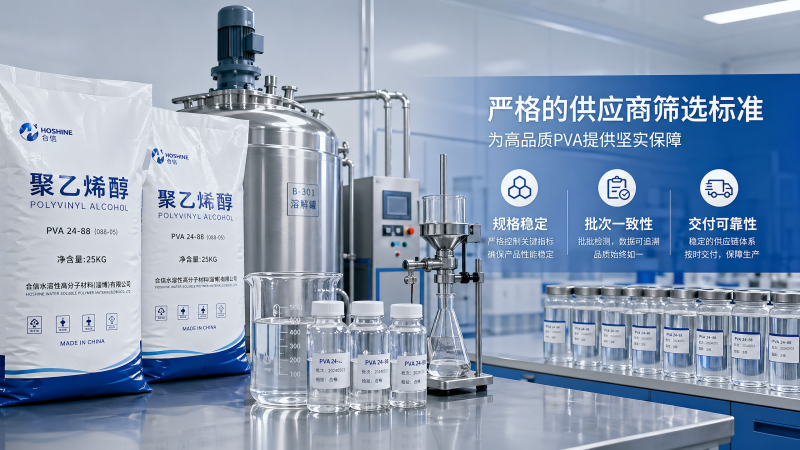
Choosing the right Polyvinyl Alcohol supplier can directly affect product consistency, processing stability, and overall production efficiency. For operators and plant users, early warning signs such as unstable quality, unclear specifications, delayed delivery, or weak technical support often lead to costly downtime and performance issues. Understanding these supplier red flags is essential to reducing risk and keeping chemical production reliable and efficient.
Why does a Polyvinyl Alcohol supplier matter so much in daily production?
For operators in chemical processing, adhesives, coatings, paper treatment, ceramics, textile sizing, and construction formulations, polyvinyl alcohol is not just another raw material. It affects viscosity build, film formation, dissolution speed, water retention, bonding behavior, and interaction with other additives. When a Polyvinyl Alcohol supplier delivers material with inconsistent hydrolysis degree or viscosity range, the effect shows up quickly on the line: slower mixing, unstable batching, filter blockage, foam variation, or end-product performance drift.
In many plants, a small shift in key parameters can create a large processing problem. A viscosity deviation of even 10% to 15% may require changes in water ratio, agitation time, or temperature profile. If the hydrolysis level is not well controlled, dissolution can become uneven across batches, especially in systems operating between 80°C and 95°C. For users working with repetitive daily production, this means more operator intervention, more rework, and a greater chance of customer complaints.
That is why supplier evaluation should not focus only on price per ton. A lower unit cost can easily be offset by 2 to 4 hours of downtime, scrap from one unstable production lot, or delayed shipment caused by reformulation. A reliable Polyvinyl Alcohol supplier helps reduce these hidden losses by keeping specification control, lot traceability, and delivery planning stable over time.
Which production indicators are most sensitive to supplier quality?
Operators usually notice supplier-related issues first in process behavior, not in paperwork. Mixing time may increase from 25 minutes to 40 minutes. Undissolved particles may remain after the normal holding period. Viscosity may rise too fast or too slowly. Product appearance may shift from clear to hazy. These are practical warnings that incoming material behavior is not matching previous lots.
- Batch-to-batch viscosity stability within the expected operating window
- Dissolution profile at standard production temperature and agitation speed
- Moisture content consistency during storage and handling
- Compatibility with surfactants, fillers, pigments, or cellulose ethers
- Residue, gel particles, and filtration behavior during solution preparation
In plants that also handle formulation auxiliaries, users often compare how different water-soluble polymers behave in similar systems. For example, some production teams evaluating detergent or construction blends also look at materials like Detergent-grade HPMC when reviewing rheology and dissolution management across multiple product lines. This kind of comparison makes supplier consistency even more important because process benchmarks are easier to detect.
A quick warning sign checklist
Before quality complaints become major production failures, frontline users can watch for repeated small warnings over 2 to 3 incoming lots. These signals usually appear earlier than formal laboratory rejection.
- Mixing time changes by more than 15% without any process adjustment.
- Operators need to modify water temperature repeatedly to achieve normal dissolution.
- Finished product viscosity drifts outside the normal process control band.
- More foam, haze, sediment, or fish-eyes appear than in previous lots.
- Supplier paperwork does not explain why measured values differ from historical averages.
What are the most common red flags when selecting a Polyvinyl Alcohol supplier?
The most common warning signs are not always dramatic. In many cases, production problems start with vague technical data, irregular response times, or inconsistent documentation. A Polyvinyl Alcohol supplier that cannot clearly explain product grade, hydrolysis range, ash level, particle size, recommended dissolution conditions, or storage sensitivity may not have enough process control to support stable industrial use.
Another red flag is oversimplified quoting. If every application is offered the same grade without asking about viscosity target, mixing equipment, use concentration, pH, temperature, or downstream system, that usually means the supplier is selling generally rather than supporting technically. In chemical operations, this increases the risk of choosing a grade that looks acceptable on paper but performs poorly in the actual process.
Delivery reliability is equally important. Plants operating with 7-day to 21-day raw material planning windows need predictable supply. If a supplier regularly changes lead time from 10 days to 25 days, or sends substitute grades without prior approval, operators may be forced into emergency adjustments. That often causes rushed validation, increased safety risk, and unstable output.
Which red flags deserve immediate attention?
The table below summarizes practical warning signs that operators and procurement teams should treat seriously during supplier screening or re-evaluation.
These issues matter because they directly affect plant rhythm. A trial that succeeds at 5 kg but fails at 500 kg often points to supplier inconsistency rather than formulation error alone. Operators should insist on stable sample identity, clear lot records, and written confirmation if any parameter range changes.
How can you tell if a supplier is hiding uncertainty?
A supplier may not openly admit process variability, but it usually appears in communication patterns. If technical questions are answered with broad terms like “standard grade” or “suitable for all applications,” caution is necessary. Good suppliers usually discuss at least 4 to 6 relevant points: viscosity range, hydrolysis degree, dissolution method, solid handling, storage conditions, and typical compatibility limitations.
Another sign is resistance to comparison data. While not every supplier can provide a full application report, they should be able to explain normal operating ranges and expected variation. If they avoid discussing testing method, measurement temperature, or specification tolerance, users may later discover that quoted values were not measured under conditions relevant to their own production line.
How do unclear specifications turn into real production issues?
Unclear specifications are one of the fastest routes from procurement error to plant instability. In polyvinyl alcohol purchasing, terms like “medium viscosity” or “fully hydrolyzed” are not enough by themselves. Operators need specific ranges or target values because process settings depend on them. A difference between partial and high hydrolysis can change dissolution profile, film strength, and compatibility with other ingredients.
For example, if a production recipe was validated using a grade dissolved at 90°C with 30 minutes of hold time, changing to a less clearly defined product may require 45 to 60 minutes, different pre-wetting, or stronger agitation. That extra time reduces line efficiency and may also disturb production planning for the next batch. In continuous or semi-batch operations, such changes can cascade across an entire shift.
The problem becomes more severe when several variables shift together. If viscosity is slightly lower, moisture is slightly higher, and particle size is less uniform, the material may still pass a basic incoming check but perform unpredictably during dissolution. That is why operators should review supplier data with a process lens, not just a certificate lens.
Which specification items should users confirm before approving a supplier?
The following comparison helps separate useful specification control from vague product descriptions.
A good Polyvinyl Alcohol supplier should explain not only the values but also the testing conditions. This matters because two products can appear similar until one realizes that viscosity was measured at different solution concentrations. That kind of mismatch is a common source of mistaken supplier approval.
Useful questions for operators and lab teams
- What is the standard dissolution temperature range, and how much variation is acceptable?
- Does the supplier provide a recommended charging sequence to reduce fish-eyes or gel particles?
- What is the normal lot-to-lot viscosity variation under the same test method?
- How long can the material remain stable under local warehouse humidity conditions?
- Can sample, pilot, and bulk orders be linked to the same grade definition?
These questions help users move from a sales conversation to a process validation conversation. That shift often prevents later disputes about whether the problem came from material quality or from plant handling conditions.
How should you evaluate delivery, service, and technical support from a Polyvinyl Alcohol supplier?
Many supplier evaluations focus heavily on product data and overlook operational support. Yet in real chemical production, service quality often decides whether a problem stays small or becomes expensive. A Polyvinyl Alcohol supplier should be able to support users before purchase, during trial, and after first bulk delivery. If communication disappears after the quotation stage, that is a practical red flag.
Response speed matters because production problems rarely wait for a weekly meeting. If a user reports solution haze, foam, or extended dissolution after receiving a new lot, the supplier should respond within a reasonable business window and provide troubleshooting guidance. Even when root cause analysis takes 24 to 72 hours, the first technical response should not be vague or purely commercial.
Delivery service should also be measured realistically. A supplier promising very short lead times is not automatically dependable unless they can maintain them consistently over several orders. Plants should ask about normal production scheduling, packaging options, transport conditions, and how substitutions are handled if a grade becomes temporarily unavailable.
What does dependable support look like in practice?
The best support is specific, not generic. Users should look for a supplier that can discuss application conditions in detail and give realistic answers about operating limits.
- Pre-sales review of application type, target viscosity, concentration, and process temperature
- Trial support covering dissolution sequence, agitation, and filtration suggestions
- Post-delivery follow-up during the first 1 to 3 production runs
- Clear complaint handling steps with lot traceability and corrective communication
- Stable packing, labeling, and batch identification for warehouse control
For buyers managing multiple additive systems, it is often helpful when a supplier understands broader formulation behavior. Companies active in cellulose ethers and related process materials, such as Jinan Ludong Chemical Co., Ltd., are often familiar with how rheology modifiers, water-soluble polymers, and integrated production systems affect end-use performance. That wider process awareness can help users compare options more practically, including related materials such as Detergent-grade HPMC in compatible application discussions.
How can users score supplier support internally?
A simple internal scorecard can improve decision quality. Rate each supplier over 3 to 5 orders using delivery accuracy, technical response, documentation quality, complaint closure time, and batch consistency. Even a 5-point scale is enough to show patterns that price comparisons often miss.
What mistakes do plants make when comparing Polyvinyl Alcohol suppliers?
The biggest mistake is approving a supplier based only on a sample that performed well under ideal lab conditions. Lab testing is useful, but it does not always reveal storage behavior, dust handling, large-scale dissolution issues, or the effect of minor lot variation. Plants should move from bench to pilot to production in controlled stages rather than jumping directly to commercial use.
Another frequent mistake is comparing offers without normalizing key assumptions. One supplier may quote on a 7-day lead time for standard packaging, while another quotes on a 20-day lead time with different moisture protection. One may provide a tighter viscosity range, while another offers a wider one at a lower price. Without lining up these differences, the cheaper option may not be cheaper in actual use.
Some users also underestimate the cost of process adaptation. If a new Polyvinyl Alcohol supplier requires higher dissolution temperature, slower powder charging, or more filtration, the plant may use more energy, labor, and time. Those hidden costs should be included in the comparison, especially when monthly consumption reaches several tons or more.
Which comparison method is more practical for users?
Instead of comparing only ex-works or delivered price, users should compare full operating suitability. The table below offers a practical FAQ-style evaluation structure.
This kind of structured comparison helps operators, QC staff, and procurement teams speak the same language. It also reduces the chance that a supplier is selected for price alone while creating higher operational cost later.
What should you confirm before placing the first or next order?
Before a first commercial order, users should confirm more than just product name and quantity. Start with application fit, then move to process fit, then to supply fit. This means checking whether the grade performs in your actual concentration range, whether it dissolves under your equipment conditions, and whether the supplier can maintain the same standard over repeated deliveries.
For repeat orders, review recent lot performance every 1 to 3 months. If the plant has observed a drift in mixing time, filtration, or finished product properties, do not treat it as a routine fluctuation without checking raw material history. Small changes often appear first in user notes long before a formal nonconformance report is raised.
The most effective approach is to align procurement, QC, and production around a short supplier approval checklist. This reduces internal misunderstanding and gives the Polyvinyl Alcohol supplier a clear picture of what your plant actually needs.
Pre-order checklist for operators and buyers
- Confirm viscosity, hydrolysis degree, and test conditions in writing.
- Ask whether the sample lot and production lot are controlled under the same grade definition.
- Verify standard lead time, packaging format, and storage recommendations.
- Request guidance for dissolution temperature, charging method, and mixing time.
- Clarify how complaints, lot replacement, or technical support will be handled if production issues arise.
If any of these points remain unclear, the risk of future production instability rises sharply. In chemical manufacturing, fewer assumptions usually mean fewer disruptions.
Why choose us for broader chemical material support?
Jinan Ludong Chemical Co., Ltd. is a global manufacturing enterprise focused on cellulose ethers, production support, and integrated material solutions. With advanced production lines and an annual capacity of 45,000 tons, including HPMC series with controllable viscosities from 400 to 200,000 CPS, the company supports diverse industrial needs with flexible manufacturing and practical process understanding.
For users evaluating chemical raw materials, supplier strength is often reflected in manufacturing discipline, specification communication, and responsiveness to application requirements. If you need support with parameter confirmation, product selection, delivery cycle planning, sample evaluation, packaging discussion, or custom solution matching, early technical communication can reduce both trial time and purchasing risk.
Contact us to discuss your application conditions, target performance, expected order volume, and supply schedule. We can help you review key parameters, compare suitable material options, clarify delivery expectations, and support sample or quotation discussions based on real production needs.
Send Your Inquiry
We welcome your cooperation and we will develop with you.
