


How to Balance Cost and Quality When Reviewing a Polyvinyl Alcohol Supplier
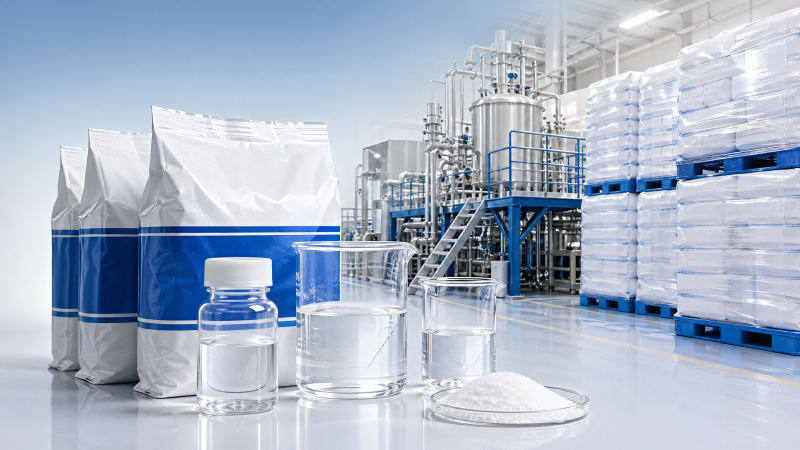
Choosing a reliable Polyvinyl Alcohol supplier is not just a purchasing decision—it is a financial risk management strategy. For budget approvers, the real challenge is balancing upfront cost with consistent quality, supply stability, and long-term project performance. Understanding how to evaluate pricing, production capability, and service support can help prevent hidden costs and protect overall procurement value.
Why Cost-Quality Balance Changes by Application Scenario
For finance decision-makers in the chemicals sector, supplier review cannot stop at comparing unit price per kilogram or per metric ton. A Polyvinyl Alcohol supplier may appear competitive on paper, yet create downstream losses through unstable viscosity, inconsistent hydrolysis degree, delayed shipment, or batch-to-batch variation. In practical procurement, a 3% to 8% lower purchase price can quickly be offset by rework, formulation adjustment, or production interruption.
The reason this issue deserves scenario-based evaluation is simple: PVA is used in very different operating environments. Adhesive production, paper processing, textile sizing, and construction-related formulations do not value the same performance indicators in the same order. One buyer may prioritize dissolution speed within 20 to 40 minutes, while another may focus on film strength, foaming behavior, or storage stability over 6 to 12 months.
That means the right Polyvinyl Alcohol supplier for one factory may be the wrong choice for another. Financial approvers should therefore ask not “Who is cheapest?” but “Who is most cost-effective for our exact use case?” This shift reduces total cost of ownership and supports better procurement control across annual contracts, spot orders, and mixed-volume purchasing cycles.
What usually drives hidden cost in PVA procurement
Hidden cost often appears in four places: formula instability, operational inefficiency, inventory risk, and supplier response time. If viscosity drifts outside an acceptable range, operators may increase water, additives, or mixing time. If packaging quality is poor, moisture absorption can reduce usable yield. If lead time stretches from 10 days to 30 days without warning, safety stock must increase, tying up working capital.
- Unit price savings may be erased by higher rejection rates or lower effective solids utilization.
- Unstable delivery can force emergency air shipment or expensive substitute sourcing.
- Incomplete technical support may increase laboratory trial cycles from 1 week to 4 weeks.
- Poor communication on grade change can affect monthly production planning and customer commitments.
A sound supplier review process should therefore connect procurement price with production outcome, quality consistency, and supply resilience. This is especially important for companies that manage more than 2 to 3 application lines or buy multiple functional additives from the same vendor base.
Three Common Business Scenarios and What Finance Teams Should Check
Different business scenarios create different risk profiles. The table below helps financial approvers compare what matters most when evaluating a Polyvinyl Alcohol supplier across typical industrial uses.
This comparison shows why there is no universal “lowest-cost” option. The right Polyvinyl Alcohol supplier is the one whose quality controls align with your application, not merely the one that quotes the smallest number on the first purchase order.
Scenario 1: Adhesives and binder systems
In adhesive manufacturing, consistency usually matters more than headline price. A supplier offering a lower rate may still raise cost if operators must recalibrate water ratio, pH range, or co-binder dosage every 2 to 3 batches. Finance teams should ask for viscosity range, dissolution conditions, and batch retention practices, because those details directly affect line stability.
A useful test is to compare initial sample performance with a pilot order of 1 to 2 tons. If the supplier can maintain similar performance between sample and commercial shipment, cost risk falls significantly. If not, the apparent savings may be misleading. This is also the stage where technical communication quality becomes measurable.
For some buyers managing broader additive portfolios, it is also practical to review adjacent functional products from the same chemical solutions partner. For example, companies working across construction or detergent formulations may also evaluate Detergent-grade HPMC alongside other rheology or film-forming materials to reduce supplier fragmentation and simplify qualification workflows.
Scenario 2: Textile sizing and process-sensitive production
Textile operations are highly sensitive to process rhythm. If a Polyvinyl Alcohol supplier delivers material with inconsistent dissolution or filtration behavior, machine efficiency can decline quickly. In this scenario, a small fluctuation in raw material quality may create a larger loss than in less process-sensitive environments, especially when production runs are continuous for 8 to 24 hours.
Financial reviewers should pay attention to operational indicators, not just lab specifications. Ask whether the supplier supports trial guidance, defect tracing, and problem response within 24 to 72 hours. Faster issue handling can reduce downtime cost far more effectively than a narrow price concession. This is where service quality becomes part of measurable financial value.
It is also wise to review packaging format, moisture protection, and lot coding. These details may seem administrative, but in export or humid-climate supply chains, they influence usable shelf life and warehouse loss. A better-packed product with a slightly higher price can improve effective consumption per ton.
Scenario 3: Paper, coatings, and specialty formulations
In paper and specialty coating applications, compatibility and purity often outweigh basic cost comparison. The financial risk here is not only waste, but quality claims from downstream customers. If a formulation requires stable appearance, controlled foaming, or repeatable film characteristics, a variable raw material can create expensive inconsistency across the final product line.
Procurement teams should request clarity on standard grade availability, order quantity flexibility, and lead time reliability. A supplier that supports both regular monthly volume and urgent top-up orders within agreed windows often provides stronger commercial value than one that only wins on nominal price. This is particularly relevant when customer orders fluctuate by 15% to 30% month to month.
For these applications, documentation discipline matters as much as material supply. A dependable Polyvinyl Alcohol supplier should provide consistent specification sheets, lot traceability, and a practical method for handling deviations. These systems reduce approval friction and support internal audit readiness.
How to Compare Price Beyond the Quotation Sheet
A procurement quote should be broken into total cost components, not read as a single number. This is especially important for budget approvers responsible for annual spend, working capital, and risk exposure. In chemicals purchasing, total cost usually includes material price, freight mode, packaging suitability, inventory burden, trial cost, and quality-failure exposure over a 3- to 12-month horizon.
The following table can be used as a practical review framework when comparing offers from more than one Polyvinyl Alcohol supplier.
This method helps finance teams move from surface comparison to true procurement economics. Even a 1% to 2% improvement in effective yield or fewer emergency orders can produce more value than aggressive unit-price negotiation alone.
Questions that reveal real supplier economics
- What is the normal lead time for standard grades, and how often does it deviate?
- What tolerance range is maintained for key indicators such as viscosity and hydrolysis degree?
- Can the supplier support pilot-scale orders before annual contract commitment?
- How are complaints handled, and what is the response window for technical issues?
- Does the quoted price include packaging suited to sea shipment, warehousing, and humidity control?
These questions help determine whether a low quote is truly competitive or merely incomplete. They also give finance and procurement teams a shared decision framework, reducing approval delays caused by missing operational context.
Supplier Capability Signals That Matter in Chemical Procurement
A credible Polyvinyl Alcohol supplier should be reviewed as a production and service system, not just a trading contact. In chemical sourcing, production continuity, process control, and communication discipline are all part of quality assurance. Buyers should check whether the supplier can support repeated purchasing over 6 months, 12 months, and peak-demand periods without major specification drift.
This is where broader manufacturing capability can become relevant. Jinan Ludong Chemical Co., Ltd. operates as a large-scale global manufacturing enterprise focused on cellulose ethers and integrated chemical services. Its annual production capacity reaches 45,000 tons, with viscosity control capabilities ranging from 400 to 200,000 CPS across core product lines. For budget approvers, such production discipline is a meaningful indicator when assessing whether a supplier understands industrial consistency, scalable delivery, and multi-market demand management.
Even when reviewing PVA supply specifically, buyers often prefer partners with broader experience in formulation-support chemicals, because those suppliers usually understand compatibility, packaging reliability, export handling, and documentation control more deeply. This can shorten qualification cycles and improve internal approval confidence.
Operational signs of a dependable supplier
Production and specification control
A capable supplier should explain how grades are differentiated, how batches are recorded, and how key parameters are monitored. Buyers do not need confidential process details, but they do need enough visibility to judge whether quality is actively controlled or passively checked after production.
Commercial flexibility
For many factories, demand does not remain fixed. Monthly orders may fluctuate by 10% to 25%. A supplier that can handle mixed order sizes, staged shipment, and forecast-based planning often delivers stronger financial value than a rigid supplier with a slightly lower base price.
Technical communication
A good Polyvinyl Alcohol supplier should communicate in application terms, not only catalog terms. If your team asks about dissolution temperature, solution stability, or grade substitution, the response should be practical and timely. This reduces trial cost and helps avoid procurement decisions based on incomplete technical understanding.
Common Misjudgments When Finance Teams Review Suppliers
One common mistake is treating all PVA grades as broadly interchangeable. In reality, even when two materials appear similar in headline specification, processing behavior can differ enough to affect output quality. This is why a Polyvinyl Alcohol supplier should be reviewed through actual-use testing rather than specification sheets alone.
Another mistake is undervaluing service speed. For process industries, a delayed response can create a chain cost far beyond the value of the raw material itself. If a supplier takes 5 to 7 days to answer a technical complaint, while production needs a decision within 24 hours, procurement savings lose strategic meaning.
A third issue is overemphasis on first-order pricing. A better review model is to compare first order, first quarter, and first year economics separately. Some suppliers are attractive in trial volume but weak in stable scale supply. Others may be more suitable because they support documentation, batch continuity, and related product coordination, including materials such as Detergent-grade HPMC for buyers with wider formulation procurement needs.
A practical approval checklist
- Confirm the exact application scenario before comparing offers.
- Review sample data together with pilot-order performance.
- Compare lead time reliability, not only quoted lead time.
- Estimate hidden cost from reformulation, downtime, and stockholding.
- Check whether the supplier can support future volume growth or product diversification.
This checklist helps finance approvers align with procurement and technical teams around measurable value. The result is a more defensible supplier decision and a lower probability of unplanned cost after approval.
Why Choose Us for Scenario-Based Chemical Sourcing Support
When you review a Polyvinyl Alcohol supplier, you need more than a quote—you need a partner that understands how raw material decisions affect production cost, quality stability, and commercial risk. Jinan Ludong Chemical Co., Ltd. brings manufacturing scale, integrated chemical service experience, and an application-oriented mindset that supports practical procurement evaluation.
Our business is built around industrial performance, flexible supply, and solution coordination. With advanced production lines, a combination of traditional process discipline and intelligent automation, and annual capacity of 45,000 tons across core chemical products, we are positioned to support customers who care about consistency as much as price. For finance teams, this means a stronger basis for approval decisions tied to long-term value rather than short-term cost only.
If you are comparing suppliers for a specific application, contact us to discuss parameter confirmation, product selection, delivery cycle planning, custom supply options, sample support, and quotation details. We can help you evaluate the right sourcing path based on your actual use scenario, required specification range, order frequency, and risk-control priorities.
Send Your Inquiry
We welcome your cooperation and we will develop with you.
