


Synthetic Lubricants for Extreme Temperatures: What Works Best
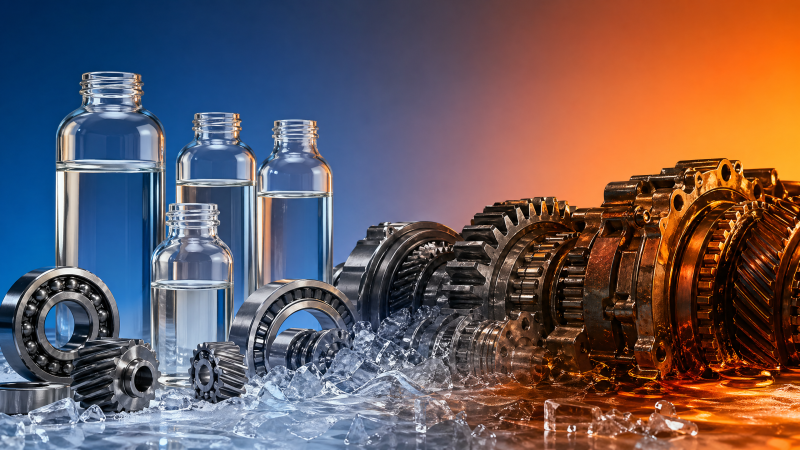
When equipment faces severe heat, freezing cold, or rapid temperature swings, choosing the right synthetic lubricants can make the difference between smooth operation and costly failure. For operators and maintenance users, the best option is rarely the “most expensive” oil or grease. It is the formulation whose base stock, viscosity behavior, additive package, and seal compatibility match the real temperature conditions of the machine. In extreme environments, the wrong lubricant can thicken, evaporate, oxidize, leave deposits, or fail to protect moving parts at startup.
For most users, the practical answer is this: PAO-based synthetic lubricants are often the best all-around choice for very low temperatures and broad operating ranges, ester-based products perform strongly in high-heat applications and under heavy loads, and specialty options such as PFPE are reserved for the harshest chemical or thermal environments. However, no single product is ideal for every machine. Operators need to evaluate cold-start performance, high-temperature stability, load, contamination risk, relubrication interval, and OEM requirements before making a decision.
This guide focuses on what maintenance users and operators actually need to know. Instead of staying at the level of theory, it explains how synthetic lubricants behave under extreme temperatures, which chemistries work best, what warning signs to watch for, and how to choose a product that protects equipment while reducing downtime and wear.
Why extreme temperature performance matters more than many operators expect
Lubrication problems in extreme temperatures often begin before obvious failure appears. In cold conditions, oil can become too thick to circulate quickly, which means bearings, gears, and hydraulic components may run briefly without a proper protective film. In very hot conditions, the opposite problem can occur: the lubricant may thin too much, oxidize faster, or evaporate, leaving metal surfaces exposed to friction and wear. In both cases, the machine may still run for a while, but damage is already developing.
For operators, the key issue is not only whether the lubricant “works” at a certain temperature, but whether it keeps the right viscosity at startup, under load, and during full operating temperature. Equipment in mining, heavy construction, manufacturing, transport, and outdoor processing often faces daily temperature swings that are just as damaging as absolute high or low extremes. A machine that starts in freezing air and later operates under heavy heat stress needs a lubricant with excellent viscosity stability across the entire range.
Extreme temperatures also affect maintenance cost and reliability planning. If a lubricant breaks down too quickly, users face more frequent oil changes, more component cleaning, and a higher risk of bearing or gearbox failure. Synthetic lubricants are valuable because they are engineered for better molecular consistency than many conventional mineral oils. That consistency gives them better performance where ordinary lubricants tend to fail first.
What makes synthetic lubricants better in severe heat and cold
The main advantage of synthetic lubricants is their controlled molecular structure. Unlike many conventional lubricants, which contain a broader mix of molecules, synthetics are designed to deliver more predictable performance. This helps them resist thickening in cold weather, thinning in high heat, and rapid oxidation when exposed to oxygen and thermal stress. For operators, that means easier starts, more stable lubrication films, and longer service life.
Another major benefit is improved viscosity index. A high viscosity index means the lubricant changes less dramatically as temperature changes. In real-world terms, that helps synthetic lubricants remain fluid enough for cold starts while still maintaining enough body to protect parts at elevated operating temperatures. This is why synthetic products are commonly preferred in engines, compressors, gearboxes, hydraulic systems, and electric motor bearings exposed to difficult climates.
Additive response is also important. Modern synthetic lubricants often include anti-wear, antioxidant, anti-foam, corrosion-inhibiting, and detergency packages tailored to demanding service. The base oil provides the thermal foundation, but the additive package helps the lubricant survive stress, contamination, and load. Users should remember that a lubricant’s extreme-temperature performance depends on the full formulation, not only on the word “synthetic” on the label.
Which synthetic base stocks work best in extreme temperatures
Polyalphaolefin, or PAO, is often the first recommendation when users need broad extreme-temperature capability. PAO-based synthetic lubricants perform very well at low temperatures because they retain fluidity and pumpability better than many mineral oils. They also offer good oxidation stability and long service life. For fleets, outdoor hydraulic systems, and equipment that must start reliably in winter, PAO is usually one of the safest and most versatile choices.
Esters are another strong option, especially in high-temperature or high-load applications. They have excellent lubricity, good solvency, and strong thermal stability. In some applications, ester-based synthetic lubricants can provide better film strength and cleaner operation than PAO alone. However, esters may require extra attention to seal compatibility and moisture sensitivity depending on the formulation. This does not make them a poor choice; it simply means users should match them carefully to the equipment design.
For the most severe environments, such as aggressive chemicals, very high continuous heat, or specialized industrial systems, PFPE and certain silicone-based lubricants may be used. These are specialty products rather than general-purpose solutions. They can deliver exceptional thermal and chemical resistance, but they are much more expensive and may not be suitable for standard machinery. Most operators should only consider them when conventional synthetic options cannot meet the demand.
Best choices for very low temperatures
In sub-zero conditions, the most important property is not just viscosity grade on paper, but real cold-flow behavior. A lubricant that pours poorly or pumps slowly can leave critical components starved during startup. For this reason, PAO-based synthetic lubricants are commonly favored for outdoor equipment, refrigerated operations, winter transport systems, and cold-climate hydraulics. They typically deliver lower pour points and better low-temperature cranking characteristics than conventional oils.
Users should also pay attention to startup resistance. If motors strain, hydraulic response is sluggish, or lubrication alarms appear during cold starts, the lubricant may be too thick for the environment. In these cases, selecting a lower-viscosity synthetic grade with suitable load protection can solve the issue better than simply waiting longer at idle. The ideal lubricant should reach critical surfaces quickly without sacrificing wear control once the machine warms up.
Grease users face a similar issue. A grease that performs well at room temperature may become too stiff in the cold, causing bearing drag and inadequate lubrication. Synthetic base oil greases, especially those designed for low-temperature service, can dramatically improve machine movement and startup behavior. Operators in cold conditions should always review both the base oil and the thickener system when comparing grease products.
Best choices for high-temperature operation
When equipment runs continuously in high heat, oxidation stability becomes one of the biggest concerns. Heat accelerates chemical breakdown, leading to sludge, varnish, deposit formation, viscosity increase, and loss of protective properties. In these conditions, ester-based synthetic lubricants often stand out because of their strong thermal stability and lubricity. They are widely used where high surface temperatures, heavy loads, or prolonged operating cycles push standard oils beyond their limit.
Volatility is another factor operators should not ignore. A lubricant that evaporates too easily at elevated temperatures can lead to oil consumption, residue buildup, and shortened service intervals. High-quality synthetic lubricants generally offer lower volatility than conventional products, helping systems retain lubrication longer and remain cleaner. This is especially important in compressors, chains, bearings, and enclosed gear drives where heat exposure is constant.
For very hot applications, users should also evaluate whether the limiting factor is bulk oil temperature or local hotspot temperature. Bearings, seals, and gear contacts can experience temperatures much higher than the system average. A lubricant that looks acceptable based on sump temperature alone may still fail at those hotspot points. That is why thermal stability data, oxidation resistance, and application-specific approval matter more than marketing claims.
How to choose the right synthetic lubricants for your equipment
The first step is to define the real operating temperature range, not the ideal range listed in maintenance documentation. Operators should look at cold startup conditions, full-load running temperatures, ambient seasonal change, and any short-term thermal spikes. A lubricant chosen only for average operating temperature may fail during startup or peak production periods. Good selection begins with actual field conditions.
Next, consider the machine type and lubrication method. Hydraulic systems need strong pumpability and shear stability. Gearboxes need film strength and wear protection. Bearings may need low-torque cold movement or resistance to high-speed heat buildup. Compressors often need oxidation resistance and deposit control. The best synthetic lubricants are application-specific, even when two machines operate at similar temperatures.
It is also wise to check material compatibility. Seals, hoses, paints, and plastics can respond differently to various synthetic formulations. In industrial environments, users may also work with adjacent materials such as binders, coatings, or specialty polymers. For example, companies involved in broader chemical supply chains sometimes source multiple functional materials from one partner, including products such as Polyvinyl Alcohol, alongside process-support chemicals. While unrelated to lubrication performance itself, consolidated sourcing can simplify procurement and technical communication.
Common mistakes that lead to lubricant failure in extreme temperatures
One of the most common mistakes is assuming that “synthetic” automatically means suitable for all extremes. In reality, synthetic lubricants vary widely by base stock, additive package, and target application. A synthetic engine oil, hydraulic fluid, and high-temperature chain oil may all behave very differently. Users should never select solely by brand reputation or the word “synthetic” without reviewing the technical data.
Another frequent error is using the wrong viscosity grade. Even a high-quality synthetic lubricant can perform poorly if it is too thick for cold startup or too thin for the load and heat involved. Operators sometimes react to wear by choosing a heavier oil, but that can worsen cold-flow issues and reduce circulation. The right answer is usually to balance viscosity grade with the equipment’s actual temperature and load profile.
Mixing lubricants without verification is another risk. Different base oils and additive systems may not be fully compatible, which can lead to foaming, separation, deposit formation, or reduced performance. If changing from mineral oil to synthetic lubricants, or from one synthetic chemistry to another, users should follow proper conversion procedures. Flushing or staged replacement may be needed in critical systems.
Warning signs that your current lubricant is not handling temperature stress
Operators can often detect lubrication trouble early if they know what to look for. In cold weather, warning signs include slow starts, delayed hydraulic response, noisy bearings at startup, increased power draw, or lubrication pressure taking too long to stabilize. These symptoms suggest that the lubricant may be too viscous or circulating poorly at low temperature.
In high-temperature service, the warning signs are different. Watch for burnt odor, darkened oil, varnish, sludge, abnormal oil consumption, frequent topping up, rising bearing temperatures, or shortened drain intervals. These can indicate oxidation, volatility losses, or thermal breakdown. If a machine repeatedly shows these symptoms, changing to better-suited synthetic lubricants may improve both reliability and service life.
Used oil analysis is one of the most effective tools for confirmation. Viscosity change, oxidation number, acid buildup, wear metals, and contamination levels can reveal whether a lubricant is truly surviving the temperature stress. Rather than relying only on appearance or schedule-based replacement, operators can make smarter decisions using trend data from regular sampling.
Practical selection checklist for operators and maintenance teams
Start with five basic questions: What is the coldest startup temperature? What is the hottest sustained operating temperature? What type of component is being lubricated? Is the system exposed to water, dust, chemicals, or shock loads? And what does the OEM specify? These questions narrow the selection faster than looking at product labels alone.
Then compare technical properties that matter in extreme service: pour point, viscosity index, flash point, oxidation stability, volatility, load-carrying capacity, and compatibility with seals and materials. If the application is critical, ask the supplier for field experience or performance data under similar conditions. Operators should feel comfortable requesting specifics, because vague claims are not enough when downtime is expensive.
Finally, think beyond the lubricant itself. Storage conditions, cleanliness during filling, proper relubrication intervals, and contamination control all affect performance. Even the best synthetic lubricants cannot protect equipment if they are applied incorrectly or become contaminated before reaching the machine. In many cases, reliability improves most when product choice and maintenance practice are upgraded together.
Conclusion: what works best depends on the temperature profile and the machine
If you need a simple rule, PAO-based synthetic lubricants are often the best general solution for broad temperature swings and strong low-temperature performance, while ester-based options are often better for severe heat and high-load operation. Specialty chemistries are valuable for niche conditions, but most users do not need them unless the environment is unusually harsh. The best product is the one matched to actual operating conditions, not just the one with the most impressive label.
For operators and maintenance users, the smartest approach is to focus on cold-start flow, high-temperature stability, viscosity control, and compatibility with the equipment. Avoid guesswork, verify performance with technical data and oil analysis, and do not assume all synthetic lubricants behave the same. With the right selection, you can reduce wear, improve efficiency, extend service intervals, and prevent costly failures in extreme temperature environments.
Send Your Inquiry
We welcome your cooperation and we will develop with you.
