


Vietnam Enforces New AI Safety Certification for Imported Construction Machinery
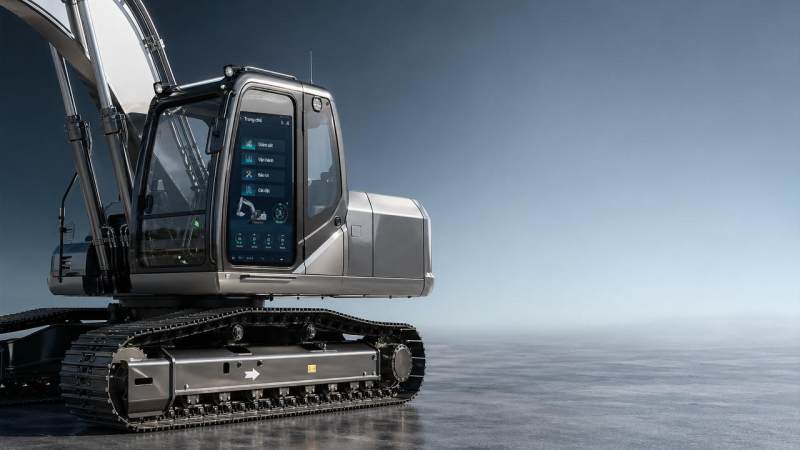
Starting May 1, 2026, Vietnam’s Ministry of Industry and Trade (MOIT) and the Standardization, Metrology, and Quality Authority (STAMEQ) will implement mandatory AI-assisted operational safety certification, Vietnamese-language human-machine interface (HMI) validation, and local after-sales service center registration for newly declared imports of construction machinery—including excavators, cranes, and electric heavy-duty trucks. This regulation directly affects export-oriented manufacturers, especially Chinese enterprises supplying to the Vietnamese market, and raises compliance and delivery implications for firms without established local service infrastructure.
Event Overview
Effective May 1, 2026, Vietnam’s MOIT and STAMEQ require all newly declared imports of excavators, cranes, and electric heavy-duty trucks to meet three mandatory conditions: (1) pass an AI-assisted operational safety assessment; (2) certify Vietnamese-language human-machine interface functionality; and (3) complete registration of a locally compliant after-sales service center. The policy applies only to new import declarations submitted on or after the effective date.
Industries Affected
Direct Exporters (e.g., Chinese OEMs)
Exporters face delayed customs clearance and increased pre-shipment compliance workload. The requirement for AI safety evaluation—especially for equipment not originally designed with embedded AI operational safeguards—may necessitate hardware or software retrofitting, third-party testing, and documentation in Vietnamese. Delivery timelines for orders placed in Q1–Q2 2026 may be extended if AI assessment reports are not finalized before shipment.
After-Sales Service Providers & Distributors
Firms acting as authorized service agents must now register physical service centers meeting STAMEQ-defined criteria—including certified technicians, spare parts inventory, and Vietnamese-language support systems. Unregistered entities cannot legally perform warranty repairs or issue compliance documentation for imported units, limiting their role in post-import value chains.
Component Suppliers & Tier-2 Manufacturers
Suppliers of AI-related modules (e.g., collision avoidance systems, telematics units, HMI firmware) may experience revised procurement specifications from OEMs seeking Vietnam-compliant configurations. However, no new technical standards for individual components have been published; current requirements apply at the whole-machine level only.
What Enterprises Should Monitor and Do Now
Track official guidance on AI safety assessment scope and accredited labs
STAMEQ has not yet published the technical parameters for AI-assisted operational safety evaluation (e.g., required response latency, fail-safe behavior definitions, test scenarios). Exporters should monitor STAMEQ’s official portal and MOIT circulars for lab accreditation lists and evaluation protocols—expected to be released by Q4 2025.
Verify Vietnamese HMI compliance beyond basic translation
HMI certification requires functional validation—not just linguistic localization. This includes menu navigation logic, error message clarity, alarm audibility, and touchscreen responsiveness under local ambient conditions. Firms should initiate internal usability testing with native Vietnamese operators before submission.
Confirm service center registration eligibility ahead of shipment planning
Registration requires documented proof of facility address, technician certifications, and spare parts logistics capability. Entities without existing Vietnamese legal entities may need to partner with registered local service providers—making early due diligence on potential partners critical for Q2 2026 shipments.
Distinguish between policy announcement and enforcement readiness
While the rule takes effect May 1, 2026, customs authorities may allow transitional handling for shipments with pre-May documentation pending final STAMEQ guidelines. Enterprises should maintain records of all pre-submission communications with Vietnamese import agents and retain evidence of good-faith compliance efforts.
Editorial Perspective / Industry Observation
Observably, this regulation signals Vietnam’s shift toward harmonizing industrial equipment governance with digital safety expectations—not merely as a trade barrier, but as part of broader national digital infrastructure alignment. Analysis shows it is less about restricting imports outright and more about incentivizing long-term market commitment through localized technical and service investment. From an industry perspective, the requirement reflects growing regional emphasis on operational AI accountability in high-risk machinery sectors. It is currently best understood as a structural signal—not yet a fully operationalized bottleneck—given that detailed technical annexes and accredited testing pathways remain pending.
Conclusion: This measure marks a formal step in Vietnam’s regulatory maturation for intelligent industrial equipment, with tangible implications for supply chain design, compliance timing, and service model planning. It is not a blanket restriction, but a calibrated threshold: one that rewards advance preparation and local integration over transactional export models. Currently, it is more appropriately understood as a forward-looking framework requiring phased implementation—rather than an immediate, uniformly enforced barrier.
Source: Official notices issued by Vietnam’s Ministry of Industry and Trade (MOIT) and the Standardization, Metrology, and Quality Authority (STAMEQ), effective May 1, 2026. Pending details—including AI assessment methodology, accredited laboratories list, and service center registration checklist—remain under development and subject to further public consultation.
Send Your Inquiry
We welcome your cooperation and we will develop with you.
