


Predicting flow behavior based on HPMC viscosity range
Time:May 02, 2026
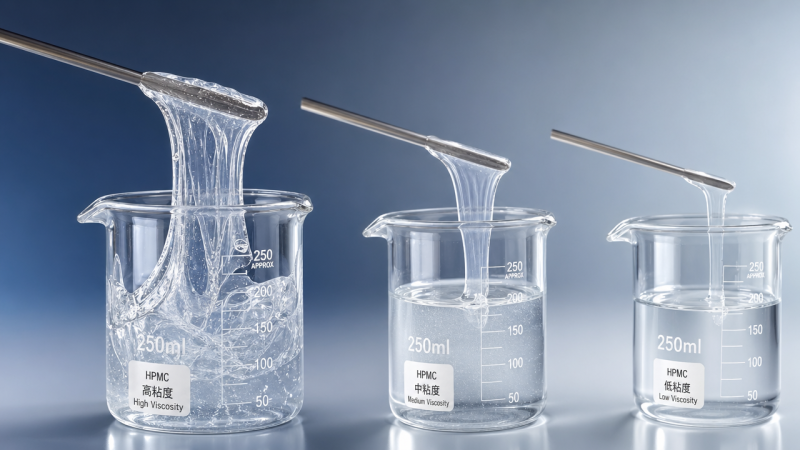
Understanding the HYDROXYPROPYL METHYL CELLULOSE viscosity range is crucial for predicting flow behavior in complex industrial applications. For technical evaluators, selecting the right grade, such as HYDROXYPROPYL METHYL CELLULOSE for tile adhesive, ensures optimal consistency and workability. At Jinan Ludong Chemical, we provide high-performance solutions including food grade HYDROXYPROPYL METHYL CELLULOSE and high purity Polyvinyl Alcohol, tailored for diverse global needs. Whether you require non-toxic Lubricants or specialized Polyvinyl Alcohol for textile, our 400 to 200,000 CPS viscosity control empowers precise formulation. This guide explores how viscosity variations impact rheological properties, helping quality control managers achieve superior, stable results with reliable chemical additives.
The Fundamentals of HPMC Viscosity and Molecular Structure
In the realm of polymer science, viscosity is more than just a measure of thickness; it is a direct reflection of the molecular weight and the degree of polymerization within the cellulose chain. For technical evaluators focusing on chemical additives, understanding how Hydroxypropyl Methyl Cellulose functions at a molecular level is essential. The viscosity of an HPMC solution is typically measured at a 2% concentration at 20 degrees Celsius, using standard Brookfield or Ubbelohde methods. As the molecular chain length increases, the entanglement between polymer strands becomes more pronounced, leading to higher resistance to flow, which we perceive as increased viscosity.
Jinan Ludong Chemical, established in 2020, leverages sophisticated automated production lines to manipulate these molecular characteristics with extreme precision. Our current annual production capacity of 45,000 tons allows us to serve the global market with HPMC series products such as Type 75 and Type 60. These designations often refer to the gelation temperature and the ratio of hydroxypropyl to methyl substitution. By carefully controlling the etherification process, we can offer a vast viscosity spectrum ranging from 400 CPS to as high as 200,000 CPS. This range ensures that whether a formulation requires a fluid, self-leveling consistency or a thick, paste-like texture, the flow behavior remains predictable and manageable.
From a quality control perspective, the consistency of this viscosity range is paramount. A deviation of even 10% in viscosity can significantly alter the performance of a final product, such as a tile adhesive or a cementitious plaster. Technical teams must evaluate the viscosity not just as a static number, but as a dynamic parameter that influences water retention, open time, and shear resistance. In construction grades, for instance, high viscosity HPMC provides the necessary sag resistance for heavy tiles, while low viscosity grades are preferred for spray-applied mortars where ease of pumping is a priority.
Furthermore, the chemical purity of the HPMC significantly impacts its rheological performance. At Ludong Chemical, we ensure that our products maintain an ash content of less than 5.0% and a moisture content under 5.0% to guarantee that the viscosity measurements remain stable over time and across different batches. This level of purity ensures that the flow behavior predicted in the laboratory translates accurately to the construction site or the manufacturing floor, providing business evaluators with the confidence that their procurement choices will lead to reliable end-user satisfaction.
Rheological Properties and Predictive Flow Behavior
Predicting flow behavior requires a deep dive into the non-Newtonian nature of cellulose ethers. HPMC solutions exhibit pseudoplastic or shear-thinning behavior. This means that as the shear rate increases—such as when a tile adhesive is being spread with a notched trowel or when a paint is being brushed onto a wall—the apparent viscosity decreases. Understanding this relationship is vital for quality control managers who must balance the ease of application (low viscosity under high shear) with the stability of the product once it is applied (high viscosity under low shear/gravity).
The concentration of the Hydroxypropyl Methyl Cellulose in a formulation also plays a critical role in its flow profile. Generally, the relationship between concentration and viscosity is exponential rather than linear. For a technical evaluator, this means that slight adjustments in the dosage—perhaps as small as 0.05% to 0.1% of the total dry mix weight—can result in substantial changes in the workability of the mortar. Our Type 75 and Type 60 series are designed to provide consistent thickening power, ensuring that the "slip-resistance" of a mortar remains within the required 0.5mm threshold even under varying environmental temperatures.
Temperature sensitivity is another predictive factor. As the temperature of the system rises, the viscosity of HPMC typically decreases until it reaches its specific gelation point. At the gelation point, the polymer chains undergo a phase transition, forming a three-dimensional network that causes the viscosity to spike suddenly. For business evaluators, choosing an HPMC with an appropriate gel temperature (usually between 58 and 90 degrees Celsius depending on the grade) is essential for projects in hot climates, where premature gelling or excessive thinning could compromise the integrity of the construction solution.
The following table illustrates the typical viscosity ranges provided by Jinan Ludong Chemical and their corresponding impacts on flow behavior and application suitability. This data helps technical evaluators select the most efficient grade for their specific mechanical requirements.
The table confirms that as we move into the 100,000 to 200,000 CPS range, the shear sensitivity increases, making these grades ideal for high-build applications where sag resistance is a critical quality control metric. Conversely, the lower viscosity grades allow for excellent flow and de-airing properties in self-leveling underlayments, where a smooth, flat finish is the primary objective.
Technical Evaluation for Industrial Formulation Success
When technical evaluators analyze HPMC for industrial use, they must look beyond the base viscosity number and consider the synergy with other additives like Redispersible Polymer Powder (RDP) and Hydroxypropyl Starch Ether (HPS). The interaction between these components can either stabilize or disrupt the intended flow behavior. For example, in a high-performance tile adhesive formulation, the HPMC provides the water retention and thickening, while the RDP adds flexibility and adhesion. If the HPMC viscosity is too high, it may impede the proper wetting of the substrate, whereas if it is too low, the tiles may slide before the mortar sets.
Quality control personnel should also monitor the pH stability of their mixtures. HPMC is generally stable within a pH range of 5.0 to 9.0, which covers most cement-based and gypsum-based systems. However, extreme alkalinity can sometimes accelerate the dissolution rate of certain surface-treated HPMC grades, leading to "instant" thickening that might catch an operator off guard. At Jinan Ludong Chemical, our automated production ensures that the particle size distribution (with 98.5% passing through a 100-mesh screen) is consistent, allowing for uniform dissolution and predictable viscosity development in every batch.
Business evaluators must also consider the efficiency of the HPMC grade. A higher viscosity grade may allow for a lower dosage rate while achieving the same thickening effect, potentially reducing the overall material cost per ton of finished dry mix. However, this must be balanced against the potential loss of workability. With an annual capacity of 45,000 tons, Ludong Chemical is equipped to provide technical support that helps customers find the "sweet spot" between performance and cost-effectiveness, ensuring a competitive edge in the global market.
Safety and regulatory compliance are equally important for quality control managers. Our HPMC products are manufactured to meet stringent environmental and safety standards. The non-toxic nature of our additives makes them suitable for a wide range of applications, including those requiring food-grade or pharmaceutical-grade specifications. By providing high-purity solutions, we eliminate the risks associated with impurities that could affect the flow behavior or the chemical stability of the final application.
Strategic Procurement: Evaluating Manufacturers and Performance Metrics
For business evaluators and procurement managers, selecting a chemical supplier is a strategic decision that impacts the entire production lifecycle. A manufacturer's ability to maintain a tight control over the viscosity range of their HPMC is a primary indicator of their technological maturity. Jinan Ludong Chemical’s integration of traditional production processes with intelligent automated systems allows us to produce 45,000 tons of cellulose ethers annually with remarkable consistency. This stability reduces the need for frequent formulation adjustments at the client’s end, leading to significant time and labor savings.
Another critical factor in procurement is the lead time and global service capability. In the fast-paced construction and chemical industries, a delay in additive supply can halt multi-million dollar projects. Our integrated solution approach means we don't just sell HPMC; we provide a comprehensive service that includes logistical support and technical consultation. We typically maintain a lead time of 7 to 15 days for standard orders, ensuring that our global partners can manage their inventories efficiently without the risk of stockouts.
The following procurement decision matrix outlines the key factors that quality control and business evaluators should consider when selecting an HPMC supplier for large-scale operations.
This matrix serves as a guide for quality control managers to benchmark potential suppliers against industry leaders like Ludong Chemical. By focusing on these measurable metrics—such as the ±10% viscosity tolerance and the 45,000-ton capacity—businesses can mitigate the risks of supply chain disruption and product failure, ultimately protecting their brand reputation and bottom line.
Common Industry Questions and Expert Answers (FAQ)
How does HPMC viscosity affect the open time of tile adhesives?
Viscosity is the primary driver of water retention in HPMC. Higher viscosity grades (e.g., 100,000 to 150,000 CPS) create a more robust film-forming layer on the surface of the mortar. This layer significantly slows down the evaporation of water, providing a longer "open time." For technical evaluators, this means the installer has 20 to 30 minutes to adjust tiles without the adhesive skinning over. However, if the viscosity is excessively high, it may make the adhesive too tacky, making it difficult to spread, which is why a balanced approach is necessary.
Why is the gel temperature of HPMC important for flow behavior?
The gel temperature (typically 60°C to 75°C for standard grades) marks the point where the polymer solution transitions from a liquid state to a gel state. In high-temperature environments or during the exothermic reaction of cement hydration, if the internal temperature exceeds the gel point, the HPMC will lose its viscosity and water-retention properties, leading to a catastrophic failure in flow control. Quality control managers must ensure that the grade selected (Type 60 vs Type 75) matches the thermal conditions of the application site.
Can I mix different viscosity grades of HPMC?
Yes, mixing different grades is a common practice to achieve a specific rheological profile that a single grade might not provide. For instance, blending a 4,000 CPS grade with a 100,000 CPS grade can create a formulation that has excellent initial flow but sets with high final thickness. However, this requires precise calculation and rigorous testing by the technical evaluation team to ensure that the resulting flow behavior remains stable and that the particles dissolve at compatible rates.
Conclusion: Achieving Excellence through Precise Viscosity Control
Predicting flow behavior in industrial applications is a sophisticated science that hinges on the accurate selection of the HPMC viscosity range. From the fluid requirements of self-leveling floors to the high-build demands of modern masonry, the 400 to 200,000 CPS range offered by Jinan Ludong Chemical provides the versatility needed for global success. By understanding the molecular mechanics, rheological properties, and strategic procurement factors discussed in this guide, technical and business evaluators can make informed decisions that drive quality and efficiency.
Our commitment to innovation and large-scale manufacturing ensures that we remain a leading provider of comprehensive construction solutions. With an annual capacity of 45,000 tons and a focus on both traditional and automated production excellence, we are ready to support your next project with high-performance cellulose ethers and integrated chemical solutions.
If you are looking to optimize your formulations or require a reliable partner for high-purity chemical additives, we invite you to explore our full range of solutions. Contact us today to receive a customized technical assessment or to request product samples for your specific application needs. Let our expertise in viscosity control empower your business to achieve superior, stable results.
Send Your Inquiry
We welcome your cooperation and we will develop with you.
