


Labeling requirements for food grade HPMC in global markets
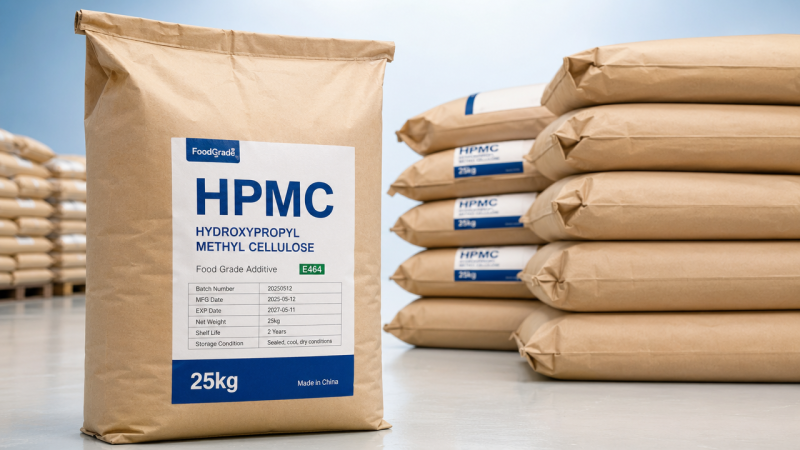
Navigating the complex landscape of international food safety standards requires precision, especially regarding labeling requirements for food grade HYDROXYPROPYL METHYL CELLULOSE. As global demand for high-quality additives rises, technical evaluators and quality control managers must ensure full compliance with regional regulations. Jinan Ludong Chemical offers a versatile HYDROXYPROPYL METHYL CELLULOSE viscosity range to meet diverse application needs. While our expertise extends to Polyvinyl Alcohol for textile, non-toxic Lubricants, and HYDROXYPROPYL METHYL CELLULOSE for tile adhesive, ensuring the transparency of high purity Polyvinyl Alcohol and food-grade additives remains paramount. This guide explores the essential documentation and labeling standards required for seamless global market entry, safety management, and long-term business evaluation.
Global Regulatory Framework for Food Grade HPMC Compliance
Understanding the regulatory landscape is the first step for any business evaluator looking to import Hydroxypropyl Methylcellulose (HPMC) for food applications. Food grade HPMC is recognized globally under various codes, most notably as E464 in the European Union and under the International Numbering System (INS) as 464. These designations are not merely labels but represent a commitment to strict purity standards. For quality control managers, verifying that the product meets the Food Chemicals Codex (FCC) or Joint FAO/WHO Expert Committee on Food Additives (JECFA) specifications is essential. Failure to align with these international benchmarks can lead to significant delays at customs and potential legal repercussions in the target market.
Jinan Ludong Chemical Co., Ltd. operates with an understanding of these high-stakes requirements, maintaining an annual production capacity of 45,000 tons of high-quality cellulose ethers. Our manufacturing processes are designed to bridge the gap between traditional reliability and intelligent automation, ensuring that every batch meets the rigorous safety management protocols required for food-grade distribution. Technical evaluators often focus on the methoxy and hydroxypropoxy substitution levels, which determine the functional properties of the additive. By providing clear documentation on these chemical parameters, we help procurement teams make informed decisions that align with both safety standards and functional performance needs in diverse food matrices.
In the North American market, the FDA oversees the use of HPMC as a food additive under specific Title 21 CFR sections. Compliance involves not only the chemical purity of the HPMC itself but also the accuracy of the labeling on the secondary packaging. Technical evaluators must ensure that labels clearly state the "Food Grade" status and include the necessary "GRAS" (Generally Recognized as Safe) notifications where applicable. As a leading provider, Jinan Ludong Chemical ensures that our exports to these regions are accompanied by comprehensive Certificates of Analysis (COA) and Material Safety Data Sheets (MSDS) that reflect current regulatory shifts, providing a layer of security for business evaluators concerned with long-term compliance and risk mitigation.
Furthermore, the European market demands strict adherence to Regulation (EU) No 231/2012, which lays down specifications for food additives. This includes specific limits on heavy metals, such as lead being restricted to less than 2 ppm, and ensuring that the product is free from harmful residues. For quality control personnel, this means that the labeling must facilitate full traceability back to the production line. Our integrated solutions at Ludong Chemical allow for seamless tracking of every 25kg bag produced, ensuring that regardless of the destination—be it Europe, Asia, or the Americas—the product is fully compliant with local transparency and safety laws.
Essential Labeling Elements for Seamless Market Entry
When shipping food-grade additives across international borders, the physical label on the packaging serves as the primary document for customs and quality inspectors. A compliant label must contain several mandatory elements to avoid rejection. These include the proper chemical name, the E-number or INS number, and a clear "Not for Retail Sale" or "For Food Use" declaration. For business evaluators, the clarity of this information is a direct indicator of the supplier's professional standing. Jinan Ludong Chemical prioritizes these details, ensuring that all 25kg multi-layer paper bags are marked with high-visibility, durable labels that withstand the rigors of global transit and warehousing.
Below is a comparative overview of the standard labeling requirements across three major global economic zones. This table serves as a quick reference guide for procurement officers and quality management teams during the technical evaluation phase of the sourcing process.
The data presented in the table highlights the importance of localized labeling. For instance, while the US market accepts both metric and imperial units, China strictly requires the GB standard nomenclature. This level of detail is where Jinan Ludong Chemical excels, offering customized labeling solutions that cater to the specific language and regulatory requirements of over 50 countries. Our quality control team double-checks every label against the destination's compliance checklist before the 7–15 day shipping window commences, ensuring a smooth transition through international ports.
Beyond basic identification, modern labeling often includes QR codes for digital COA access. This technological integration aligns with Ludong’s commitment to intelligent production. By scanning a code, a technical evaluator can immediately access the viscosity data—ranging from 400 to 200,000 CPS—and the moisture content for that specific batch. This transparency reduces the administrative burden on the buyer's quality team and fosters a high level of trust, which is critical for long-term B2B partnerships in the chemical industry.
Technical Specifications and Viscosity Selection for Food Applications
For technical evaluators, selecting the correct grade of HPMC involves more than just verifying the label; it requires a deep dive into the rheological properties of the material. Food grade HPMC is typically classified into different types, such as Type 75 and Type 60, which refer to the substitution levels of methoxy and hydroxypropoxy groups. These variations significantly affect the gelation temperature and the viscosity of the solution. Jinan Ludong Chemical provides a broad spectrum of controllable viscosities, ensuring that whether the application is for gluten-free baking, meat alternatives, or sauce thickening, the product performs predictably under various thermal processing conditions.
The versatility of cellulose ethers in our portfolio is matched by our expertise in other high-performance materials. For example, while HPMC serves as a vital thickener in food, a high-purity Polyvinyl Alcohol might be evaluated by the same quality teams for its role in biodegradable packaging or as a safe adhesive component in food-contact materials. Understanding how these different chemicals interact within a production environment is a key part of our integrated solution approach. Our technicians are available to provide guidance on the compatibility of HPMC with other hydrocolloids, helping customers optimize their formulations for cost and performance.
Viscosity control is particularly critical in large-scale food manufacturing where consistency is non-negotiable. Ludong Chemical utilizes automated viscosity testing at three distinct stages of production: post-etherification, after grinding, and prior to packaging. This ensures that the final product adheres to the tight tolerances required by high-speed processing lines. For instance, a viscosity fluctuation of more than ±5% can disrupt the texture of a premium plant-based dairy alternative. By maintaining a 45,000-ton capacity with such high precision, we provide business evaluators with the reliability they need to scale their own operations without fear of raw material variability.
Application Scenarios and Viscosity Guidelines
The following table outlines common application scenarios for food grade HPMC and the recommended viscosity ranges. This serves as a starting point for technical evaluators during the product selection phase to ensure that the labeling and specifications match the end-use requirements.
This breakdown emphasizes that a one-size-fits-all approach does not work in food technology. A business evaluator must ensure the procurement contract specifies the exact CPS range to avoid production downtime. Ludong Chemical supports this by offering a controllable range from 400 up to 200,000 CPS, allowing for precise customization. When the labeling correctly reflects these technical nuances, it facilitates faster internal QC checks and ensures that the ingredient behaves exactly as expected during the manufacturing process.
Quality Assurance and Documentation Verification Protocols
Quality control managers and safety evaluators face the daunting task of verifying the safety of every ingredient that enters the food chain. For food grade HPMC, this verification process involves a multi-step protocol that starts long before the shipment arrives. At Jinan Ludong Chemical, we facilitate this by providing a comprehensive "Technical Dossier" for every client. This dossier includes not only the standard COA but also statements regarding non-GMO status, allergen-free certifications, and heavy metal analysis reports. By having these documents pre-verified, quality teams can reduce their lead times for new material approvals by up to 30%.
One of the most critical parts of the documentation is the Halal and Kosher certification, which are often mandatory for global food products. These certifications must be clearly listed on the packaging label. Our production lines are regularly audited to maintain these standards, ensuring that our food grade HPMC is suitable for a wide range of cultural and dietary requirements. For a business evaluator, these certifications are not just "nice to have"; they are market entry requirements that can expand a product's reach to millions of additional consumers globally.
In addition to the chemical additives, evaluators often look for high-performance polymers for other areas of their operation. For instance, the use of Polyvinyl Alcohol in moisture-barrier films for food packaging is a common cross-over area. Ludong Chemical's expertise in these related fields means we understand the holistic safety environment of a food plant. Whether it is the cellulose ethers inside the food or the polymer additives in the packaging, our integrated service ensures that all materials meet the same high standard of non-toxicity and chemical stability.
Finally, the frequency of testing is a key metric for quality management. We conduct continuous monitoring during our 24-hour production cycles, with samples taken every 2 hours to ensure uniformity. This data is then aggregated into the final report sent to the customer. This level of transparency is what sets a large-scale global manufacturer apart from smaller trading firms. By choosing Ludong, business evaluators are choosing a partner that treats their safety management protocols as an extension of their own internal quality departments.
Frequently Asked Questions on HPMC Compliance and Labeling
What is the typical shelf life for food grade HPMC, and how should it be labeled?
The standard shelf life for food grade HPMC is 24 months from the date of manufacture, provided it is stored in its original, unopened packaging. Labels must clearly state both the production date and the "Best Before" or expiry date. To maintain the integrity of the product, it should be kept in a cool, dry environment with temperatures ideally between 15°C and 30°C. If the label does not include these storage conditions, it could lead to improper handling in the warehouse, potentially compromising the technical performance of the additive during food processing.
Can the labeling be customized for specific regional languages?
Yes, customization is a core part of Jinan Ludong Chemical's integrated services. We understand that local regulations in regions like the Middle East or South America may require labeling in Arabic or Spanish respectively. Our design team works with business evaluators to ensure all technical terms, safety warnings, and ingredient names are accurately translated and compliant with local food labeling laws. This proactive approach minimizes the risk of the product being flagged by local health authorities for non-compliant packaging.
Are there specific labeling requirements for the methoxy content in HPMC?
While the methoxy content is a technical parameter, it is usually represented by the product type (e.g., 60HD or 75HD) on the commercial label. However, the specific percentages (typically 19-30% for food grade) must be documented in the Certificate of Analysis (COA) that accompanies the shipment. Quality control managers should check that the COA lot number matches the lot number printed on the bag label to ensure the chemical specifications are accurate for the specific batch received. This link is vital for ensuring the functional consistency of the final food product.
Why Partner with Jinan Ludong Chemical for Your Global Sourcing?
In the fast-paced global chemical market, choosing a supplier that understands the intricacies of both production and regulation is paramount. Jinan Ludong Chemical Co., Ltd. stands out as a leading global provider by offering a perfect fusion of traditional manufacturing excellence and intelligent automated production. With an annual capacity of 45,000 tons, we are uniquely positioned to meet the high-volume needs of global food manufacturers while maintaining the artisanal precision required for specialized food grade HPMC formulations. Our commitment to quality is backed by a 4-step implementation process for all new orders: technical consultation, sample verification, production monitoring, and logistical support.
For business evaluators and procurement managers, we offer more than just a product; we provide a partnership based on transparency and reliability. Whether you are navigating the labeling requirements of a new market or seeking a more stable supply chain for your existing products, our team is ready to assist. We provide 7–15 day delivery windows for standard orders and offer extensive sample support to ensure our HPMC meets your exact technical specifications before a full-scale commitment is made. Our integrated solutions also extend to related chemicals like RDP and HPS, providing a one-stop-shop for construction and food-grade cellulose ethers alike.
We invite you to contact us today for a detailed consultation on your specific HPMC needs. Our experts can assist with parameter confirmation, customized labeling design for global compliance, and providing the necessary documentation for your safety management audits. By choosing Ludong Chemical, you are opting for a partner that prioritizes your regulatory success and operational efficiency. Let us help you streamline your global market entry with high-purity, perfectly labeled food grade additives that meet the world's most demanding standards.
Send Your Inquiry
We welcome your cooperation and we will develop with you.
