


Risk assessment of non-toxic lubricants in beverage packaging
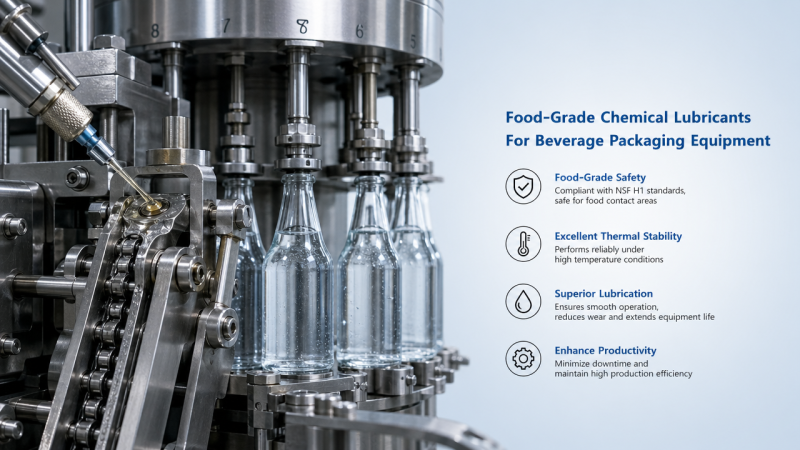
Ensuring consumer safety is paramount in the beverage industry, making the risk assessment of non-toxic Lubricants a critical priority for packaging integrity. For technical evaluators and safety managers, selecting high-performance additives like food grade HYDROXYPROPYL METHYL CELLULOSE with a precise HYDROXYPROPYL METHYL CELLULOSE viscosity range is essential. Jinan Ludong Chemical offers industry-leading solutions, from high purity Polyvinyl Alcohol to HYDROXYPROPYL METHYL CELLULOSE for tile adhesive, ensuring versatility across applications. By integrating Polyvinyl Alcohol for textile and specialized packaging needs, business evaluators can effectively mitigate risks and ensure regulatory compliance. Our advanced manufacturing ensures every chemical solution meets rigorous global standards, delivering reliability and safety to the competitive beverage packaging market.
The Critical Role of Non-Toxic Lubricants in Modern Beverage Packaging
In the high-velocity environment of modern beverage production, the mechanical systems responsible for filling, capping, and labeling operate under intense physical stress. These systems rely heavily on lubricants to reduce friction, minimize wear, and ensure the longevity of high-precision components. However, for technical evaluators, the primary concern is the risk of incidental contact between the lubricant and the beverage itself. This potential migration necessitates a shift from industrial-grade lubricants to non-toxic, food-grade chemical solutions. The shift is not merely a preference but a regulatory requirement dictated by global safety standards such as those set by the FDA and EFSA. Assessing these risks requires a deep understanding of chemical stability and the potential for chemical leaching into the final product.
For safety managers, the challenge lies in balancing mechanical performance with chemical inertness. Non-toxic lubricants must maintain their structural integrity across a wide range of operating conditions, including extreme temperature fluctuations and high humidity environments typical of beverage bottling plants. If a lubricant fails under thermal stress, it may undergo chemical decomposition, leading to the formation of harmful byproducts. This is why many manufacturers now look toward cellulose-based additives and advanced polymers. Jinan Ludong Chemical Co., Ltd., established in 2020, has recognized this critical intersection of mechanical engineering and chemical safety, providing a robust production capacity of 45,000 tons annually to meet the growing global demand for high-purity chemical additives.
Business evaluators must also consider the long-term impact of lubricant selection on brand reputation and operational continuity. A single instance of contamination can lead to massive product recalls, costing millions in lost revenue and damaging consumer trust. By prioritizing non-toxic lubricants that feature controlled viscosity and high thermal stability, companies can effectively mitigate these risks. The use of specialized chemical solutions, including those involving Polyvinyl Alcohol, allows for a more controlled interaction between packaging materials and the machinery, ensuring that the final consumer product remains pure and uncontaminated throughout the supply chain.
Furthermore, the integration of intelligent automated production lines has transformed how these chemical solutions are manufactured and applied. Modern facilities now use precise dosing systems to apply lubricants in micro-quantities, further reducing the volume of chemicals present on the production floor. This automation, combined with traditional quality control processes, ensures that every batch of chemical additive meets the necessary specifications for food contact. Technical evaluators often look for products with controllable viscosities ranging from 400 to 200,000 CPS, as this flexibility allows the lubricant to be tailored to specific machinery types, from high-speed rotary fillers to slower conveyor systems.
Ultimately, the risk assessment process must be holistic, evaluating not only the lubricant's chemical profile but also its lifecycle from manufacturing to disposal. As sustainability becomes a core pillar of the beverage industry, the demand for biodegradable and non-toxic lubricants continues to rise. Suppliers like Jinan Ludong Chemical are leading this transition by offering integrated services that combine high-scale production with specialized technical support. This comprehensive approach ensures that both technical and business stakeholders can make informed decisions that prioritize consumer safety without compromising on the efficiency of their packaging operations.
Technical Risk Assessment Framework for Lubricant Additives
A robust technical risk assessment framework is essential for quality control personnel to evaluate the safety of additives used in packaging lubricants. The primary focus of this assessment is the migration potential—the likelihood of chemical molecules moving from the lubricant through the packaging material and into the beverage. This process is influenced by the molecular weight of the additives, the permeability of the packaging substrate (such as PET, glass, or aluminum), and the storage conditions of the final product. Technical teams must conduct migration testing under "worst-case" scenarios, such as prolonged exposure to temperatures exceeding 40°C, to ensure that any potential leaching remains within the legal threshold of 10mg/kg of food simulant.
One of the most effective ways to manage migration risk is through the selection of high-molecular-weight polymers that are inherently less mobile. Cellulose ethers, such as Hydroxypropyl Methylcellulose (HPMC), are frequently used in this context because of their stable chemical structure and excellent film-forming properties. These additives can create a secondary barrier that minimizes direct contact between the mechanical components and the packaging surface. The following table provides a comparison of common lubricant bases and their suitability for beverage packaging environments, helping technical evaluators choose the safest possible option for their specific production needs.
The table below outlines the performance characteristics of various lubricant categories used in the chemical and food-packaging industries, focusing on safety and mechanical efficiency.
As indicated by the data, synthetic cellulose-based lubricants offer the most favorable risk profile for beverage packaging. Their superior thermal stability ensures that the chemical structure remains intact even during high-friction operations, preventing the release of volatile organic compounds (VOCs). Technical teams should prioritize additives that offer controllable viscosity ranges, such as the HPMC type 75 and type 60 products, which allow for precision in application. These products are developed using automated production processes to ensure a batch-to-batch consistency of ±2%, which is vital for maintaining steady production speeds and avoiding machine downtime.
In addition to the base material, the inclusion of performance enhancers must be scrutinized. Any additive, whether for thickening or anti-foaming, must be cleared for food contact. The selection of Polyvinyl Alcohol as a stabilizer or binding agent in specialized packaging applications is a prime example of using recognized chemical solutions to improve functionality while maintaining a high safety margin. When used correctly, these polymers enhance the structural integrity of the lubricant film, providing consistent lubrication while acting as a barrier against external contaminants. This dual-action functionality is a key component of a comprehensive risk mitigation strategy.
Operational Performance and Safety Compliance in High-Speed Production
In high-speed beverage packaging lines, where output can reach up to 60,000 units per hour, the physical demands on machinery are immense. Lubricants must perform flawlessly under these conditions, as any failure can lead to mechanical seizure or, worse, localized overheating that could compromise the integrity of plastic packaging. Safety managers must monitor the "dropping point" and oxidation stability of non-toxic lubricants to ensure they do not break down into residues that could harbor microbial growth. This is particularly important in damp or humid environments, where water-resistant properties are essential to prevent the lubricant from being washed away during routine cleaning cycles.
Chemical compliance is the bedrock of these operational standards. Every chemical solution used in the vicinity of a beverage filling line must be accompanied by a comprehensive Material Safety Data Sheet (MSDS) and a certificate of analysis (COA). Technical evaluators look for specific parameters such as pH balance, which should ideally be maintained between 6.5 and 8.5 to prevent the corrosion of stainless steel machinery parts. Furthermore, the ash content and moisture levels of cellulose additives like HPMC must be strictly controlled—typically below 5.0% for ash—to ensure that no inorganic impurities are introduced into the mechanical system or the packaging environment.
From a business perspective, the cost of high-quality non-toxic lubricants is justified by the reduction in maintenance frequency. While standard industrial oils might require reapplication every 24 to 48 hours, advanced synthetic lubricants can often extend this interval to 7 to 15 days, depending on the machine's load. This reduction in manual intervention not only lowers labor costs but also minimizes the opportunity for human error and accidental contamination during the application process. Strategic procurement teams should analyze the Total Cost of Ownership (TCO), factoring in the extended lifespan of machinery components when using high-purity additives.
Furthermore, the global nature of the beverage supply chain means that packaging solutions must comply with multiple international standards simultaneously. Whether a product is being bottled in Europe, North America, or Asia, the chemical additives must meet the local food safety regulations of the destination market. Suppliers with a global manufacturing footprint, such as Jinan Ludong Chemical, provide an advantage here by producing chemicals that are pre-certified for multiple jurisdictions. This simplifies the procurement process for multi-national beverage brands, ensuring that their packaging lubricants are universally accepted by safety auditors and regulatory bodies around the world.
Supply Chain Integrity and Quality Control for Chemical Solutions
The reliability of a non-toxic lubricant is only as good as the supply chain that produces it. For quality control personnel, vetting the manufacturer is just as important as testing the final product. A reliable partner should possess a modern production facility that integrates intelligent automated systems to eliminate human error. At Jinan Ludong Chemical, the production of cellulose ethers and polymers is conducted in a controlled environment where parameters such as temperature, pressure, and reaction time are monitored in real-time. This level of precision is necessary to maintain the tight viscosity tolerances (from 400 to 200,000 CPS) required for specialized beverage packaging machinery.
Traceability is another cornerstone of supply chain integrity. In the event of a quality deviation, safety managers must be able to trace a specific batch of lubricant back to its raw material sources. This requires a digital record-keeping system that documents every step of the 3-stage filtration and purification process used in chemical manufacturing. By ensuring that raw materials are sourced from reputable suppliers and processed according to ISO 9001 and ISO 22000 standards, chemical manufacturers can guarantee that their non-toxic lubricants are free from heavy metals, phthalates, and other hazardous substances that are banned in food contact materials.
The scale of production also plays a significant role in risk management. A large-scale global manufacturing enterprise with an annual capacity of 45,000 tons has the resources to invest in advanced R&D and sophisticated testing equipment. This scale allows for the continuous improvement of product formulas, such as optimizing the hydration rate of HPMC to ensure it dissolves quickly and uniformly in liquid lubricant bases. For business evaluators, the stability of a large-scale supplier provides confidence that there will be no supply chain disruptions, which is critical for maintaining the high-volume output of modern beverage plants.
Moreover, the logistics of chemical delivery must be handled with care to prevent contamination during transit. Non-toxic lubricants should be shipped in sealed, tamper-evident packaging with clear labeling that specifies their food-grade status. Quality control protocols should include an inspection of the delivery vehicle and a verification of the seal integrity upon arrival at the packaging facility. By establishing strict standard operating procedures (SOPs) for the receipt and storage of chemicals, companies can maintain the purity of their lubricants until the moment they are applied to the production line.
Strategic Procurement: Evaluating Business and Technical Viability
When selecting a supplier for non-toxic lubricants, business and technical evaluators must collaborate to ensure the chosen solution aligns with both financial goals and safety requirements. The procurement process should begin with a detailed audit of the supplier’s technical capabilities, including their ability to provide custom viscosity profiles and their responsiveness to regulatory changes. A supplier that offers integrated services—from R&D to logistics—can often provide better value than one that only handles production. This partnership approach allows beverage companies to stay ahead of industry trends, such as the move toward more sustainable, bio-derived chemical additives.
The evaluation of technical viability should also include a review of the supplier’s commitment to innovation. For instance, the transition from traditional production processes to a fusion of traditional and intelligent automated production signifies a manufacturer's ability to adapt to the diverse needs of global customers. This flexibility is essential when developing specialized lubricants for new packaging formats, such as lightweight PET bottles or recycled aluminum cans, which may have different friction profiles than traditional packaging materials. The following table summarizes the key checkpoints that procurement teams should use when evaluating chemical suppliers for the beverage packaging sector.
The following table serves as a guide for procurement professionals to assess the risk and value of chemical suppliers in the beverage packaging industry.
By using these metrics, business evaluators can identify suppliers that offer the best balance of safety and performance. It is also worth considering the supplier's broader chemical portfolio. A manufacturer that also produces HPMC for construction or redispersible polymer powder (RDP) often has a deeper understanding of polymer science and material interactions. This cross-industry expertise can be invaluable when troubleshooting complex lubrication issues. Furthermore, the inclusion of products like Polyvinyl Alcohol in their manufacturing scope suggests a high level of technical versatility, which is a strong indicator of a supplier's ability to handle diverse chemical challenges.
Ultimately, the goal of strategic procurement in the beverage packaging industry is to build a resilient and safe supply chain. This requires a commitment to transparency, rigorous testing, and the selection of high-performance chemical solutions. By partnering with established global enterprises like Jinan Ludong Chemical, companies can ensure that their risk assessment protocols are backed by world-class manufacturing standards and a reliable supply of non-toxic lubricants. This proactive approach to chemical safety not only protects the consumer but also secures the financial future of the beverage brand in an increasingly regulated global market.
Frequently Asked Questions (FAQ)
What is the primary difference between industrial and non-toxic lubricants?
Industrial lubricants often contain heavy metals and mineral oils that are hazardous if they come into contact with food or beverages. Non-toxic lubricants, especially those used in beverage packaging, are formulated using food-grade additives like cellulose ethers (HPMC). These products must pass rigorous migration testing and meet international safety standards such as the FDA’s 21 CFR 178.3570, which regulates lubricants for incidental food contact. This ensures that even if a small amount of the lubricant reaches the beverage, it does not pose a health risk to the consumer.
How often should risk assessments be conducted for packaging lubricants?
Risk assessments should be performed at several key intervals: during the initial selection of a new lubricant, whenever there is a change in the packaging machinery or material (such as a move to recycled plastics), and on an annual basis as part of a general quality audit. Additionally, if there are any changes in global food safety regulations, technical evaluators must review their current chemical solutions to ensure ongoing compliance. Data from these assessments should be used to update standard operating procedures and maintenance schedules.
Can the viscosity of a lubricant affect its safety profile?
Yes, viscosity is a critical factor in both performance and safety. A lubricant with too low a viscosity may "run" or drip, increasing the likelihood of direct contact with the beverage. Conversely, a lubricant that is too viscous may not provide adequate coverage, leading to friction-induced heat that could degrade the packaging material. By utilizing products with controllable viscosities (from 400 to 200,000 CPS), technical teams can optimize the application thickness, ensuring the lubricant stays exactly where it is needed and performs its function without migrating toward the product path.
Conclusion: Securing the Future of Beverage Packaging Safety
In conclusion, the risk assessment of non-toxic lubricants is a multidimensional process that requires the combined expertise of technical evaluators, safety managers, and procurement professionals. By focusing on chemical purity, thermal stability, and regulatory compliance, the beverage industry can continue to deliver safe products to consumers while maintaining high levels of operational efficiency. The use of advanced additives like HPMC and specialized polymers provides a reliable foundation for these safety efforts, offering the technical performance needed for high-speed production environments. As global standards become more stringent, the role of experienced chemical manufacturers will only grow in importance.
Jinan Ludong Chemical Co., Ltd. stands at the forefront of this industry, offering the scale, technology, and expertise required to meet the challenges of modern beverage packaging. With an annual capacity of 45,000 tons and a focus on both traditional and automated production, we provide the consistency and reliability that global brands demand. We invite you to explore our comprehensive range of chemical solutions and see how our commitment to quality can enhance your production safety. Please contact our technical team today to discuss your specific requirements and obtain a customized solution for your packaging operations.
For more information on our high-performance additives or to request a product sample, please contact us today to learn more about our integrated solutions for the beverage packaging industry.
Send Your Inquiry
We welcome your cooperation and we will develop with you.
