


Polyvinyl Alcohol in Adhesives: Where Performance Often Falls Short
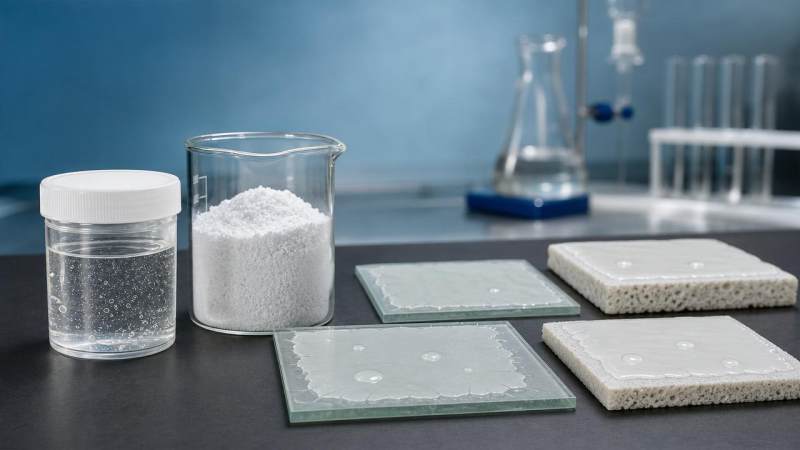
Polyvinyl Alcohol remains a familiar choice in adhesive systems because it is film-forming, economical, and relatively easy to process. However, technical evaluators looking beyond baseline lab results often find that Polyvinyl Alcohol becomes the limiting factor when adhesives face moisture, movement, complex substrates, or inconsistent production conditions.
In practice, the key question is not whether Polyvinyl Alcohol can work, but where its performance margin becomes too narrow. For chemical and construction applications, this matters because a binder that performs adequately in controlled testing may still create failure risk during storage, application, curing, or long-term service.
For technical assessment teams, the most useful evaluation approach is to examine Polyvinyl Alcohol through the lens of water sensitivity, flexibility, compatibility, process stability, and total formulation robustness. Those are the areas where real-world shortcomings most often appear, and where alternative binder strategies may offer stronger long-term value.
What technical evaluators are really trying to determine
When professionals search for information about Polyvinyl Alcohol in adhesives, they are usually not looking for a generic material overview. They want to know where this polymer underperforms, what kinds of failures it may trigger, and whether another formulation route would reduce commercial and technical risk.
That search intent is highly practical. Technical evaluators need to compare laboratory promise with field reliability, especially in products exposed to humidity, wash cycles, thermal change, or varying substrate conditions. Their goal is to make a defensible material selection, not simply confirm that Polyvinyl Alcohol is widely used.
They also tend to care about what happens after the first performance metric is met. Initial bond strength alone is rarely enough. They need to understand rework rate, consistency across batches, processing sensitivity, and whether the adhesive remains stable across the product’s full life cycle.
Why Polyvinyl Alcohol still appears in many adhesive formulations
Polyvinyl Alcohol remains common for understandable reasons. It offers good film formation, can contribute to adhesion on porous materials, and is often considered cost-effective for paper, packaging, and certain water-based systems. It can also support viscosity development and provide a relatively straightforward entry point for basic formulations.
In less demanding applications, those benefits may be enough. If the substrate is absorbent, environmental exposure is mild, and flexibility demands are limited, Polyvinyl Alcohol can still be a practical choice. This is why it continues to hold a place in many legacy formulations and price-sensitive adhesive products.
But technical evaluators should be cautious about treating widespread use as proof of broad suitability. A material can be common in the market and still be a poor fit for modern performance expectations, especially when the end-use environment has become more demanding than the original formulation logic assumed.
Where Polyvinyl Alcohol often falls short: water resistance
One of the most important limitations of Polyvinyl Alcohol in adhesives is water sensitivity. Because it is fundamentally hydrophilic, its performance can deteriorate significantly when exposed to moisture, condensation, repeated humidity cycles, or direct water contact. This is often the first major concern during technical evaluation.
In practical terms, that means bond strength may decline after environmental exposure even if dry-state performance initially looks acceptable. Swelling, softening, and partial loss of cohesive integrity can occur, especially in formulations that lack strong crosslinking support or that rely too heavily on Polyvinyl Alcohol as the primary binder.
For construction-related applications, this shortcoming can become critical. Adhesives may be exposed to damp substrates, variable site humidity, or service environments where water ingress is difficult to control. In such conditions, Polyvinyl Alcohol can introduce a reliability gap that may not be obvious from short-duration laboratory testing.
Technical teams should therefore review not only dry adhesion data but also wet adhesion retention, humidity aging, and repeated exposure recovery. If performance loss becomes sharp after moisture contact, the material may be adequate only on paper and not in the actual use environment.
Flexibility limitations under movement and stress
Another common weakness is insufficient flexibility in applications that experience mechanical movement, substrate expansion, vibration, or thermal cycling. Polyvinyl Alcohol films can become too rigid for systems that need to accommodate stress without cracking, embrittlement, or interfacial failure.
This issue becomes more visible when adhesives are used on substrates with different expansion rates. As materials move under heat or moisture variation, the adhesive layer must deform without losing bond integrity. If Polyvinyl Alcohol dominates the binder package, the formulation may not absorb those stresses effectively.
Over time, this can show up as edge lifting, brittle fracture, microcracking, or reduced peel performance. In some cases, the adhesive may pass static bond tests but fail in dynamic or fatigue-related conditions. That disconnect is especially important for evaluators assessing long-term service reliability rather than short-term qualification only.
It is also worth noting that attempts to improve flexibility by adding plasticizers may create trade-offs. While flexibility can increase, water sensitivity, migration risk, or long-term dimensional stability may worsen. That makes simple compensation strategies less effective than they first appear.
Compatibility challenges with broader formulation systems
Polyvinyl Alcohol does not always integrate smoothly into complex adhesive formulations. Compatibility can become an issue when working with hydrophobic polymers, specialty fillers, defoamers, preservatives, or performance additives that require a more balanced chemical environment. The result may be instability, uneven dispersion, or compromised final properties.
For technical evaluators, this matters because a binder is never judged in isolation. An adhesive system has to function as a complete package. If Polyvinyl Alcohol limits additive selection or creates formulation sensitivity, the overall development window becomes narrower and scale-up risk increases.
Compatibility problems may also lead to variable rheology, phase separation, foam retention, or reduced film uniformity. In production settings, these effects can lower efficiency and complicate quality control. What looks manageable in a pilot batch may become expensive once full manufacturing variability is introduced.
In some industrial formulations, companies compare Polyvinyl Alcohol-based systems with cellulose ether-modified systems to improve water-phase control and application behavior. Depending on the end use, ingredients associated with broader solution design, including materials such as Detergent-grade HPMC, may also inform how formulators think about stability, compatibility, and process consistency across product families.
Processing stability and manufacturing sensitivity
Polyvinyl Alcohol can also be more demanding in processing than decision-makers expect. Dissolution conditions, temperature management, mixing time, and hydration sequence can all influence final performance. If preparation is inconsistent, the adhesive may show viscosity fluctuations, incomplete solubilization, or gel-related defects.
For a technical evaluator, this means performance data should be reviewed together with manufacturing practicality. A material that works only under tightly controlled preparation conditions may not be the best option for large-scale production sites that need repeatability across operators, shifts, and regional facilities.
Storage stability can also become a concern. Depending on formulation design, Polyvinyl Alcohol-based systems may show viscosity drift, microbial sensitivity in water-based environments, or altered application behavior over time. These issues increase the importance of preservative strategy and broader formulation discipline.
In commercial terms, processing sensitivity often translates into hidden cost. Additional control steps, longer dissolution time, higher energy use, and stricter quality monitoring can offset the apparent raw material economy of Polyvinyl Alcohol. Technical selection should therefore consider total operating impact, not only purchase price.
Limits in high-performance or modern construction adhesive applications
As performance standards rise, Polyvinyl Alcohol may no longer offer enough margin for demanding adhesive applications. Modern construction chemistry often requires resistance to moisture, strong open-time control, robust workability, and dependable bonding across varied mineral or polymer-modified substrates.
In these environments, a binder that is merely functional under basic conditions can become a source of complaint, rework, or warranty exposure. Technical evaluators should be especially alert when the application involves exterior exposure, repeated cleaning, temperature swings, or strict consistency requirements from project to project.
The same logic applies when the end user values easy application and stable handling as much as bond strength. If Polyvinyl Alcohol contributes to narrow processing windows or unstable rheology, field performance may suffer even before the bond line is fully challenged in service.
This is one reason why many formulation teams increasingly think in terms of integrated systems rather than single-material substitution. In adjacent chemical segments, advanced cellulose ether products have become important because they support consistency, water retention, and workability in ways that align with industrial scale. Even when not used as direct replacements, products like Detergent-grade HPMC reflect the broader move toward more controlled, application-oriented formulation engineering.
How technical evaluators should assess Polyvinyl Alcohol more effectively
If the objective is sound material selection, evaluation should move beyond standard dry bond testing. Polyvinyl Alcohol should be tested under the stresses that most closely resemble real use. That includes wet exposure, high-humidity aging, thermal cycling, flexibility under movement, and storage stability over practical time frames.
It is also useful to separate performance questions into three layers: formulation fit, production fit, and service fit. Formulation fit asks whether Polyvinyl Alcohol works chemically with the full additive package. Production fit asks whether it can be processed consistently. Service fit asks whether it survives real environmental demands.
Technical teams should further compare not just peak performance, but failure mode. Does the adhesive soften, crack, lose cohesion, or detach at the interface? Understanding how Polyvinyl Alcohol fails often provides more decision value than simply measuring whether a benchmark is passed or missed at one time point.
Finally, evaluators should quantify the cost of inconsistency. A lower-cost binder can become more expensive if it raises reject rate, complicates batching, or narrows the acceptable application window. This broader assessment framework usually leads to more reliable material decisions than raw-material cost comparisons alone.
When Polyvinyl Alcohol may still be acceptable
Despite its limitations, Polyvinyl Alcohol is not automatically the wrong choice. It may still be appropriate in interior, dry-condition, low-movement, or porous-substrate adhesive applications where moisture resistance and elastic recovery are not primary performance drivers. In those cases, it can remain commercially reasonable.
The important point is matching the material to the demand level. Problems arise when Polyvinyl Alcohol is expected to perform like a more robust, moisture-tolerant, or mechanically forgiving binder system without the necessary structural support in the formulation. Misalignment, not mere use, is the real issue.
For technical evaluators, that means the decision should be conditional, not habitual. Legacy usage, supplier familiarity, or attractive cost should not override the evidence from environment-specific testing and process review. A narrower but clearly defined use case is where Polyvinyl Alcohol can still make sense.
Conclusion: performance gaps matter more than familiarity
Polyvinyl Alcohol continues to play a role in adhesive technology, but its limitations are significant in any application where moisture, movement, formulation complexity, or manufacturing consistency matter. The most common performance gaps involve water resistance, flexibility, compatibility, and process stability.
For technical evaluators, the central takeaway is straightforward: Polyvinyl Alcohol should be judged by real service demands, not by its long market history. If an adhesive must deliver reliable long-term performance in modern chemical or construction settings, this material may offer too little safety margin on its own.
A stronger evaluation process focuses on realistic exposure testing, full-system compatibility, and total operational cost. That approach helps teams identify when Polyvinyl Alcohol is sufficient, and when a more robust formulation strategy is the better path for performance, consistency, and commercial confidence.
Send Your Inquiry
We welcome your cooperation and we will develop with you.
