


Polyvinyl Alcohol in Water-Soluble Packaging Applications
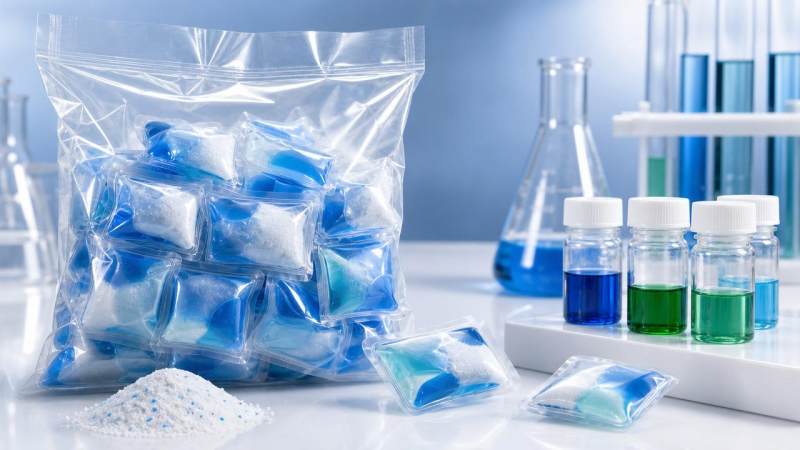
Polyvinyl Alcohol is widely used in water-soluble packaging applications because it combines strength, controlled dissolution, and a favorable environmental profile.
As packaging standards become stricter, Polyvinyl Alcohol continues to gain importance in chemical handling, detergents, agrochemicals, healthcare, and unit-dose systems.
Its ability to form transparent, durable films supports safer dosing, cleaner operations, and reduced direct contact with sensitive or hazardous contents.
This article explains what Polyvinyl Alcohol is, why it fits water-soluble packaging, where it performs best, and how practical selection decisions should be made.
Understanding Polyvinyl Alcohol in Packaging Chemistry
Polyvinyl Alcohol is a synthetic polymer known for film-forming ability, adhesion, flexibility, and water solubility under defined conditions.
In water-soluble packaging, Polyvinyl Alcohol is processed into films or pouches that dissolve during use, releasing the enclosed material efficiently.
Its performance depends on hydrolysis degree, molecular weight, thickness, additives, humidity exposure, and target water temperature.
These variables determine whether a film dissolves rapidly in cold water or more gradually in warm or industrial wash systems.
Core material characteristics
- Good tensile strength for unit-dose packaging and sachets
- Reliable oxygen and aroma barrier in dry conditions
- Compatibility with printing, converting, and heat sealing
- Controlled dissolution for precise release performance
- Reduced handling exposure to aggressive formulations
Because Polyvinyl Alcohol is highly tunable, it serves both consumer packaging and industrial chemical applications where dissolution timing matters.
Why the Industry Focus on Water-Soluble Packaging Is Growing
Water-soluble packaging responds to several market pressures at once, including safety, waste reduction, dosing accuracy, and workflow simplification.
Polyvinyl Alcohol sits at the center of this shift because it supports both product protection and practical end-use dissolution.
In chemical markets, packaging is no longer only a transport medium. It now affects compliance, usability, storage stability, and brand reliability.
That is why Polyvinyl Alcohol attracts attention not only from formulators, but also from teams evaluating application safety and packaging consistency.
Performance Advantages of Polyvinyl Alcohol Films
The main reason Polyvinyl Alcohol is selected for water-soluble packaging is its balance between in-use strength and on-demand dissolution.
Many packaging materials resist water well, but very few can remain stable during storage and then dissolve predictably during application.
Mechanical and processing benefits
- Good film integrity during filling, sealing, and transport
- Adaptability to pouch, bag, liner, and capsule formats
- Printable surfaces for instructions and traceability
- Potential for multilayer design in demanding uses
Functional advantages in use
- Measured dosing reduces overuse and product waste
- Closed packaging lowers spill risk during handling
- Dissolution can match wash cycles or mixing stages
- Less container cleaning may be required after use
These qualities make Polyvinyl Alcohol especially relevant where product concentration is high and direct contact should be minimized.
In related formulation systems, additives such as Hydroxypropyl Starch Ether may also support rheology control and application stability.
Typical Applications Across Industrial and Commercial Segments
Polyvinyl Alcohol water-soluble packaging appears in a wide range of sectors where convenience, safety, and repeatable release are essential.
The chemical industry values Polyvinyl Alcohol because packaging can become part of the process instead of remaining separate waste after dosing.
This is particularly useful for powders, granules, and concentrated liquids that need clean introduction into water-based systems.
Key Factors That Influence Real-World Performance
Not every Polyvinyl Alcohol film behaves the same way. Selection should match storage conditions, formulation chemistry, and dissolution targets.
Important technical variables
- Degree of hydrolysis affects water sensitivity and resistance.
- Film thickness influences strength, seal quality, and dissolve time.
- Ambient humidity can change storage stability and handling behavior.
- Packaged contents may interact with the film over time.
- Water temperature and agitation affect final dissolution speed.
For example, a detergent pod and an agrochemical bag may both use Polyvinyl Alcohol, but their film specifications can differ significantly.
Storage testing, seal evaluation, and compatibility checks are essential before full-scale commercialization or export deployment.
Practical Guidance for Material Selection and Implementation
A successful water-soluble packaging project requires coordination between formulation design, film performance, converting process, and final-use conditions.
- Define whether dissolution should occur in cold, warm, or hot water.
- Measure the product’s moisture, pH, and solvent interaction profile.
- Confirm machine compatibility for filling, sealing, and transport.
- Test shelf stability under realistic warehouse humidity conditions.
- Review regional expectations for packaging safety and environmental performance.
Integrated suppliers with strong process control can help reduce development risk through consistent polymer quality and technical support.
Jinan Ludong Chemical Co., Ltd. operates advanced production lines and integrated manufacturing systems in the chemical materials field.
Its broad product capability in cellulose ethers reflects the value of stable production, flexible supply, and application-oriented technical solutions.
For broader formulation optimization, Hydroxypropyl Starch Ether can also be considered where system balance and handling performance matter.
Conclusion and Next-Step Considerations
Polyvinyl Alcohol remains one of the most important materials for water-soluble packaging because it combines processability, safety, and functional dissolution.
Its value is strongest in applications that need accurate dosing, cleaner handling, and packaging that works as part of the use process.
When evaluating Polyvinyl Alcohol, focus on film grade, environmental exposure, content compatibility, and end-use water conditions.
Careful testing and reliable material sourcing can improve package performance, reduce failure risk, and support more efficient chemical product delivery.
The next practical step is to compare target applications, dissolution requirements, and packaging line conditions before selecting a final Polyvinyl Alcohol solution.
Send Your Inquiry
We welcome your cooperation and we will develop with you.
