


Redispersible Polymer Powder: Common Mistakes That Reduce Bond Strength
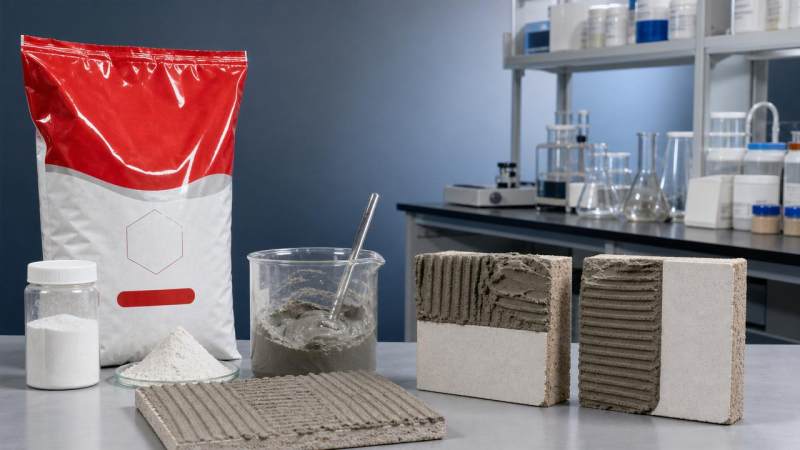
Redispersible Polymer Powder is a key ingredient in modern dry-mix construction chemistry. It improves adhesion, flexibility, water resistance, and cohesion, yet bond strength can still fall sharply when formulation, storage, or application errors go unnoticed. For quality control and process stability, the most important task is not only choosing the right Redispersible Polymer Powder, but also avoiding the small mistakes that quietly weaken performance.
What Redispersible Polymer Powder Does in Bonding Systems
Redispersible Polymer Powder is a spray-dried polymer that redistributes in water and forms a flexible film after curing. In mortars, tile adhesives, repair products, and exterior wall systems, it helps bind mineral particles together and improves contact between substrate and finish layer.
When used correctly, Redispersible Polymer Powder supports stronger pull-off performance, better crack resistance, and more stable long-term durability. When used poorly, the same material can still fail to deliver expected bond strength, even if the base formula seems correct.
Common Mistakes That Reduce Bond Strength
The most common issues are often practical rather than chemical. A powder can lose effectiveness if it is exposed to moisture, blended unevenly, or paired with an incompatible cement system. Small deviations can create large differences in final adhesion.
- Using an incorrect dosage for the target substrate or application.
- Mixing too briefly, leaving polymer and mineral materials unevenly dispersed.
- Allowing moisture pickup during storage or handling.
- Ignoring cement quality, sand gradation, or additive compatibility.
- Applying the product on dusty, weak, or poorly prepared surfaces.
A frequent hidden problem is over-reliance on one additive while neglecting the rest of the system. For example, a binder package may still underperform if the rheology balance is wrong. In some formulations, products like Hydroxypropyl Methyl Cellulose help control water retention and workability, which indirectly supports more consistent bonding during application.
Industry Signals That Often Point to Bonding Risk
In construction chemistry, bond loss rarely comes from a single cause. It usually appears through a pattern of symptoms that can be traced back to raw material control, process discipline, or field conditions.
These signals are useful because they help connect observed failure to upstream control points. Redispersible Polymer Powder performs best when every part of the system, from raw materials to curing conditions, is managed consistently.
Typical Application Areas and Sensitivity Levels
Different products place different demands on Redispersible Polymer Powder. Some systems tolerate moderate variation, while others require very precise control to achieve bond strength targets.
- Tile adhesives: high sensitivity to open time, slip resistance, and substrate wetting.
- Repair mortars: demand strong cohesion and crack resistance under stress.
- Exterior insulation systems: need long-term durability and weather resistance.
- Self-leveling compounds: require balanced flow and film formation.
For each of these applications, the formulation window is narrow. A small error in Redispersible Polymer Powder dosage or dispersion can reduce the final bond strength enough to affect field performance, warranty confidence, and project consistency.
Practical Ways to Protect Bond Strength
A stable process starts with material control. Keep Redispersible Polymer Powder sealed, dry, and protected from heat. Check storage humidity, package integrity, and first-in first-out handling. Even brief exposure to moisture can reduce flow behavior and create clumping.
Next, verify batch consistency through simple routine checks. Viscosity, ash content, particle behavior, and re-dispersibility should be tracked against internal standards. If the formulation includes cellulose ethers, dispersants, or retarders, test the full system rather than evaluating one component alone.
Surface preparation matters just as much. Dust, oil, weak laitance, and excessive water can all undermine adhesion. Even the best Redispersible Polymer Powder cannot fully compensate for a poor substrate.
A Simple Control Checklist
- Confirm dosage against the target bond requirement.
- Test mixing time and speed under production conditions.
- Monitor storage humidity and packaging condition.
- Review compatibility with cement, filler, and cellulose ether systems.
- Inspect substrate cleanliness before application.
This checklist is simple, but it captures the most common causes of unstable bonding. In practice, disciplined control often delivers better results than frequent formula changes.
Conclusion and Next Step
Redispersible Polymer Powder is highly effective, but bond strength depends on how carefully the whole system is managed. Most failures come from preventable mistakes: moisture exposure, poor mixing, weak surfaces, or incompatible formulation choices.
For more stable results, review storage, processing, and application controls together, then validate performance under real conditions. A well-balanced construction chemistry system will always outperform a single-material approach.
If you need a stronger baseline for formulation planning, start by auditing your Redispersible Polymer Powder handling process and verifying how it interacts with the rest of the binder package.
Send Your Inquiry
We welcome your cooperation and we will develop with you.
