


Redispersible Polymer Powder in Self-Leveling Compounds
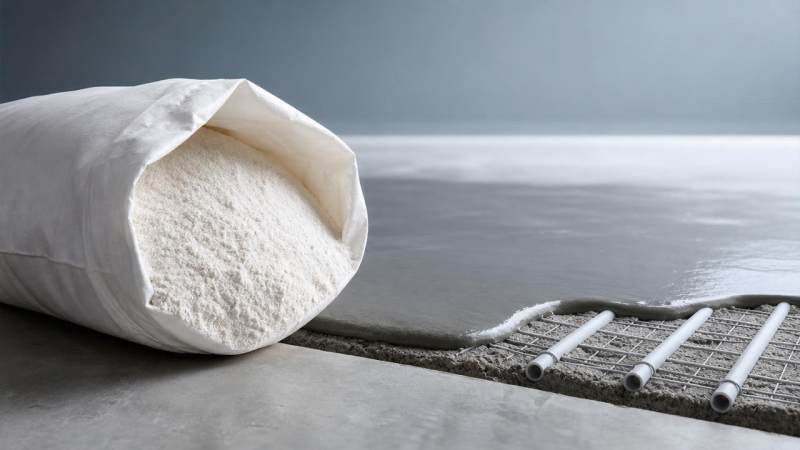
For technical evaluators, selecting the right Redispersible Polymer Powder is critical to achieving reliable flow, adhesion, flexibility, and surface durability in self-leveling compounds.
As flooring systems demand faster application, lower shrinkage, and consistent performance across diverse substrates, RDP plays a decisive role.
This article examines how Redispersible Polymer Powder functions in self-leveling formulations, which indicators matter, and how stable supply supports scalable construction solutions.
Why Self-Leveling Scenes Need Redispersible Polymer Powder
Self-leveling compounds are expected to spread easily, harden evenly, and maintain bond strength under daily traffic and thermal movement.
Redispersible Polymer Powder helps mineral binders form a continuous polymer film after mixing with water and drying.
This film improves adhesion, reduces brittleness, and enhances the balance between flowability and cured performance.
In practical flooring work, the same formulation may face concrete, gypsum, old tiles, or heated floors.
Each substrate creates different stresses, absorption rates, and bonding risks, making Redispersible Polymer Powder selection a scene-based decision.
Scene Background: Matching Flooring Risk With Polymer Performance
The value of Redispersible Polymer Powder becomes clear when flooring requirements move beyond simple leveling.
Fast renovation jobs need early strength, smooth spreading, and reduced surface defects within limited construction windows.
Industrial or commercial floors need stronger adhesion, better abrasion resistance, and stable bonding under mechanical load.
Residential projects often demand crack resistance, low dusting, and compatibility with decorative finishes or floor coverings.
These differences explain why Redispersible Polymer Powder should not be judged only by price or appearance.
Film-forming behavior, glass transition temperature, powder redispersibility, and cement compatibility must be reviewed together.
Typical Scene 1: Concrete Substrates With Variable Absorption
Concrete remains the most common base for self-leveling compounds, but its porosity can vary greatly between sites.
High-absorption concrete can pull water from the fresh mortar, reducing flow time and increasing pinholes.
Redispersible Polymer Powder supports stronger interface bonding and helps the hardened layer resist local stress concentration.
For this scene, evaluate tensile adhesion after dry curing and after water exposure.
A suitable Redispersible Polymer Powder should maintain bond strength without creating excessive stickiness during placement.
Typical Scene 2: Fast Renovation Over Existing Flooring
Renovation projects often require self-leveling compounds over old cement, terrazzo, or tile after proper surface preparation.
These bases may have lower absorption and weaker mechanical keying, increasing the risk of debonding.
Redispersible Polymer Powder improves adhesion through film formation and increases flexibility at the interface.
The key judgment point is whether adhesion remains stable after thermal cycling and foot traffic.
In this scene, Redispersible Polymer Powder with balanced flexibility and cement compatibility is usually preferred.
Typical Scene 3: Heated Floors and Thermal Movement
Underfloor heating creates repeated expansion and contraction in both the substrate and leveling layer.
A brittle self-leveling compound may crack, curl, or lose adhesion near heating pipes and joints.
Redispersible Polymer Powder increases deformability, helping the system accommodate small movements without failure.
For heated floors, flexibility should be considered together with compressive strength and dimensional stability.
Too much polymer may soften the matrix, while too little may reduce crack resistance.
Typical Scene 4: Thin-Layer Applications Requiring Smooth Finish
Thin self-leveling layers are sensitive to segregation, air release, surface dusting, and uneven water retention.
Redispersible Polymer Powder contributes cohesion, allowing the compound to remain uniform while spreading across the floor.
It also helps the cured surface resist powdering before adhesives, coatings, or resilient floors are installed.
In this scene, the formulation may also use cellulose ether for water retention and rheology control.
For example, Hydroxypropyl Methyl Cellulose can support workability when properly balanced with RDP.
How Scenario Requirements Differ in Self-Leveling Compounds
This comparison shows why Redispersible Polymer Powder should be selected according to job-site stress, not only dosage habits.
Performance Indicators That Should Guide Selection
Redispersibility and Mixing Stability
Good Redispersible Polymer Powder should disperse quickly in water and distribute evenly through the dry-mix mortar.
Poor dispersion may cause lumps, inconsistent flow, and weak spots after curing.
Adhesion Under Different Curing Conditions
Adhesion should be checked after standard curing, wet exposure, heat exposure, and aging conditions.
Reliable Redispersible Polymer Powder reduces failure at the interface between the leveling compound and substrate.
Flow Retention and Surface Formation
Self-leveling mortars need sufficient open time, but excessive viscosity can slow leveling and trap bubbles.
The polymer must work with cement, gypsum, fillers, defoamers, and rheology modifiers without destabilizing flow.
Flexibility Without Strength Loss
Redispersible Polymer Powder improves flexibility, but formulation balance remains essential.
Excessive polymer content may reduce compressive strength or delay hardness development in demanding flooring systems.
Scene Adaptation Suggestions for Formulation Work
- For absorbent concrete, prioritize adhesion, water resistance, and stable flow after short mixing times.
- For non-absorbent renovation bases, focus on interface bonding and flexibility after temperature changes.
- For heated floors, test crack resistance, dimensional stability, and adhesion after repeated heating cycles.
- For thin layers, check surface hardness, air release, leveling quality, and compatibility with floor coverings.
- For rapid projects, verify early strength, walkability time, and retained workability under site temperature changes.
These actions make Redispersible Polymer Powder evaluation more practical and reduce risks during scale-up production.
Common Misjudgments When Using Redispersible Polymer Powder
One common mistake is assuming that higher Redispersible Polymer Powder dosage always delivers better performance.
In reality, excessive dosage may increase cost, slow hardening, or change the balance of flow and strength.
Another mistake is testing only fresh flow without measuring cured adhesion and long-term durability.
A third risk is ignoring interactions between RDP, cement chemistry, calcium sulfate systems, and additives.
Even a high-quality Redispersible Polymer Powder can underperform if the formulation lacks proper water retention or defoaming control.
Compatibility trials should include dry blending, wet mixing, flow spread, setting time, and adhesion after aging.
How Stable Manufacturing Supports Flooring Consistency
Consistent Redispersible Polymer Powder quality depends on controlled raw materials, spray drying, particle design, and anti-caking performance.
Jinan Ludong Chemical Co., Ltd., established in 2020, supports construction material applications through integrated chemical production and services.
The company focuses on cellulose ethers, Redispersible Polymer Powder, and hydroxypropyl starch ether for modern dry-mix systems.
Its production capacity reaches 45,000 tons annually, supporting stable supply for construction and chemical-grade applications.
Advanced production lines and intelligent automation help maintain viscosity control, batch consistency, and flexible customer adaptation.
For self-leveling compounds, this stability helps reduce formulation drift and supports repeatable field performance.
Practical Evaluation Route Before Final Selection
- Define the application scene, substrate type, layer thickness, curing condition, and expected floor covering.
- Screen Redispersible Polymer Powder grades by adhesion, flexibility, film formation, and cement compatibility.
- Run laboratory tests for flow spread, flow retention, setting time, and surface appearance.
- Measure cured properties, including tensile bond strength, flexural strength, compressive strength, and abrasion resistance.
- Conduct pilot trials under realistic site temperature, humidity, mixing time, and pumping conditions.
This route connects Redispersible Polymer Powder chemistry with actual flooring outcomes, making decisions easier to defend.
Conclusion: Turning Polymer Choice Into Flooring Reliability
Redispersible Polymer Powder is not only an additive for adhesion; it is a performance bridge in self-leveling compounds.
It links fresh workability, substrate bonding, crack resistance, and surface durability across different flooring scenes.
The best results come from matching Redispersible Polymer Powder properties with substrate risk, construction speed, and final service conditions.
For formulation development or grade comparison, begin with scene requirements, then validate through structured laboratory and field testing.
To build consistent self-leveling systems, work with a supplier capable of stable production, technical alignment, and scalable construction material support.
Send Your Inquiry
We welcome your cooperation and we will develop with you.
