


Redispersible Polymer Powder in Tile Adhesives
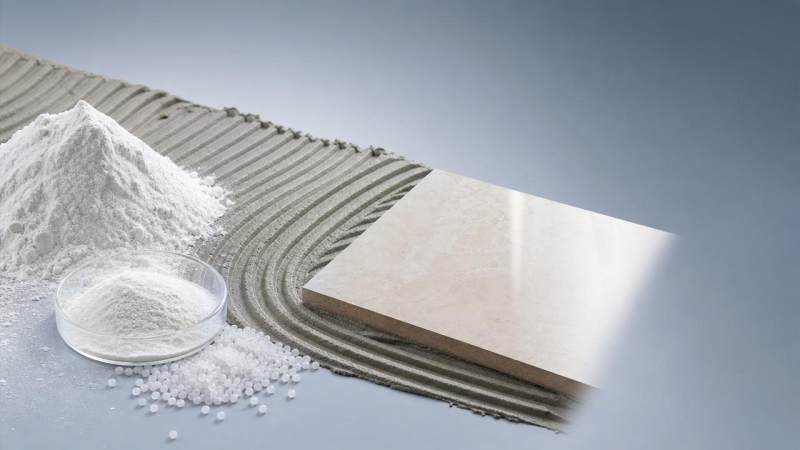
Redispersible Polymer Powder is a key additive in modern tile adhesives, helping operators achieve stronger bonding, better flexibility, and more reliable workability on site.
For construction users, choosing the right RDP can directly affect open time, slip resistance, water retention, and long-term adhesion performance.
As a professional supplier of construction chemical solutions, Jinan Ludong Chemical provides consistent RDP products designed to support stable mixing, easy application, and durable tile installation across different substrates and job conditions.
Why Redispersible Polymer Powder Needs a Practical Checklist
Tile adhesive performance is rarely decided by cement alone.
Redispersible Polymer Powder forms a polymer film after hydration and drying, improving cohesion, adhesion, deformability, and resistance to service stress.
A checklist approach helps compare technical indicators before trial production, site application, and final formula approval.
It also reduces the risk of choosing Redispersible Polymer Powder only by price, appearance, or short mixing tests.
In real tile adhesive systems, RDP must work together with cement, sand, cellulose ether, starch ether, defoamer, and other additives.
That interaction determines whether the mortar spreads smoothly, holds ridges, resists sagging, and maintains adhesion after curing.
Core Checklist for Redispersible Polymer Powder in Tile Adhesives
- Check polymer type first, because vinyl acetate-ethylene and other systems influence flexibility, adhesion, water resistance, and compatibility with cement hydration.
- Confirm ash content and active polymer level, since excessive inorganic filler may reduce film formation and weaken final bonding strength.
- Evaluate redispersibility in water, ensuring the powder disperses quickly without large particles, floating lumps, or unstable slurry behavior.
- Test open time under realistic temperature and airflow, because Redispersible Polymer Powder must support adhesion after delayed tile placement.
- Measure tensile adhesion strength after standard curing, water immersion, heat aging, and freeze-thaw cycles when relevant.
- Observe slip resistance on vertical application, especially when large-format tiles require stable positioning before final setting.
- Compare workability after mixing, including creaminess, trowel feel, ridge stability, and ease of tile adjustment.
- Review compatibility with cellulose ether, because HPMC and Redispersible Polymer Powder jointly affect water retention and application time.
- Assess dosage sensitivity, as a stable RDP grade should perform predictably across reasonable formulation adjustments.
- Verify storage stability, keeping powder free-flowing and protected from moisture, compression, contamination, and temperature fluctuation.
Key Performance Areas to Verify Before Scaling
Bond Strength and Polymer Film Formation
Redispersible Polymer Powder improves adhesion by forming a flexible polymer network inside the cementitious matrix.
This film bridges fine pores, strengthens contact with tile backs, and helps resist shrinkage stress during curing.
For reliable assessment, test adhesion on ceramic tile, porcelain tile, concrete, mortar board, and other target substrates.
Do not rely only on early strength.
Tile adhesive must maintain bonding after moisture exposure, temperature change, and long-term service movement.
Open Time, Wetting, and Tile Adjustment
Good Redispersible Polymer Powder helps the adhesive surface remain active long enough for proper tile placement.
Open time depends on RDP, cellulose ether, cement type, sand grading, water dosage, and jobsite climate.
A practical test is to comb the adhesive, wait at controlled intervals, then place tiles with consistent pressure.
Check transfer coverage, surface skinning, and final pull-off strength instead of judging only by appearance.
Flexibility and Deformation Resistance
Redispersible Polymer Powder is essential when tile adhesive must tolerate vibration, thermal movement, or slight substrate deformation.
Higher polymer contribution can improve flexibility, but excessive dosage may change setting, cost, and water demand.
Balance deformability with adhesion strength, slip resistance, and curing speed.
The best formula is not always the one with the highest RDP dosage.
Application Scenarios and Formulation Notes
Standard Ceramic Tile Adhesives
For common wall and floor ceramic tiles, Redispersible Polymer Powder supports adhesion, workability, and improved resistance to water exposure.
The formula should maintain smooth spreading without becoming sticky, rubbery, or difficult to comb.
Start with a controlled dosage, then adjust according to tensile adhesion results and open time requirements.
Jinan Ludong Chemical can support RDP selection within broader construction additive systems, including HPMC and HPS solutions.
Porcelain and Low-Absorption Tiles
Porcelain tiles have dense backs and low water absorption, so cement hydration alone may not provide enough anchoring.
Redispersible Polymer Powder improves wetting and bonding at the interface between mortar and tile surface.
Use stricter testing after water immersion and heat aging, because interface failure often appears under severe conditions.
For dense tiles, pay close attention to open time and mortar transfer coverage during trial application.
Large-Format Tile Installation
Large-format tiles increase stress on the adhesive layer and demand stronger anti-slip behavior.
Redispersible Polymer Powder helps improve cohesion, but rheology must also be controlled through cellulose ether and graded aggregates.
Check ridge collapse, bedding coverage, and tile adjustment time under the actual trowel size used on site.
If the mortar feels overly soft, adjust water demand and thickening system before increasing cement content.
Exterior and Wet-Area Applications
Exterior walls, balconies, bathrooms, and kitchens expose tile adhesives to moisture and temperature variation.
Select Redispersible Polymer Powder with suitable water resistance and durable film characteristics.
Evaluate adhesion after immersion, drying cycles, and heat exposure before approving the formula.
For demanding projects, laboratory performance must be confirmed by site mock-up testing.
Commonly Overlooked Risks When Choosing RDP
Ignoring Cement and Sand Variation
Redispersible Polymer Powder performance can change when cement fineness, alkali content, or mineral composition changes.
Sand grading also affects water demand, surface area, and final mortar texture.
When raw materials change, repeat workability and adhesion checks instead of assuming the same RDP dosage remains ideal.
Using Only a Short Mixing Observation
A tile adhesive may look creamy after mixing but fail in open time or water-aged adhesion.
Redispersible Polymer Powder must be judged through a full test cycle, not a five-minute visual inspection.
Include fresh mortar behavior, hardened strength, interface bonding, and storage stability in the approval process.
Overlooking Additive Compatibility
RDP interacts with cellulose ether, starch ether, retarders, accelerators, and air-entraining materials.
Poor compatibility may cause delayed setting, weak surface strength, excessive air, or unstable viscosity.
Ludong Chemical’s cellulose ether production background supports integrated formulation thinking, not isolated additive selection.
For related cellulose ether applications, the portfolio also includes Detergent-grade HPMC for specialized non-construction uses.
Underestimating Climate Conditions
High temperature, dry wind, and absorbent substrates shorten open time and reduce transfer coverage.
Cold conditions slow cement hydration and delay strength development.
Select Redispersible Polymer Powder and supporting additives with the intended climate range in mind.
Execution Guide for Trial and Approval
- Define the tile type, substrate, climate exposure, standard requirement, and expected working time before building the formula.
- Prepare a baseline mortar with known cement, sand, cellulose ether, and Redispersible Polymer Powder dosage.
- Mix with controlled water addition, fixed mixing time, and consistent resting time to avoid misleading comparisons.
- Record fresh properties, including viscosity, trowel feel, ridge profile, slip resistance, and adjustment window.
- Cure test samples under standard conditions, then test tensile adhesion after normal and severe conditioning.
- Run a site simulation using target tiles, real substrate conditions, and realistic waiting time before placement.
- Adjust RDP dosage only after confirming whether failure comes from bonding, rheology, water retention, or raw material variation.
- Keep batch records so future production can repeat the approved performance window with fewer surprises.
Supplier Factors That Support Consistent Tile Adhesive Quality
A reliable Redispersible Polymer Powder supplier should provide stable quality, technical communication, and clear product positioning.
Jinan Ludong Chemical Co., Ltd., established in 2020, focuses on cellulose ethers, RDP, and construction chemical solutions.
Its production capacity reaches 45,000 tons annually, with HPMC viscosity controllable from 400 to 200,000 CPS.
The company integrates traditional production processes with intelligent automated production to support consistent supply and flexible customer needs.
For tile adhesive development, this background matters because RDP selection often requires coordination with cellulose ether performance.
Stable Redispersible Polymer Powder helps maintain predictable bonding, while suitable HPMC improves water retention and handling.
Summary and Next Action
Redispersible Polymer Powder is not a simple filler or optional modifier in tile adhesives.
It directly influences adhesion, flexibility, workability, open time, slip resistance, and long-term durability.
Use a checklist to evaluate polymer type, redispersibility, compatibility, dosage response, and performance after severe conditioning.
Then confirm results through controlled laboratory testing and practical site simulation.
For stable tile adhesive production, choose Redispersible Polymer Powder with proven consistency and formulation support.
Jinan Ludong Chemical can assist with RDP selection, cellulose ether matching, and integrated construction chemical solutions for durable tile installation.
Send Your Inquiry
We welcome your cooperation and we will develop with you.
