


Quality Assessment Guide: How to Identify High-Quality RDP Powder
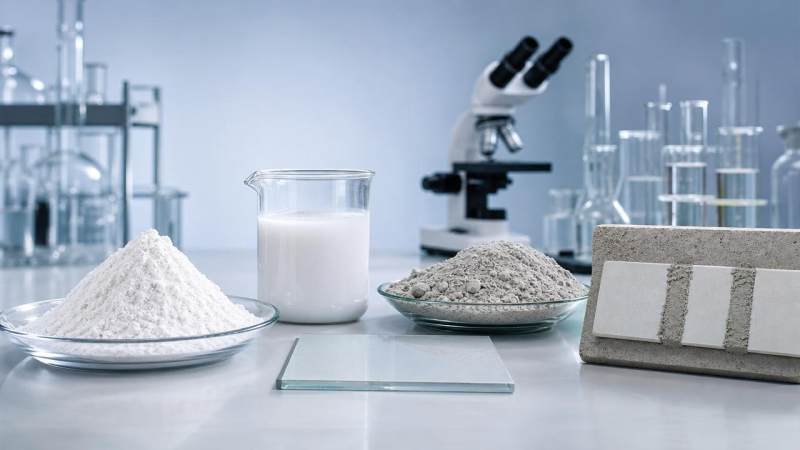
Quality Assessment Guide: How to Identify High-Quality RDP Powder
Choosing high-quality Redispersible Polymer Powder is essential for ensuring stable performance in tile adhesives, wall putty, mortars, and other dry-mix construction materials.
Raw materials, polymerization control, spray drying, and quality testing can strongly influence bonding strength, flexibility, water resistance, and workability.
This guide explains practical indicators for assessing Redispersible Polymer Powder quality before purchase, production trial, or large-scale application.
What Is Redispersible Polymer Powder and Why Does Quality Matter?
Redispersible Polymer Powder is a spray-dried polymer emulsion powder used in cement-based and gypsum-based dry-mix formulations.
After contact with water, good RDP powder redisperses into polymer particles and forms a continuous film during curing.
This film improves adhesion, cohesion, flexibility, abrasion resistance, impact resistance, and long-term durability in construction chemical systems.
Low-grade Redispersible Polymer Powder may disperse poorly, reduce bond strength, increase cracking risk, or cause unstable mortar workability.
Quality is not judged by appearance alone. A white powder can still contain unsuitable additives or inconsistent polymer composition.
Reliable assessment combines physical testing, chemical indicators, application trials, and supplier quality management.
Common Applications of RDP Powder
- Tile adhesive and tile grout systems.
- Exterior insulation finishing systems.
- Wall putty, skim coat, and repair mortar.
- Self-leveling mortar and floor compounds.
- Waterproof mortar and flexible cement coatings.
Each application requires different balance among adhesion, flexibility, water resistance, open time, and cement compatibility.
How Can Appearance and Basic Physical Properties Reveal RDP Quality?
Visual inspection is only the first step, but it can quickly identify obvious production or storage problems.
High-quality Redispersible Polymer Powder usually appears as a free-flowing white or off-white powder without hard lumps.
Severe caking may indicate moisture absorption, poor packaging, long storage, or insufficient anti-caking control.
A uniform particle distribution supports better mixing in dry mortar and reduces local performance fluctuation.
Odor should be mild. Strong abnormal odor can suggest residual monomer, contamination, or unsuitable auxiliary chemicals.
Basic Physical Checks
Physical checks cannot replace laboratory testing, but they help screen unreliable batches before deeper evaluation.
Which Technical Indicators Are Most Important for Redispersible Polymer Powder?
Key technical indicators should match the target formulation, not just a generic product specification.
A tile adhesive grade may prioritize tensile adhesion, while flexible mortar may require lower glass transition temperature.
1. Redispersibility
Redispersibility measures whether Redispersible Polymer Powder can return to a stable emulsion after mixing with water.
Poor redispersion causes polymer agglomerates, uneven film formation, and weak bonding zones in hardened mortar.
A simple water dispersion test can show floating particles, sediment, foam behavior, and dispersion uniformity.
2. Ash Content
Ash content reflects inorganic material after burning. Excessive ash may indicate high filler or inorganic additive levels.
Very high ash can dilute effective polymer content and reduce adhesion or flexibility in sensitive formulations.
However, ash must be interpreted with product type, because protective colloids and additives also affect test results.
3. Film-Forming Ability
Good RDP powder should form a continuous, elastic, and uniform polymer film under suitable curing conditions.
Brittle or discontinuous films may reduce crack resistance and weaken performance under thermal movement.
4. Glass Transition Temperature
Glass transition temperature, often called Tg, influences hardness, flexibility, and low-temperature performance.
Lower Tg usually improves flexibility. Higher Tg may support hardness and abrasion resistance in some mortars.
5. Bond Strength in Mortar
Application testing is the most direct way to judge Redispersible Polymer Powder performance in a real formulation.
Important tests include initial tensile adhesion, adhesion after water immersion, heat aging, and freeze-thaw cycles.
How Should RDP Powder Be Tested in Real Formulations?
Laboratory indicators are useful, but dry-mix construction materials depend on the complete formulation system.
Cement type, sand grading, fillers, cellulose ether, starch ether, defoamer, and retarder all influence final performance.
For this reason, Redispersible Polymer Powder should be tested in the same or similar formulation used in production.
In cement mortar systems, cellulose ethers support water retention and workability, while starch ethers can improve sag resistance.
For formulation adjustment, Hydroxypropyl Starch Ether can be considered together with RDP and HPMC.
Recommended Application Trial Steps
- Prepare a control sample using the current approved RDP powder.
- Replace only Redispersible Polymer Powder in the comparison batch.
- Keep cement, sand, fillers, water ratio, and mixing time unchanged.
- Measure wet mortar workability, open time, and sag behavior.
- Test tensile adhesion after standard curing and water immersion.
- Record cracking, powdering, flexibility, and surface defects.
Changing multiple additives at once makes it difficult to identify the real cause of performance variation.
A proper trial should compare performance, dosage efficiency, and stability across at least several production-relevant batches.
What Supplier Factors Help Identify Reliable Redispersible Polymer Powder?
RDP quality is closely linked to production technology, raw material control, and batch traceability.
A reliable supplier should provide consistent specifications, testing support, and practical formulation recommendations.
Jinan Ludong Chemical Co., Ltd. focuses on cellulose ethers and integrated construction chemical solutions for global applications.
Its product portfolio includes HPMC, Redispersible Polymer Powder, and starch ether materials for dry-mix mortar systems.
With automated production lines and controlled manufacturing processes, stable capacity supports long-term project supply.
Supplier Evaluation Checklist
- Can the supplier provide batch COA and technical data sheets?
- Are ash, moisture, Tg, and polymer type clearly described?
- Is application testing available for tile adhesive or putty?
- Does the supplier support formula troubleshooting?
- Is packaging suitable for humidity-sensitive powder materials?
- Can batch consistency be verified through retained samples?
Stable technical service is especially important when construction conditions, raw materials, or regional standards change.
What Are Common Risks When Buying Low-Quality RDP Powder?
Low-priced Redispersible Polymer Powder may reduce formula cost at first, but hidden risks often appear during application.
Poor adhesion can cause tile debonding, hollowing, surface cracking, water damage, or customer complaints.
Unstable batches can force repeated formula adjustment, increasing production downtime and quality control pressure.
Excessive fillers or unsuitable additives may also affect cement hydration, thickening behavior, and mortar setting time.
Risk Comparison Table
The cheapest material is not always the lowest-cost solution when failure repair and reputation damage are considered.
How Can You Make a Final Purchasing Decision?
A sound decision combines specification review, sample testing, formulation trial, and supplier verification.
Do not approve Redispersible Polymer Powder based only on price, color, or one simple dispersion test.
The best choice is the grade that delivers stable performance at practical dosage in the intended dry-mix system.
Practical Decision Framework
- Define the target application and performance standard.
- Request technical data, COA, and safety documentation.
- Run side-by-side tests with an approved reference sample.
- Check adhesion after water, heat, and aging exposure.
- Evaluate workability together with HPMC and starch ether additives.
- Confirm packaging, shelf life, delivery stability, and support.
For systems requiring improved anti-sag behavior, Hydroxypropyl Starch Ether may complement polymer modification.
FAQ: Quick Answers About Redispersible Polymer Powder Quality
Conclusion: Build Quality Control Around Real Performance
High-quality Redispersible Polymer Powder should redisperse well, form a reliable film, and improve mortar durability.
Appearance, ash, moisture, Tg, and bulk density are useful, but they must be connected with application results.
The most dependable assessment uses controlled side-by-side trials under realistic production and curing conditions.
Before confirming a supplier, review documents, test several batches, and verify technical support for formulation optimization.
For stable dry-mix construction materials, select Redispersible Polymer Powder through evidence, not assumptions.
A disciplined quality assessment process helps reduce failure risk, improve consistency, and protect long-term project performance.
Send Your Inquiry
We welcome your cooperation and we will develop with you.
