


Supply Stability Matters: Picking the Right HPMC Supplier for Growth
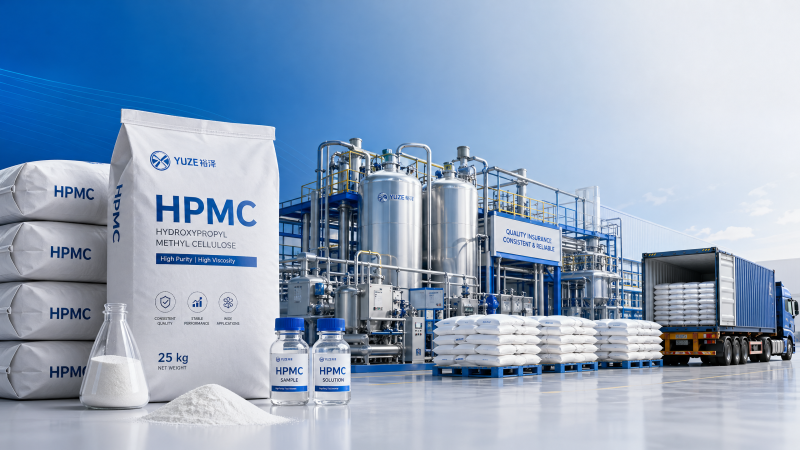
For business evaluators, choosing the right HYDROXYPROPYL METHYL CELLULOSE supplier is not just a purchasing decision—it directly affects supply continuity, product consistency, and long-term growth. In a competitive chemicals market, a reliable partner with scalable capacity, stable quality, and flexible service can reduce risk and strengthen your downstream performance. That is why supplier assessment deserves strategic attention from the very beginning.
Why a checklist-based supplier review works better
Business evaluators in the chemicals sector often face a similar problem: technical data sheets may look acceptable, prices may seem competitive, and samples may pass a short test, yet supply issues appear later during scale-up. A checklist-based review helps prevent that gap. It turns a broad supplier conversation into a controlled evaluation process with defined checkpoints, measurable thresholds, and fewer hidden assumptions.
For a HYDROXYPROPYL METHYL CELLULOSE supplier, the first review should go beyond product naming and viscosity claims. HPMC affects water retention, workability, open time, sag resistance, and consistency in applications such as tile adhesive, skim coat, self-leveling mortar, EIFS, and gypsum systems. Even a deviation within a typical range such as 5% to 10% in performance-sensitive formulations can create downstream complaints, rework, or batch instability.
A practical checklist also improves comparison across multiple suppliers. Instead of relying on a single quote or one-time laboratory trial, procurement and technical teams can evaluate 8 to 12 critical points in the same order. This is especially important when annual demand grows from trial-scale volumes to container-based purchasing cycles with lead times of 2 to 6 weeks.
What should be confirmed before deep commercial discussion
- Whether the supplier has stable manufacturing capacity rather than only trading access.
- Whether viscosity ranges, substitution consistency, and moisture control can be maintained across repeated batches.
- Whether the supplier can support both standard grades and application-oriented selection for mortar, putty, gypsum, or detergent systems.
- Whether sample quality matches bulk order quality under routine production conditions.
When the review is structured this way, the HYDROXYPROPYL METHYL CELLULOSE supplier is judged not only on product availability, but on the ability to support growth without damaging formulation reliability or delivery confidence.
Core supplier checklist: the 8 points evaluators should verify first
The most efficient evaluation process starts with a compact decision checklist. These points are practical because they address the areas where business risk usually appears first: production capacity, consistency, technical fit, delivery execution, and service responsiveness. For a HYDROXYPROPYL METHYL CELLULOSE supplier, these are often more important than chasing the lowest unit price.
Priority review checklist
- Confirm annual production capacity and whether the supplier can handle demand increases of 20% to 30% without extending lead time too sharply.
- Check the viscosity control range and ask how batch-to-batch variation is managed within application-specific tolerances.
- Review the available product grades for construction and chemical applications rather than assuming one grade fits all systems.
- Ask for standard packaging details, palletization method, and moisture protection for sea freight conditions lasting 15 to 45 days.
- Evaluate sample support, trial feedback speed, and technical communication quality during formulation adjustment.
- Clarify order quantities, production scheduling rules, and how urgent replenishment requests are handled.
- Review whether product documentation is complete, including routine specification information, handling guidance, and shipment records.
- Assess whether the supplier understands your downstream application targets rather than selling only by generic viscosity number.
The table below can be used as a quick screening tool when comparing more than one HYDROXYPROPYL METHYL CELLULOSE supplier. It is designed for business evaluators who need to align technical and commercial review in one framework.
A supplier that performs well across these four areas is usually more valuable than one that leads only on price. In chemical procurement, the true cost difference often appears later through delayed projects, unstable formulations, additional testing hours, or emergency sourcing.
Capacity matters more than many buyers first assume
Jinan Ludong Chemical Co., Ltd., established in 2020, operates as a large-scale global manufacturing enterprise focused on cellulose ethers, production, trading, and integrated services. Its annual production capacity reaches 45,000 tons, including HPMC series products such as type 75 and type 60 for construction and chemical grades, with viscosity controllable from 400 to 200,000 CPS. For evaluators, this matters because supply resilience depends on real production flexibility, not just catalog breadth.
A capable HYDROXYPROPYL METHYL CELLULOSE supplier should also show alignment between traditional process control and modern automation. That combination usually supports better repeatability, faster switching between grades, and more predictable large-order scheduling when market demand becomes uneven.
How to compare technical fit, not just specification labels
One of the most common evaluation mistakes is comparing HPMC only by viscosity number. In practice, downstream performance depends on a group of factors: dissolution behavior, water retention, workability, anti-sag behavior, film-forming interaction, and compatibility with cementitious or gypsum-based systems. Two products with similar labeled viscosity may still behave differently in the same formula.
This is why technical fit should be reviewed by application. A HYDROXYPROPYL METHYL CELLULOSE supplier serving tile adhesive may need to prioritize open time and slip resistance, while a supplier serving wall putty may need smoother workability and water retention balance. For drymix applications, even a small change in cellulose ether response can alter labor feel and job-site acceptance within one production week.
In some portfolios, buyers also compare adjacent cellulose ether products to improve product planning. For example, where broader system matching is needed, teams may also review Methyl Hydroxyethyl Cellulose (HEMC) as part of an application-oriented raw material strategy. This does not replace HPMC evaluation, but it helps clarify which supplier can support wider formulation pathways.
Technical review points by application
Before final approval, evaluators should ask the supplier to map recommended grades to the intended use. This reduces the risk of overbuying a general-purpose grade that performs inconsistently in production-scale mixing or field application.
This comparison method helps evaluators move from catalog review to real-use assessment. It also reveals whether the HYDROXYPROPYL METHYL CELLULOSE supplier understands end-use behavior or simply offers a broad list of grades without application depth.
Useful technical questions for sample validation
- What is the recommended dosage window in the target formula, such as 0.2% to 0.6% or another typical range?
- How much formulation adjustment is usually needed when switching from another supplier’s grade?
- Can the supplier provide comparison advice between medium and high viscosity options for the same application?
- How is lot consistency monitored before shipment and after production changeover?
Risk reminders: what evaluators often overlook
Even experienced buyers can miss evaluation points that later become supply or quality problems. In the chemicals industry, many disruptions do not come from dramatic failures. They come from small but repeated mismatches: slow response to urgent demand, weak packaging under humid transport, incomplete application guidance, or too much reliance on one successful sample batch.
Another overlooked issue is the difference between a supplier that can sell and a supplier that can support growth. A HYDROXYPROPYL METHYL CELLULOSE supplier may be acceptable for 500 kg trial orders, but the same supplier may struggle when monthly demand moves to 20-ton or 100-ton planning. That is why scalability should be tested during the first commercial review, not after purchase expansion begins.
It is also useful to ask whether related product support exists across the cellulose ether range. In some sourcing strategies, buyers value a partner who can discuss adjacent materials such as RDP, HPS, or Methyl Hydroxyethyl Cellulose (HEMC), because broader solution support can shorten development cycles and simplify vendor coordination.
Commonly missed risk items
- Approving a supplier after one positive sample without checking repeat-batch behavior over 2 to 3 orders.
- Focusing on price per kilogram while ignoring packaging damage risk and landed supply interruption cost.
- Assuming all grades within the same viscosity range will perform similarly in the formula.
- Not defining acceptable lead time, replenishment response, and communication window before contract execution.
A simple internal rule for supplier approval
A practical internal rule is to approve a HYDROXYPROPYL METHYL CELLULOSE supplier only after three layers align: technical fit, delivery reliability, and commercial feasibility. If one of these three is weak, the sourcing decision may still look efficient on paper but remain vulnerable in operations. This is especially true for companies supplying construction chemicals where customer timelines are tight and reformulation windows are limited.
Execution guide: how to run a supplier assessment in stages
A staged process is usually the safest and fastest approach for business evaluators. It prevents overcommitting after an attractive quote and helps cross-functional teams align procurement, quality, and application testing. In many chemical sourcing projects, a 4-step approach can reduce avoidable back-and-forth and create clearer supplier comparison records.
Recommended 4-step assessment path
- Screening stage: confirm capacity range, product scope, viscosity coverage, and target applications.
- Sample stage: test at least one preferred grade and one alternative grade under your routine production conditions.
- Commercial stage: confirm MOQ, lead time, packaging, shipment mode, and response plan for rush orders.
- Scale stage: place a controlled commercial order and compare bulk behavior against sample expectations over 1 to 3 cycles.
The value of this process is that each stage produces a decision point. Instead of asking whether a supplier looks good overall, evaluators can ask a sharper question: has this HYDROXYPROPYL METHYL CELLULOSE supplier passed the next operational threshold? That produces better internal reporting and stronger purchasing discipline.
For companies seeking a long-term partner, integrated production and service capability should carry real weight. Ludong Chemical combines cellulose ether manufacturing, trading, and integrated service support, with production lines designed to flex across different customer needs. For evaluators, this type of setup can be useful when demand planning includes multiple grades, multiple destinations, or expanding construction chemical applications.
What to prepare before contacting shortlisted suppliers
Supplier discussions become more productive when buyers prepare a concise requirement package. This reduces vague technical exchanges and helps the supplier recommend the right grade faster.
- Target application, such as tile adhesive, wall putty, gypsum plaster, or detergent formulation.
- Current dosage range, required viscosity band, and any known field-performance issues.
- Expected monthly or quarterly demand volume and preferred shipment schedule.
- Commercial requirements such as sample timing, packaging preference, and quote basis.
Why choose us for your cellulose ether sourcing plan
If your team is reviewing a HYDROXYPROPYL METHYL CELLULOSE supplier with a focus on supply stability, scalable output, and application-oriented support, Jinan Ludong Chemical offers a practical basis for evaluation. The company focuses on cellulose ethers and related construction material solutions, with annual production capacity of 45,000 tons and HPMC viscosity control from 400 to 200,000 CPS. That range supports both routine procurement and more specialized selection discussions.
For business evaluators, the key advantage is not a single specification point, but the ability to connect production capacity, grade flexibility, and service responsiveness in one supply relationship. This is especially relevant when your procurement plan must balance quality consistency, delivery timing, and future growth rather than only immediate price comparison.
Contact us if you want to discuss parameter confirmation, product selection, lead time planning, sample support, packaging details, or a customized supply approach for construction and chemical grade cellulose ethers. A focused conversation at the start can help your team compare options faster, reduce sourcing risk, and choose a supplier that supports both current orders and long-term expansion.
Send Your Inquiry
We welcome your cooperation and we will develop with you.
