


Hydroxypropyl Methyl Cellulose Supplier Options for Expanding Product Lines
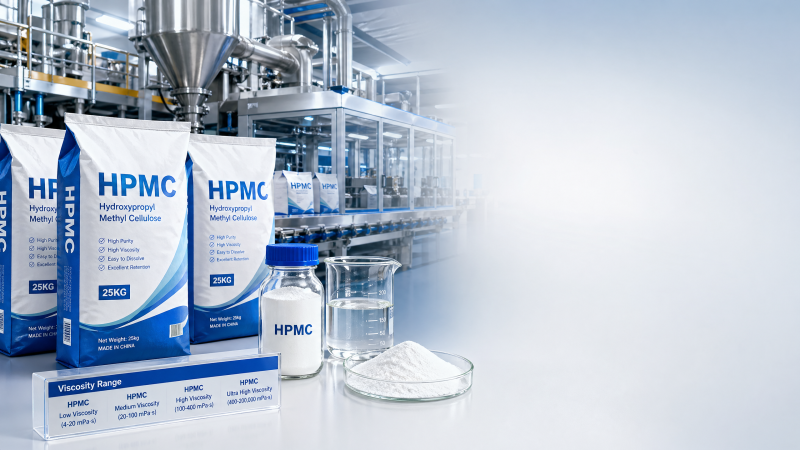
Choosing the right HYDROXYPROPYL METHYL CELLULOSE supplier is critical for companies planning to expand product lines while maintaining quality, consistency, and supply stability. For decision-makers in the chemical and construction materials sectors, a partner with scalable production, controlled viscosity ranges, and integrated service capabilities can directly support faster market response and long-term growth.
Understanding the Role of a HYDROXYPROPYL METHYL CELLULOSE Supplier
A HYDROXYPROPYL METHYL CELLULOSE supplier does more than provide a cellulose ether. For manufacturers expanding into drymix mortar, tile adhesive, wall putty, self-leveling compounds, gypsum products, detergents, or related chemical formulations, the supplier influences product performance, production rhythm, and technical stability. HPMC affects water retention, workability, open time, sag resistance, and thickening behavior, so its selection directly shapes final product consistency.
In practical terms, decision-makers usually evaluate three core dimensions within the first 30 to 90 days of supplier screening: whether the supplier can keep quality variation under control, whether viscosity grades match product development plans, and whether production capacity can support future growth rather than only current orders. A mismatch in any of these areas can delay launches, increase reformulation costs, or create avoidable field complaints.
This is why supplier choice matters especially in the chemicals and construction materials industries, where one polymer additive may be used across 5 or more product categories. A capable partner helps align raw material behavior with application needs, while also supporting documentation, sample testing, batch continuity, and shipment planning for different regional markets.
What HPMC Means for Product-Line Expansion
When companies broaden a portfolio, they rarely need only one grade. They often need a viscosity ladder, such as low, medium, and high ranges, along with different substitution or application-focused variants. A supplier with controllable viscosity from 400 to 200,000 CPS can better support formulation flexibility across multiple end uses, reducing the need to qualify several fragmented sources.
For example, one business unit may need HPMC for tile adhesive with balanced open time and anti-slip performance, while another may require stable water retention for cement render or smooth workability for skim coat. In this context, supplier capability becomes part of product strategy, not only part of procurement.
A relevant reference point for buyers is whether the supplier can offer integrated cellulose ether expertise rather than isolated transactions. Product development cycles in construction chemicals often move in stages: lab testing in 1 to 2 weeks, pilot adjustment in 2 to 4 weeks, and market validation over several additional weeks. Technical responsiveness during these stages matters as much as the material itself.
Core Evaluation Focus
- Consistency of viscosity, moisture, and application performance across batches.
- Capacity to support both current demand and 12-month expansion plans.
- Breadth of grades for different formulation targets and end-use sectors.
- Technical communication speed during sample, trial, and scale-up stages.
- Supply reliability for regional, seasonal, and contract-based demand changes.
Why the Industry Is Paying Closer Attention to Supplier Capability
The construction chemicals market has become more performance-sensitive over the past several years. Customers increasingly expect easier application, better consistency, and fewer on-site failures. As a result, manufacturers cannot treat cellulose ethers as interchangeable commodities. Even when two materials share a similar nominal viscosity, field behavior may differ in water retention, dissolution profile, or compatibility with cementitious systems.
At the same time, global supply chains have become more complex. Many purchasing teams now consider lead time resilience, production redundancy, and service integration alongside price. For a business launching 3 to 6 new SKUs within a year, interruptions of even 2 to 3 weeks can affect dealer commitments, plant scheduling, and formulation transition plans. This makes supplier structure a strategic issue rather than a routine sourcing task.
Jinan Ludong Chemical Co., Ltd., established in 2020, operates as a large-scale global manufacturing enterprise focused on cellulose ethers, production, trading, and integrated services. Its annual production capacity of 45,000 tons and coverage of HPMC, redispersible polymer powder, and hydroxypropyl starch ether reflect the kind of scale many decision-makers look for when they want one partner that can support multiple product systems.
Industry Priorities That Affect Supplier Selection
The market is no longer driven only by obtaining a standard thickener. Buyers need performance predictability across climates, formulation types, and contractor habits. In warmer or drier regions, water retention and open time can become more critical. In large-volume production environments, powder flow, mixing behavior, and batch repeatability become equally important. That is why experienced teams evaluate supplier capability in relation to the end-use environment, not in isolation.
Another trend is the move toward integrated raw material strategies. Companies prefer suppliers who understand how HPMC works alongside RDP, HPS, fillers, cement, gypsum, and additives. This reduces trial-and-error and shortens the path from formula concept to commercial output. For producers entering adjacent categories, this can save 1 to 2 formulation cycles per new product.
A supplier with both traditional process knowledge and intelligent automated production can often provide better flexibility. In practice, automation can help batch control, while process experience helps manage application nuance. That combination matters when buyers require stable performance across repeated monthly orders or varying seasonal demand.
The table below summarizes the main industry drivers behind closer evaluation of a HYDROXYPROPYL METHYL CELLULOSE supplier.
For decision-makers, these points reinforce a simple message: supplier capability should be reviewed as part of commercial planning. A lower-cost input may still become expensive if it creates slower trials, unstable product behavior, or repeat quality checks across each batch.
Application Value Across Expanding Product Portfolios
The value of selecting the right HYDROXYPROPYL METHYL CELLULOSE supplier becomes clear when a company moves from one flagship product to a broader formulation system. Instead of managing separate additive sources for each category, businesses can use a more unified development route. This improves procurement efficiency and also helps technical teams compare results more accurately across projects.
For many producers, the real advantage is reduced complexity. A supplier with construction and chemical grades, such as type 75 and type 60 series, can serve different market segments while preserving a recognizable process logic. This is especially useful when one production site supports both domestic and export-oriented products with distinct customer expectations.
A useful material reference for portfolio planning is Hydroxypropyl Methyl Cellulose, which is commonly evaluated for its broad use in drymix and related chemical systems. Buyers typically assess not only nominal viscosity but also mixing performance, water retention stability, and suitability for specific construction applications.
Typical Application Groups
HPMC is widely used across cement-based and gypsum-based products, but the functional priority can differ by segment. In tile adhesives, open time and anti-sag behavior tend to be central. In wall putty and skim coat, smooth workability and water retention are often prioritized. In self-leveling or specialty compounds, compatibility with the rest of the additive package becomes more important.
This means supplier selection should be tied to intended application families, especially if the business plans to develop 2, 4, or even 8 formulations from one raw material platform. A supplier that understands the performance balance between these categories can shorten development lead time and reduce the risk of over-specifying or under-specifying the grade.
The following table offers a practical overview of common application directions and the HPMC properties that matter most.
This classification helps technical and procurement teams speak the same language. Instead of asking only for a general grade, they can define use conditions, target feel, viscosity band, and expected process behavior. That leads to faster qualification and clearer communication with the HYDROXYPROPYL METHYL CELLULOSE supplier.
Business Benefits of a Broader Supplier Match
- Lower qualification workload when several formulations can be developed from one supplier system.
- More predictable monthly purchasing if demand changes by season or by project cycle.
- Shorter adjustment time when moving from pilot to commercial-scale production.
- Better technical continuity across HPMC, RDP, and HPS-based formulation planning.
Practical Evaluation Criteria for Decision-Makers
A structured review process helps separate a capable long-term partner from a supplier that only fits short-term purchasing needs. For enterprise buyers, the right evaluation model usually combines technical, operational, and commercial criteria. The process does not need to be complicated, but it should cover enough detail to prevent hidden cost later.
One practical starting point is to assess the supplier against the next 12 to 24 months of product expansion rather than only the next order. If a company expects additional adhesive grades, putty variants, or export-specific formulations, the supplier should be able to support a staged roadmap. Capacity, service depth, and grade breadth become more important under this forward-looking view.
For example, Ludong Chemical’s annual output of 45,000 tons, together with production lines that integrate traditional process knowledge and intelligent automation, indicates the kind of operational foundation many larger buyers seek. For global customers, this matters because stable supply and flexible production support are often linked to market responsiveness.
Recommended Evaluation Sequence
- Define application scope, such as tile adhesive, putty, mortar, or detergent-related use.
- Confirm key material parameters, including viscosity band, dosage expectation, and target workability.
- Request samples for lab comparison, ideally across 2 to 3 relevant grades rather than one single option.
- Review batch consistency, lead time expectations, packaging options, and shipment coordination details.
- Assess communication quality during trial feedback and formulation adjustment.
This sequence keeps the decision balanced. A technically suitable grade with unstable delivery may not support expansion. Likewise, strong capacity without the right application understanding may still create delays in development. The best supplier relationship is one where technical fit and operational execution reinforce each other.
Points That Should Not Be Overlooked
Decision-makers should also examine communication discipline. During the trial period, how quickly are sample questions answered? Are grade recommendations tied to application conditions or given in generic terms? Is the supplier prepared to discuss differences between type 60 and type 75 construction or chemical grades when relevant? These details often reveal whether future cooperation will be efficient.
It is equally useful to ask about routine supply planning. In many cases, buyers work with 20-foot or 40-foot shipment planning, monthly release schedules, or seasonal stocking strategies. A reliable HYDROXYPROPYL METHYL CELLULOSE supplier should be able to discuss realistic lead-time windows, packaging consistency, and order coordination without vague promises.
Finally, companies should consider whether the supplier can support broader solution thinking. If the business is simultaneously evaluating HPMC, RDP, and HPS for a construction system, an integrated service model can reduce communication gaps and improve formulation efficiency across the full additive package.
From Supplier Selection to Long-Term Product Development
Once a supplier is approved, the relationship should move beyond order placement. The most effective partnerships contribute to product iteration, adaptation to different project climates, and planning for next-generation formulations. This matters because construction chemical products are rarely static; contractor preferences, local sand quality, cement variability, and market expectations all shift over time.
A forward-looking approach may involve qualifying 2 or 3 HPMC grades in parallel, building dosage windows for each product family, and documenting acceptable performance ranges during trial production. That creates flexibility if one formulation needs a smoother application feel, longer open time, or a different rheological balance later. It also reduces disruption when product lines evolve.
This is where a supplier with a broad cellulose ether portfolio and integrated services can offer measurable value. Instead of restarting sourcing from zero for every new product concept, companies can work within a more connected technical framework. Over a 6- to 18-month expansion period, this often translates into better efficiency in both procurement and formulation management.
Why Choose Us
Jinan Ludong Chemical Co., Ltd. focuses on cellulose ethers and related integrated services for global customers. With large-scale production capability, annual capacity reaching 45,000 tons, and HPMC viscosity control from 400 to 200,000 CPS, the company is positioned to support businesses that need both immediate supply and room for product-line growth. Its portfolio includes HPMC, RDP, and HPS, allowing broader discussion around full construction material systems.
For decision-makers, the practical benefit is not only product availability but also supply structure and flexibility. Whether you are evaluating new formulations, replacing unstable grades, or preparing for regional market expansion, a partner with comprehensive production lines and integrated solutions can help reduce qualification friction and improve launch readiness.
If you are reviewing supplier options, contact us to discuss application parameters, viscosity range selection, delivery cycle planning, sample support, product matching for mortar or adhesive systems, packaging needs, and quotation details. Our team can support conversations around grade selection, custom supply planning, and coordinated solutions for expanding construction chemical product lines.
Send Your Inquiry
We welcome your cooperation and we will develop with you.
