


Synthetic Lubricants vs Mineral Oils: What Really Changes in Service Life
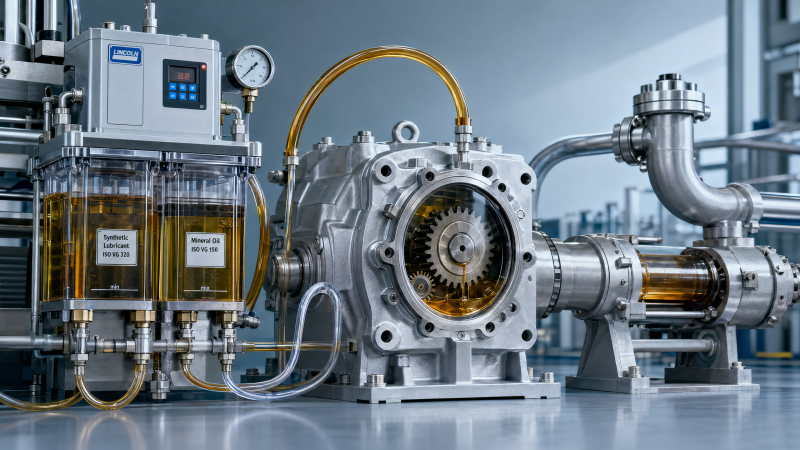
For after-sales maintenance teams, the real difference between synthetic Lubricants and mineral oils is not just price, but how long equipment can run reliably between service intervals. In demanding chemical production environments, lubricant choice directly affects wear control, thermal stability, downtime risk, and maintenance cost. Understanding what really changes in service life helps maintenance professionals make smarter, performance-driven decisions.
Why service life changes so much in chemical production maintenance
In chemical plants, service life is rarely determined by one factor alone. Pumps, gearboxes, compressors, agitators, and conveying systems often run under fluctuating loads, variable temperatures, moisture exposure, and long operating cycles. For after-sales maintenance personnel, the question is practical: how long can the lubricant protect equipment before oxidation, viscosity shift, contamination, or additive depletion begins to raise failure risk?
This is where synthetic Lubricants usually separate themselves from mineral oils. Mineral oils can perform well in standard duty, especially in stable systems with controlled temperatures and shorter drain intervals. However, when operating conditions move from routine to severe, the lubricant’s molecular stability starts to matter more. In many industrial maintenance plans, the difference shows up over 3 core service indicators: oil life, component cleanliness, and interval stability.
In chemical manufacturing, “service life” does not only mean how long the oil remains in the sump. It also includes how effectively the oil resists sludge formation over weeks or months, how consistently it maintains film strength across start-stop cycles, and whether it allows the maintenance team to keep predictable inspection intervals, such as every 500 hours, 1,000 hours, or each monthly shutdown window.
For companies such as Jinan Ludong Chemical Co., Ltd., which operates large-scale and integrated production lines for cellulose ethers and related materials, stable equipment operation supports both product consistency and delivery reliability. In facilities with annual production capacity reaching 45,000 tons, unplanned lubrication-related stoppages can disrupt not only maintenance schedules but also raw material flow, batch timing, and downstream service commitments.
What after-sales teams usually see first
- Rising operating temperature in bearings or gear housings during the later part of the oil cycle.
- Darkening oil, varnish formation, or sticky deposits that make inspections more frequent.
- Greater vibration fluctuation after long continuous runs of 8–24 hours per day.
- Shorter practical service intervals than the original maintenance plan expected.
These signs do not automatically prove that mineral oils are unsuitable. They do show that the margin for error becomes smaller when conditions are harsh, contamination is frequent, or maintenance windows are tight. That is why synthetic Lubricants are often evaluated not by purchase price alone, but by total service interval performance.
Synthetic Lubricants vs mineral oils: what really changes in operation
The most useful comparison for maintenance teams is not a laboratory-style debate. It is an operational comparison focused on oxidation resistance, viscosity stability, low-temperature flow, high-temperature film retention, and deposit control. Those 5 dimensions directly influence whether maintenance remains scheduled or becomes reactive.
Synthetic Lubricants are typically engineered for more uniform molecular structure. This generally improves resistance to thermal breakdown and oxidation when compared with conventional mineral oils. Mineral oils, by contrast, can be cost-effective in moderate-duty equipment, but they may age faster under high heat, air entrainment, or long recirculation periods common in chemical processing support equipment.
The next table gives a maintenance-oriented comparison. It is not a brand-specific guarantee. Instead, it highlights the service-life factors that usually matter when after-sales teams evaluate drain intervals, risk exposure, and equipment protection in chemical plants.
The practical reading is simple. Synthetic Lubricants tend to widen the safe operating window. Mineral oils can still be a sound choice for less severe duty, lower runtime density, or systems with frequent planned servicing. The maintenance decision should therefore be based on operating severity, not just fluid category.
Where maintenance outcomes differ most
The biggest difference usually appears in equipment that combines 2 or more stressors at the same time: elevated temperature, long duty cycles, contamination risk, or narrow shutdown windows. A gearbox that runs at moderate load for 6 hours per day is very different from a pump train that operates continuously for 24 hours with intermittent temperature swings and airborne dust exposure.
In these cases, after-sales teams often find that synthetic Lubricants reduce the frequency of corrective maintenance. That does not eliminate inspections, but it can make inspection results more predictable, which is often just as valuable as raw oil life.
Which service-life factors should after-sales maintenance personnel check first?
When teams compare synthetic Lubricants with mineral oils, the first step is to define the service-life risk profile of the equipment. In chemical production, 4 checks usually provide the clearest direction: operating temperature range, contamination exposure, runtime density, and maintenance access. These four checks are often more valuable than marketing claims because they directly shape lubricant aging speed.
A practical field approach is to divide equipment into three groups: standard duty, variable duty, and severe duty. Standard duty may include systems with stable loads, predictable temperatures, and routine shutdowns every 2–4 weeks. Severe duty typically includes high-temperature recirculation, moisture ingress risk, or continuous operation between monthly service windows.
For facilities handling cellulose ether production and related chemical processes, consistency in processing support systems matters. Stable lubrication helps protect transfer pumps, mixers, reducers, and auxiliary rotating assets that influence throughput and batch timing. Around integrated manufacturing lines, maintenance teams often evaluate not only lubricant life but also how lubricant choice affects cleaning workload, spare-parts demand, and restart speed.
In broader plant support areas, maintenance managers may also coordinate with production teams using specialty materials such as Hydroxypropyl Starch Ether. While that product serves a different application context than lubricants, the same procurement logic applies: stable performance, fit-for-process consistency, and supplier ability to support industrial-scale operations are more important than low entry cost alone.
A 5-point inspection checklist before switching oil type
- Review actual operating temperature, not only nameplate design temperature. A repeated difference of even one operating grade can affect oxidation pace over long cycles.
- Check contamination pathways, including dust, process vapors, moisture, and seal condition.
- Measure service interval pressure: weekly, biweekly, monthly, or quarterly maintenance access.
- Confirm load pattern, including continuous operation, start-stop frequency, and shock loading.
- Verify compatibility and flushing requirements before any conversion program.
This checklist prevents one of the most common mistakes: switching to synthetic Lubricants without changing the maintenance method. Extended-life fluids work best when paired with periodic oil analysis, contamination control, and documented interval review.
Common warning signs that service life is already being lost
- Lubricant replacement frequency has increased from quarterly to monthly without a clear process change.
- Filters plug faster during hot seasons or peak production periods.
- Visual inspections show foam, haze, varnish, or residue around vents and housings.
How to compare cost, drain intervals, and downtime risk
Purchase price is usually the first objection when synthetic Lubricants are proposed. For after-sales maintenance teams, that is understandable. However, lubricant cost should be measured against three operating variables: drain interval length, maintenance labor frequency, and downtime consequence. In many chemical plants, one unplanned stoppage can cost far more than the price gap between fluid types.
A useful evaluation period is 6–12 months. That window is long enough to compare oil consumption, filter replacement, emergency interventions, and bearing or seal-related incidents. For some assets, mineral oils remain more economical. For others, especially where access is difficult or shutdowns are expensive, synthetic Lubricants may lower total maintenance burden even when unit price is higher.
The table below offers a structured way to judge value. It focuses on maintenance economics rather than list price alone, which is usually the better decision framework in process industries.
The key point is not that synthetic Lubricants are always cheaper over time. It is that they often improve economic predictability in severe-duty systems. For maintenance leaders, predictability matters because it supports spare-parts planning, labor allocation, and shutdown coordination.
Companies with integrated manufacturing and global supply responsibilities, such as Ludong Chemical, understand this planning discipline well. Whether the topic is lubricant performance around plant equipment or material consistency across production lines, service reliability depends on controlling process variation before it turns into delivery risk.
Implementation mistakes, FAQs, and how to make the switch safely
Switching from mineral oils to synthetic Lubricants can improve service life, but only if the conversion is controlled. One of the most frequent errors is assuming that the new fluid alone will solve varnish, overheating, or wear problems that were actually caused by contamination, wrong viscosity grade, or poor sealing. A lubricant upgrade should be treated as a maintenance improvement project with at least 3 stages: assessment, conversion, and verification.
The assessment stage should include equipment review, compatibility check, and service history analysis. The conversion stage often includes drain-out, flushing if required, filter replacement, and relabeling. The verification stage should review temperature, noise, consumption, and sample condition after the first operating cycle, commonly within the first 2–6 weeks depending on asset criticality.
When maintenance teams manage multiple process-support assets, they should avoid plant-wide switching in a single step. A pilot group of 3–5 critical assets is usually a safer approach. This allows the team to compare interval extension, deposit behavior, and inspection findings before expanding the program.
Where procurement teams also evaluate specialty chemical materials for production support, supplier responsiveness becomes part of the decision. Industrial buyers often prefer partners who can discuss not only product supply, but also application fit, batch consistency, and timing. This is one reason many buyers seek integrated support when sourcing materials such as Hydroxypropyl Starch Ether and other process-related products.
FAQ for after-sales maintenance teams
Are synthetic Lubricants always better for service life?
No. They are often better in severe operating conditions, extended service programs, or high-consequence equipment. In moderate-duty systems with short planned drain intervals, mineral oils may still be cost-effective. The decision should follow actual runtime, temperature, contamination level, and maintenance access conditions.
Can drain intervals be extended immediately after conversion?
That is not the safest approach. A staged review is better. Start with the original or slightly adjusted interval, then confirm condition through inspection or oil analysis. Extension should be evidence-based, especially in critical equipment operating continuously or under chemical plant temperature fluctuations.
What is the most common mistake in lubricant selection?
Selecting by price or category name alone. The more reliable method is to review 5 points together: viscosity grade, base oil type, additive suitability, operating environment, and maintenance interval target. Missing even one of these can shorten practical service life.
How should maintenance teams document results?
Use a simple comparison sheet over at least one operating cycle. Record fill date, runtime hours, temperature trend, top-up volume, filter condition, visual cleanliness, and any vibration or seal changes. Over 2–3 cycles, this data gives a much clearer basis for procurement and standardization decisions.
Why choose a supplier with process understanding, and what to discuss next
For maintenance and procurement teams in the chemicals sector, technical decisions are stronger when the supplier understands industrial operating reality. Jinan Ludong Chemical Co., Ltd. combines manufacturing, trading, and integrated service capability around cellulose ethers, supported by advanced production lines and flexible production management. That operating discipline matters to B2B buyers who value stable supply, process consistency, and practical communication.
Its portfolio includes HPMC, RDP, and HPS-related solutions, while annual capacity reaches 45,000 tons and HPMC viscosity control spans 400 to 200,000 CPS. For industrial customers, those ranges indicate an ability to support differentiated application requirements rather than one-size-fits-all supply. That same consultative mindset is valuable when your team needs help aligning material choice, maintenance planning, and production demands.
If you are reviewing synthetic Lubricants, mineral oils, or adjacent chemical product selection in a production support context, the most useful next step is a structured discussion. Focus on 6 points: operating conditions, target service interval, compatibility concerns, sample needs, delivery timing, and quotation scope. Clear inputs reduce selection risk and speed up internal approval.
- Ask for parameter confirmation based on temperature range, equipment type, and service interval goals.
- Discuss product selection options for standard-duty versus severe-duty operating environments.
- Confirm delivery cycle expectations for routine orders, trial quantities, or staged supply plans.
- Request support on customization, sample evaluation, and application matching.
- Clarify documentation or common compliance requirements relevant to your procurement process.
When service life is the real issue, the best decision is rarely the cheapest oil or the most expensive oil. It is the option that fits your runtime pattern, maintenance window, and risk profile. If your team needs support with product selection, technical parameters, sample arrangements, delivery planning, or quotation discussion, reaching out with your operating data will make the conversation faster and more useful.
Send Your Inquiry
We welcome your cooperation and we will develop with you.
