


How to Choose Synthetic Lubricants for High-Load Equipment
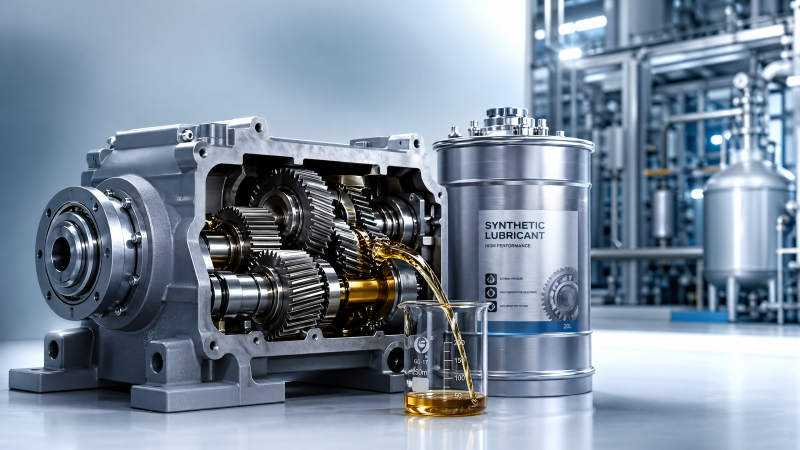
Choosing the right synthetic Lubricants for high-load equipment is critical for technical evaluators seeking reliability, efficiency, and longer service life. Under demanding operating conditions, lubricant performance directly affects wear control, thermal stability, and maintenance costs. This guide outlines the key selection criteria, helping you assess viscosity, load-bearing capacity, compatibility, and long-term value with greater confidence.
Why High-Load Applications Require Different Selection Logic
In chemical processing, construction materials production, bulk solids handling, and heavy-duty mixing systems, high-load equipment rarely operates under a single steady condition. Technical evaluators often deal with gearboxes, enclosed bearings, hydraulic units, compressors, and reduction drives that face fluctuating torque, continuous duty cycles of 8 to 24 hours, and ambient temperatures that may range from below 0°C to above 45°C. In these environments, selecting synthetic Lubricants is less about choosing a premium label and more about matching operating stress to lubricant chemistry.
The main reason scenario-based selection matters is that “high load” can mean very different things. In a mortar or drymix production line, the lubricant may need superior resistance to dust ingress and slow-speed shock loading. In a chemical reactor agitator, oxidative stability and seal compatibility may matter more than short-term load spikes. In centralized plant utilities, the focus may shift toward drain interval, energy efficiency, and simplified maintenance planning across 10, 20, or even 50 pieces of rotating equipment.
For evaluators in the chemicals sector, especially those supporting process reliability and material handling systems, the best synthetic Lubricants are judged by measurable fit: viscosity at operating temperature, film strength under boundary lubrication, water resistance, additive compatibility, and maintenance economics over 6-month, 12-month, or multi-year cycles. This approach reduces unplanned stoppage and avoids the common error of over-specifying one property while missing another critical variable.
Common operating factors that change the selection outcome
- Load profile: constant high torque, shock load, start-stop cycles, or mixed loading.
- Speed range: low-speed heavily loaded gears need different film behavior than high-speed bearings.
- Thermal stress: bulk oil temperatures of 60°C to 110°C greatly influence oxidation rate and viscosity retention.
- Contamination risk: dust, moisture, alkaline materials, and fine solids can shorten lubricant life.
- Service strategy: frequent shutdown maintenance versus long continuous production campaigns.
Typical High-Load Equipment Scenarios and What to Prioritize
To make synthetic Lubricants selection practical, it helps to break the decision into actual equipment scenarios. The table below compares common high-load situations found in chemicals, construction-material additives, and related processing plants. It is designed for technical evaluators who need quick screening criteria before requesting a detailed formulation or supplier proposal.
This comparison shows that technical evaluation should begin with operating context, not just lubricant grade. A product that performs well in a gearbox running at 80°C with moderate load may underperform in a slow-speed mixer where boundary lubrication dominates. For this reason, synthetic Lubricants should be shortlisted by scenario first, then narrowed by specification and maintenance target.
Scenario 1: Mixers, kneaders, and heavy material blending lines
These systems are common in construction additives, drymix mortar, and specialty chemical blending. They often run with dense material resistance, repeated starts, and occasional torque spikes. Under these conditions, the lubricant must maintain a protective film even when speed is low and contact stress is high. Synthetic Lubricants with strong extreme-pressure behavior are usually evaluated more favorably than standard mineral oils in this setting.
Another practical concern is contamination. Fine powders, moisture, and alkaline dust can enter housings or affect seals over time. A technical evaluator should review not only viscosity grade, such as ISO VG 220 or 320 for enclosed gears, but also water separation, rust protection, and sludge resistance over maintenance intervals of 3 to 12 months. Equipment located near bagging or transfer points often requires closer attention than cleaner indoor drives.
In production environments associated with cellulose ethers and construction formulations, process continuity matters because stoppages can disrupt batching, packaging, and quality consistency. Companies supplying materials such as Hydroxypropyl Starch Ether often understand how powder handling, mixing behavior, and line utilization create mechanical stress patterns that affect lubrication priorities.
What to verify in this scenario
- Whether startup torque is significantly higher than running torque.
- Whether the gearbox operates mostly below 1,500 rpm or under mixed-speed duty.
- Whether dust sealing is adequate for 6-month service intervals.
- Whether the lubricant must resist water washout or condensation during cleaning cycles.
Scenario 2: Continuous reducers, conveyors, and packaging drives
This is a different decision environment. Conveying and packaging lines may not always see severe shock load, but they often run 16 to 24 hours per day. Over time, heat buildup, oxidation, and viscosity loss become more important than one-time peak load. In such cases, synthetic Lubricants with a stable viscosity index and good oxidative control can reduce varnish formation and support longer oil change intervals.
Technical evaluators should also consider plant-wide maintenance economics. If a facility has 30 reducers of similar size, even a modest extension of drain intervals from 4,000 hours to 8,000 hours can materially reduce labor, downtime coordination, and lubricant disposal frequency. That does not mean the longest interval is always correct, but it highlights why lifecycle cost can outweigh purchase price in continuous-duty scenarios.
For these applications, selection should include operating temperature mapping, seal material review, and basic oil analysis planning. A lubricant that supports trend monitoring through viscosity, oxidation, and wear metal checks every 1,000 to 2,000 hours often offers better operational visibility than a lower-cost alternative with less stable performance.
Scenario 3: Reactor agitators and chemically exposed drive systems
In process reactors, dosing tanks, and chemically influenced mixing zones, the main challenge is not only load but also temperature and atmosphere. Bearings and gear units may be exposed to warm vapors, humidity, or occasional chemical splash. In these cases, synthetic Lubricants are often evaluated for oxidation resistance, corrosion control, and compatibility with seals, paints, and nearby polymeric materials.
If sump temperatures regularly exceed 90°C, oxidation rate can rise quickly compared with operation at 60°C. This makes base oil quality and additive stability central to the evaluation. Technical teams should ask whether the lubricant maintains cleanliness, resists deposit formation, and supports predictable relubrication or oil replacement intervals under continuous operation.
This scenario often benefits from supplier dialogue that goes beyond catalog data. The evaluator may need confirmation on elastomer compatibility, moisture handling, and whether the lubricant is suitable for intermittent thermal cycling. When the production process includes specialty powders or modified starch systems, an understanding of plant operating realities can improve the fit between lubricant plan and mechanical reliability.
How to Compare Key Selection Criteria Across Scenarios
After identifying the application scenario, the next step is to compare technical criteria in a structured way. For most high-load evaluations, viscosity, load-carrying ability, thermal stability, contamination resistance, and compatibility should be reviewed together. Looking at only one property can lead to mismatch, especially when the equipment faces both high mechanical stress and a chemically challenging environment.
The table below gives a practical decision framework for synthetic Lubricants in high-load equipment. The ranges are not universal design limits, but they reflect common evaluation logic used in industrial maintenance and chemicals-sector operations.
The strongest evaluations usually combine equipment data with maintenance history. If a reducer has repeated seal leakage every 9 to 12 months, compatibility and temperature may be more urgent than nominal load rating. If a mixer gearbox shows wear during short shutdown windows, the issue may be insufficient viscosity or poor film retention under start-stop conditions.
A practical scoring approach for technical evaluators
A useful method is to assign weighted importance by scenario. For example, in dust-heavy mixers, load-bearing and contamination resistance may account for 60% of the decision. In reactor drives, thermal stability and compatibility may dominate. This helps procurement, engineering, and maintenance teams avoid choosing synthetic Lubricants based solely on the lowest cost per liter.
- Define duty cycle: hours per day, load fluctuation, startup frequency, and ambient conditions.
- Map failure mode: wear, oxidation, overheating, leakage, foaming, or contamination.
- Set decision weights: technical fit, change interval, compatibility, and maintenance burden.
- Request supporting data: viscosity behavior, additive type, application limits, and changeover guidance.
Common Misjudgments in High-Load Lubricant Selection
One frequent mistake is assuming that the highest viscosity or the most expensive synthetic Lubricants will automatically deliver the best protection. In reality, overly high viscosity can increase churning losses, reduce flow at startup, and create heat under certain speeds. In hydraulic or circulating systems, it may also impair efficiency or filterability. Selection should always match actual load-speed-temperature conditions rather than a general sense of severity.
Another mistake is ignoring changeover risk. If the equipment contains residual oil, degraded seals, or contamination accumulated over several service cycles, even a technically suitable lubricant may perform inconsistently after conversion. Evaluators should plan flushing, sampling, and seal inspection where needed, especially when moving from conventional products to synthetic Lubricants in older assets.
A third issue is treating all high-load assets the same. A heavy-duty kneader and a continuously running conveyor reducer may both be “critical equipment,” but their lubrication priorities differ. Grouping them under one procurement code can simplify purchasing, yet it may create hidden wear, shorter oil life, or over-maintenance in at least part of the fleet.
Warning signs that the current choice may be wrong
- Operating temperature trends upward by 10°C or more without process changes.
- Oil darkens rapidly or develops deposits within one normal service cycle.
- Gear or bearing noise increases after startup or during peak load periods.
- Seal leakage appears shortly after lubricant conversion.
- Sampling shows viscosity drift, water ingress, or abnormal wear particles.
Where process knowledge adds value
In plants handling cellulose ethers, starch ethers, and polymer-modified drymix systems, mechanical conditions are shaped by raw material behavior. Powder density, moisture sensitivity, and batching rhythm can influence load peaks, downtime windows, and contamination pathways. That is why cross-functional understanding matters. Suppliers familiar with industrial material processing, including products such as Hydroxypropyl Starch Ether, can often contribute more relevant application discussion than vendors focused only on generic lubrication catalogs.
For technical evaluators, this means the best decision process combines mechanical data with process context. Doing so reduces the chance of selecting a lubricant that looks correct on paper but does not align with the production environment, cleaning routine, or maintenance access limitations.
How to Build a Reliable Selection and Review Workflow
A strong selection workflow for synthetic Lubricants should be repeatable across projects and easy to audit during equipment reviews. In most chemical and construction-material plants, the most useful workflow begins with equipment criticality, then confirms operating conditions, then screens compatibility, and finally compares lifecycle cost. This structure helps evaluators defend technical decisions in procurement, maintenance, and plant management discussions.
It is also important to separate short-term troubleshooting from long-term standardization. If a gearbox is already overheating, the immediate task may be to confirm root cause and stabilize operation within days. Standardizing lubricant strategy across a plant, however, may take 4 to 12 weeks because it involves documentation, stock control, supplier coordination, and changeover scheduling.
Technical evaluators should ask for actionable support, not just product brochures. Useful supplier input includes recommended viscosity grades by operating temperature, notes on compatibility, expected service intervals under defined conditions, and practical advice on sampling, flushing, and storage. These details usually determine whether synthetic Lubricants create real operational value.
Recommended review checklist
- Identify the exact equipment type, load pattern, and operating hours per shift.
- Record current lubricant grade, oil age, failure history, and contamination exposure.
- Confirm temperature range, startup conditions, and whether water or dust ingress is common.
- Check seal and material compatibility before any changeover.
- Evaluate total cost over the full maintenance cycle, not only purchase price.
- Plan follow-up monitoring at defined intervals such as 500, 1,000, or 2,000 operating hours.
Contact Us for Scenario-Based Technical Support
If you are evaluating synthetic Lubricants for high-load mixers, reducers, agitators, or material handling systems, a scenario-based review can save significant trial time. Jinan Ludong Chemical Co., Ltd. works in the chemicals and construction solutions field with large-scale manufacturing, integrated services, and extensive process understanding around cellulose ethers, including HPMC, RDP, and HPS-related production environments. That industrial perspective helps connect process conditions with practical equipment support needs.
Contact us if you need help confirming operating parameters, comparing application scenarios, reviewing material compatibility, or organizing a more reliable selection path for high-load equipment. We can support discussions on specification screening, plant condition assessment, supply coordination, and broader process-related requirements tied to powder handling and continuous production systems.
Why choose us: we understand the demands of industrial chemical production, the realities of continuous processing, and the importance of balancing technical reliability with commercial practicality. You can reach out for parameter confirmation, product selection guidance, delivery cycle discussion, customized solution planning, sample support, or quotation communication based on your actual operating scenario.
Send Your Inquiry
We welcome your cooperation and we will develop with you.
