


U.S. Adds 12 Hydraulic Valve Types to Export Controls for China
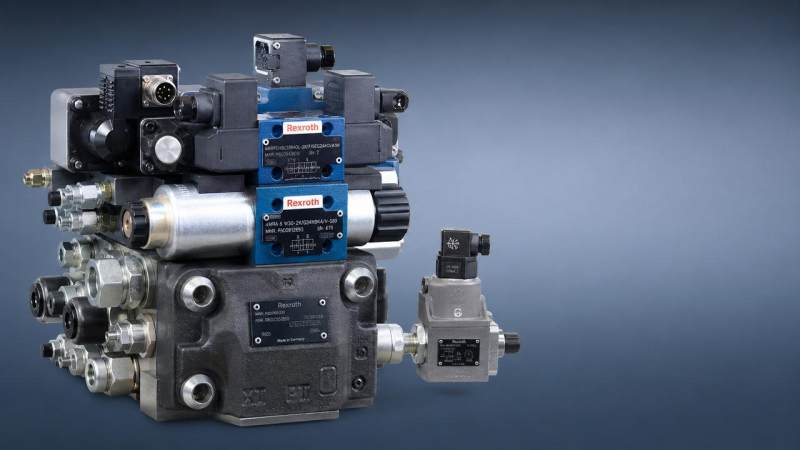
On May 5, 2026, the U.S. Department of Commerce’s Bureau of Industry and Security (BIS) amended the Export Administration Regulations (EAR), adding 12 categories of high-precision hydraulic control valves—including electro-hydraulic servo valves and proportional pressure control valves—to Export Control Classification Number (ECCN) 2A226. This change directly affects companies in construction machinery, wind power, marine equipment, and advanced manufacturing sectors that rely on or export such hydraulic systems to China, making EAR compliance documentation and technical parameter reporting critical for continued trade.
Event Overview
The U.S. Bureau of Industry and Security (BIS) updated the Export Administration Regulations (EAR) effective May 5, 2026. The amendment adds 12 specific types of high-precision hydraulic control valves to ECCN 2A226, requiring a license for exports to China. These valves include electro-hydraulic servo valves and proportional pressure control valves. The revision is publicly documented in the Federal Register notice issued by BIS and applies to all exports, reexports, and in-country transfers subject to the EAR.
Which Subsectors Are Affected
Direct Exporters and Trade Enterprises
Companies engaged in exporting hydraulic components or integrated systems to China must now assess whether their products fall under the newly controlled valve categories. License requirements introduce delays, additional administrative burden, and potential shipment holds if EAR compliance documentation—such as valid ECCN classification letters and end-use statements—is incomplete or outdated.
Hydraulic System Integrators and Equipment Manufacturers
Firms assembling wind turbine pitch/yaw systems, marine steering/hydraulic propulsion units, or heavy-duty construction machinery may use imported U.S.-origin or U.S.-controlled valves. Their supply chain visibility and component-level EAR classification become essential—not only for import compliance but also for downstream customer assurance and contract fulfillment.
China-Based Component Suppliers and OEMs
Chinese manufacturers supplying hydraulic subsystems to global equipment makers face increased scrutiny from overseas buyers. Importers now routinely request evidence of EAR compliance status, including technical specifications aligned with ECCN 2A226 parameters (e.g., bandwidth, response time, control precision). Failure to provide this may result in order deferrals or qualification exclusions.
Supply Chain and Logistics Service Providers
Freight forwarders, customs brokers, and compliance consultants supporting cross-border hydraulic equipment shipments must verify EAR classification at the part level—not just system level—before clearance. Misclassification risks non-compliant transit, detention, or regulatory penalties under U.S. jurisdiction.
What Relevant Enterprises or Practitioners Should Focus On and How to Respond Now
Review product-specific ECCN classifications against the updated 2A226 criteria
Companies should cross-check technical specifications (e.g., frequency response, control accuracy, operating pressure range) of their hydraulic valves against the official BIS definition for ECCN 2A226. Relying on prior self-classifications or legacy export licenses is no longer sufficient.
Verify and update EAR compliance documentation for all China-bound shipments
This includes obtaining updated commodity classification rulings (CCRs), preparing accurate Technical Data Sheets aligned with EAR definitions, and ensuring end-user statements explicitly confirm non-prohibited end uses per §744 of the EAR.
Engage proactively with overseas importers and procurement teams
Suppliers should initiate documentation exchanges early—not upon order placement—to avoid last-minute delays. Providing standardized EAR compliance packages (including classification rationale, technical summaries, and license exception eligibility assessments) helps streamline buyer due diligence.
Monitor BIS guidance and licensing policy updates through official channels
While the rule took effect May 5, 2026, BIS may issue FAQs, advisory opinions, or enforcement clarifications in the coming months. Subscribing to BIS email alerts and reviewing Federal Register notices remains essential for timely operational adjustments.
Editorial Perspective / Industry Observation
Observably, this amendment reflects an ongoing refinement—not expansion—of existing controls targeting precision fluid power components with dual-use relevance in defense-critical platforms. Analysis shows it does not introduce new licensing requirements for broad categories of industrial hydraulics, but rather narrows focus to performance thresholds associated with high-dynamic, closed-loop motion control. From an industry perspective, the move signals heightened attention to component-level traceability in complex electromechanical systems, especially where U.S.-origin content or technology is embedded—even indirectly. It is better understood as a calibration of enforcement emphasis than a sweeping policy shift; however, its operational impact is immediate for firms whose technical documentation lags behind current EAR definitions.
Conclusion
This regulatory update underscores that EAR compliance is no longer a static checkbox but a dynamic, specification-driven process—particularly for suppliers embedded in global hydraulic equipment value chains. For affected enterprises, the priority is not anticipation of further restrictions, but rigorous alignment of technical data, classification logic, and documentation practices with the May 2026 BIS rule. The most constructive interpretation is that this is a targeted clarification demanding precision in compliance execution—not a signal of broader sectoral escalation.
Information Sources
Main source: U.S. Department of Commerce, Bureau of Industry and Security (BIS), Federal Register Notice published May 5, 2026, amending Supplement No. 1 to Part 774 of the EAR. Parts of the implementation timeline and licensing processing details remain subject to ongoing BIS guidance and are recommended for continuous monitoring.
Send Your Inquiry
We welcome your cooperation and we will develop with you.
