


Vietnam Enforces Local EMC Certification for Construction Machinery from May 2026
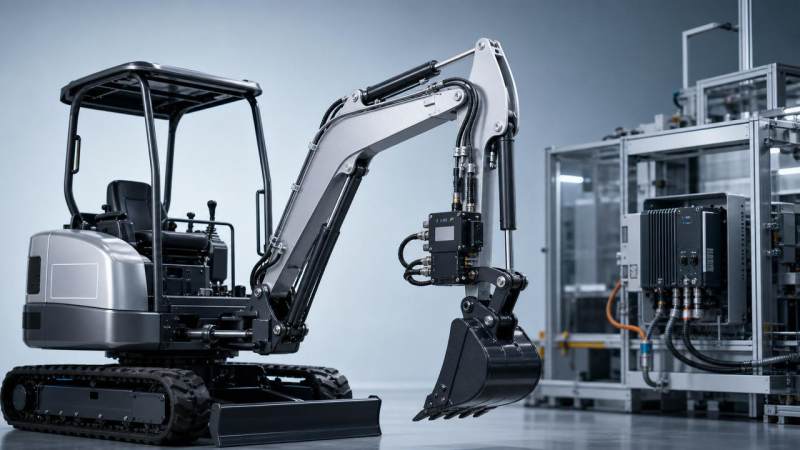
Starting 1 May 2026, Vietnam’s General Department of Standards, Metrology and Quality (STAMEQ) will mandate local electromagnetic compatibility (EMC) type certification for all imported construction machinery—including forklifts, aerial work platforms, and mini excavators—and require pre-integration of compliant filtering and shielding modules at the manufacturing stage. This regulatory shift directly affects Chinese OEMs and ODMs exporting to Vietnam, introducing new technical, compliance, and supply chain requirements.
Event Overview
Effective 1 May 2026, STAMEQ requires that all imported construction machinery entering Vietnam must pass locally administered EMC type certification. Devices must be pre-equipped with integrated EMC mitigation modules meeting TCVN IEC 61000-6-3 (emission) and IEC 61000-6-4 (immunity) standards prior to shipment. Non-compliant units will be denied customs clearance or subjected to costly on-site remediation—impacting delivery timelines and landed cost.
Industries Affected
Chinese OEMs and ODMs Exporting to Vietnam
These manufacturers are directly responsible for product conformity. The requirement to pre-integrate certified EMC modules shifts design responsibility upstream, affecting bill-of-materials, testing protocols, and factory-level quality control. Impact manifests in extended lead times, revised engineering change orders, and potential retooling for affected models.
Contract Manufacturers and Tier-1 Component Suppliers
Suppliers providing power electronics, motor drives, or control systems must now align module specifications with TCVN IEC 61000-6-3/6-4—not just generic CE or FCC-compliant designs. Failure to supply compatible subassemblies risks assembly-line stoppages or rejection of finished goods at Vietnamese ports.
Export Trading Companies and Distributors
Entities handling documentation, customs clearance, and after-sales support face increased verification burdens. They must confirm pre-integration status and retain evidence of module compliance (e.g., test reports, supplier declarations) for STAMEQ audit purposes. Unverified shipments risk detention or mandatory third-party retesting in Vietnam.
What Enterprises Should Monitor and Do Now
Track official STAMEQ implementation guidance and list of approved test labs
While the regulation takes effect in May 2026, STAMEQ has not yet published detailed procedures for module approval, lab accreditation, or certification validity periods. Enterprises should monitor STAMEQ’s official portal and Vietnam’s National Technical Regulation database for updates on recognized conformity assessment bodies.
Identify high-volume export models requiring immediate EMC redesign
Focus first on forklifts, aerial work platforms, and mini excavators—explicitly named in the mandate. Prioritize models with variable-frequency drives, wireless telemetry, or onboard battery chargers, as these present higher EMC risk profiles under TCVN IEC 61000-6-3/6-4.
Distinguish between regulatory signal and operational readiness
The policy is confirmed and date-bound, but enforcement rigor—especially regarding module traceability, documentation depth, and penalties for non-compliance—remains untested. Treat early 2026 as a transition window: use it for pilot certifications and internal process validation, not full-scale rollout without verification.
Update procurement contracts and supplier agreements to include EMC module compliance clauses
Revise sourcing terms with component vendors to explicitly reference TCVN IEC 61000-6-3/6-4 compliance, require declaration of conformity, and assign liability for failure to meet integration specifications. Include provisions for rework or replacement at supplier cost if modules fail STAMEQ review.
Editorial Perspective / Industry Observation
Observably, this requirement signals Vietnam’s broader move toward localized conformity assessment—not merely harmonization with international standards. It reflects growing emphasis on post-market surveillance and import control, rather than reliance on foreign-certified test reports alone. Analysis shows that while the rule targets EMC specifically, its enforcement model may serve as precedent for future technical mandates in other domains (e.g., energy efficiency, cybersecurity). From an industry perspective, this is less a one-off compliance hurdle and more a structural recalibration of how Chinese exporters engage with Vietnam’s regulatory ecosystem—particularly where hardware-level integration is mandated before shipment.
Consequently, the regulation is best understood not as a deadline-driven checklist item, but as a catalyst for long-term product development alignment with ASEAN market expectations. Its significance lies in shifting compliance responsibility earlier in the value chain—toward design and component selection—rather than relying on final-product testing alone.
Conclusion
This mandate marks a formal step toward stricter technical gatekeeping for construction machinery entering Vietnam. Its practical impact extends beyond certification paperwork: it reshapes product architecture, supplier collaboration, and export logistics for Chinese manufacturers. Currently, it is most accurately interpreted as an enforceable regulatory requirement with defined scope and timeline—not a proposal or draft—but one whose real-world execution details remain subject to further clarification. Enterprises are advised to treat it as binding while preparing for iterative adjustments based on emerging STAMEQ guidance.
Source Attribution
Main source: Official announcement by Vietnam’s General Department of Standards, Metrology and Quality (STAMEQ), effective 1 May 2026. Note: Implementation guidelines, accredited laboratories list, and penalty framework are pending publication and require ongoing monitoring.
Send Your Inquiry
We welcome your cooperation and we will develop with you.
